
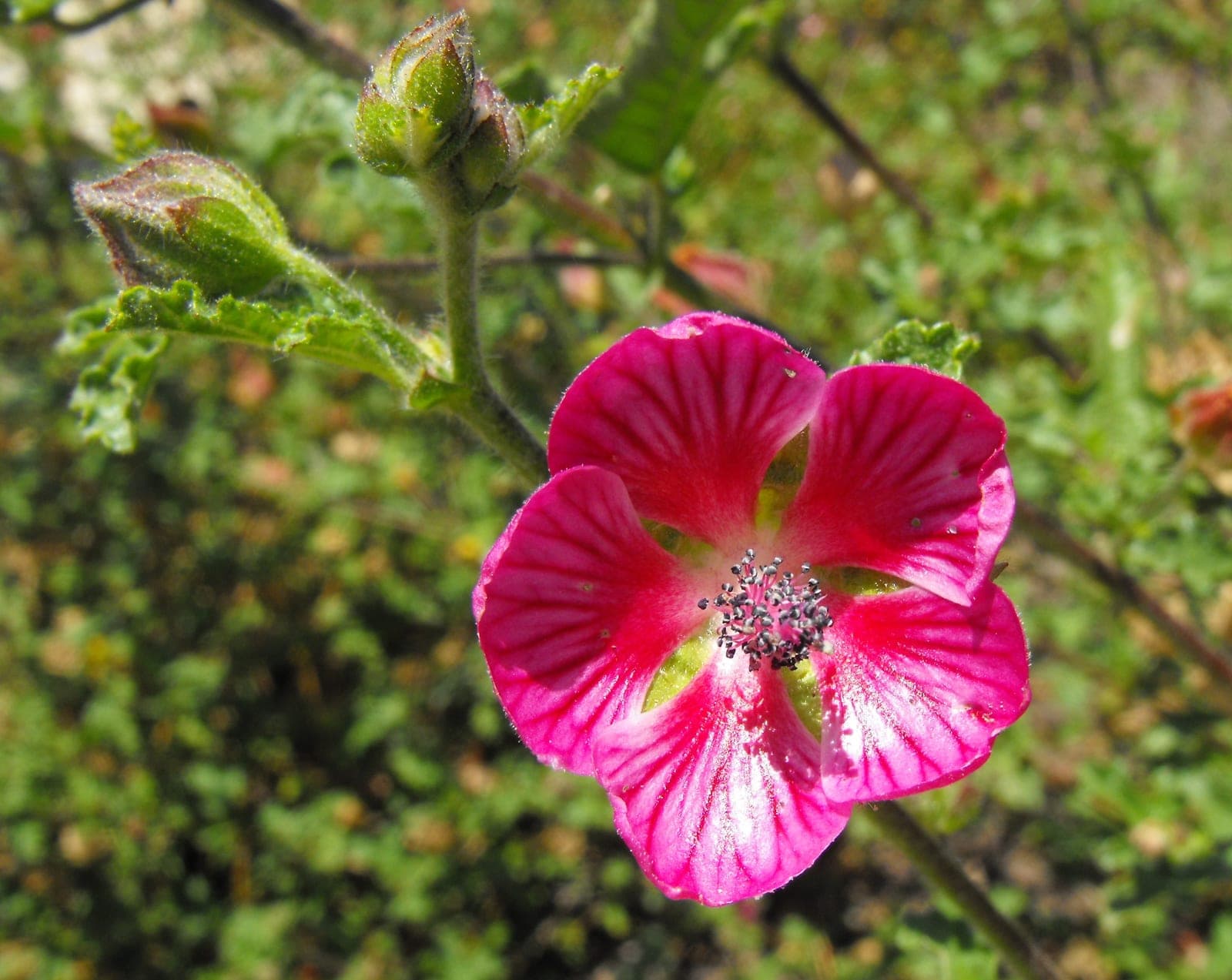
Anisodontea capensis 'El Rayo', commonly African mallow or Cape mallow, is a fast-growing evergreen-to-semi-evergreen sub-shrub from South Africa's Cape region, grown for its nonstop display of small, hibiscus-like magenta-pink flowers with a darker eye. 'El Rayo' flowers from early summer through fall - sometimes longer in mild climates - on a plant that quickly builds into an upright, lightly branched shrub; staking or light support keeps the naturally arching stems tidy along fences and borders.
Hardy outdoors only in Zones 9–11, it is grown as a container or conservatory plant, or replaced annually, in colder zones; established plants tolerate brief dips into the high teens Fahrenheit in well-drained soil but won't survive wet, cold winters. Full sun and sharp drainage keep it flowering hardest - overwatering and heavy soil are the most common causes of root rot. Prune back hard in spring to encourage bushy new growth and prevent the long stems from becoming leggy and sparse at the base.
Root rot
Plants wilt, yellow, and stunt even in moist soil; lower stems and roots turn brown, soft, and mushy and the plant may collapse. Most common in heavy, wet, or poorly drained ground.
Improve drainage and stop overwatering, and never plant too deep. Lift and destroy badly affected plants along with the soil around the roots. Grow in raised or free-draining beds to prevent it returning.