
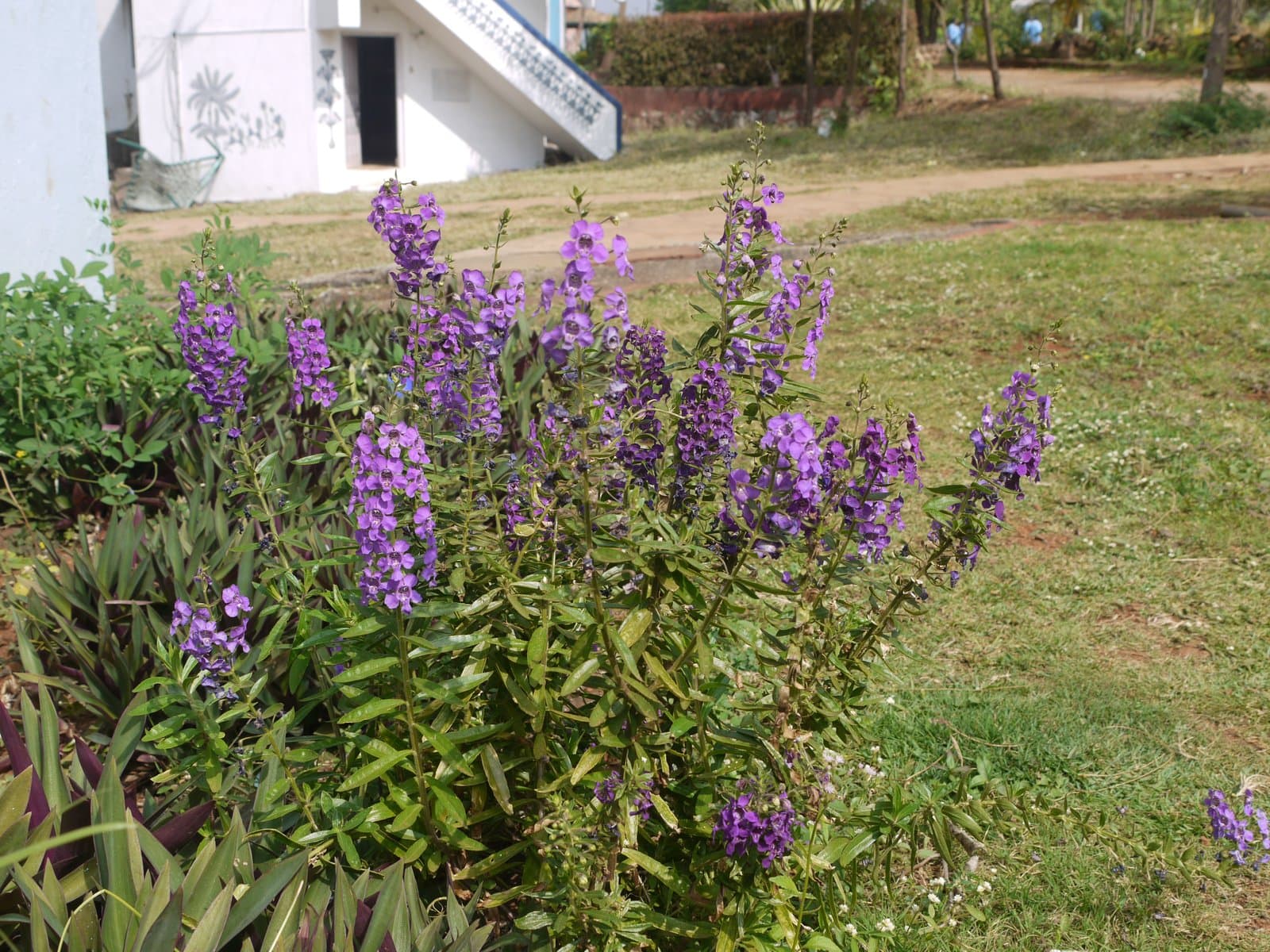
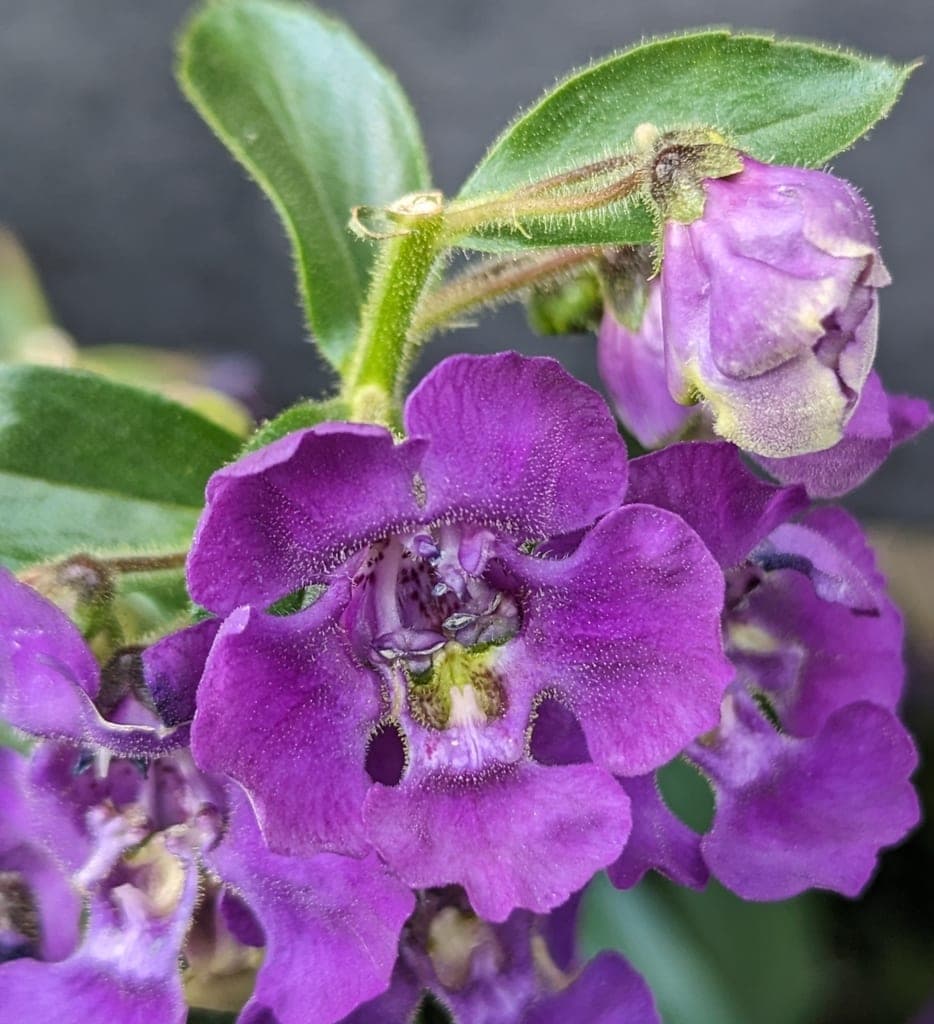
Angelonia angustifolia, the summer snapdragon, is a tender perennial native to Mexico and the West Indies, grown as a warm-season annual across most of North America. It produces dense, upright stems covered in small orchid-like flowers in purple, pink, white, and bicolor shades from late spring through the first hard frost, with no deadheading required.
It handles heat and periodic drought better than most summer annuals, making it reliable where other flowers falter. Well-drained soil is essential; roots sitting in wet ground decline rapidly. Plants that become leggy mid-season respond well to cutting back by a third, pushing fresh growth and continued flowering. In zones 9–11 it overwinters and behaves as a true short-lived perennial.
Several cultivars carry a faint grape-candy scent. The flowers draw bees, small butterflies, and hummingbirds reliably through the hottest months of the year.
Powdery mildew
White or grey powdery coating on leaves - usually starting on older growth in humid conditions or when nights cool.
Improve air circulation by thinning plants. Apply neem oil or potassium bicarbonate spray at first sign. Avoid overhead watering.
Botrytis (grey mould)
Grey fuzzy mould on petals and stems, worst in cool wet conditions.
Remove affected parts immediately. Improve air circulation. Avoid overhead watering. Apply copper fungicide if severe.
Root rot
Plants wilt, yellow, and stunt even in moist soil; lower stems and roots turn brown, soft, and mushy and the plant may collapse. Most common in heavy, wet, or poorly drained ground.
Improve drainage and stop overwatering, and never plant too deep. Lift and destroy badly affected plants along with the soil around the roots. Grow in raised or free-draining beds to prevent it returning.
Damping Off
Seedlings collapse at the soil line with thin, water-soaked stems; seeds may fail to emerge or rot before sprouting.
Sow in well-draining mix, avoid overwatering, and ensure good airflow. Remove affected seedlings and let the surface dry between waterings.