
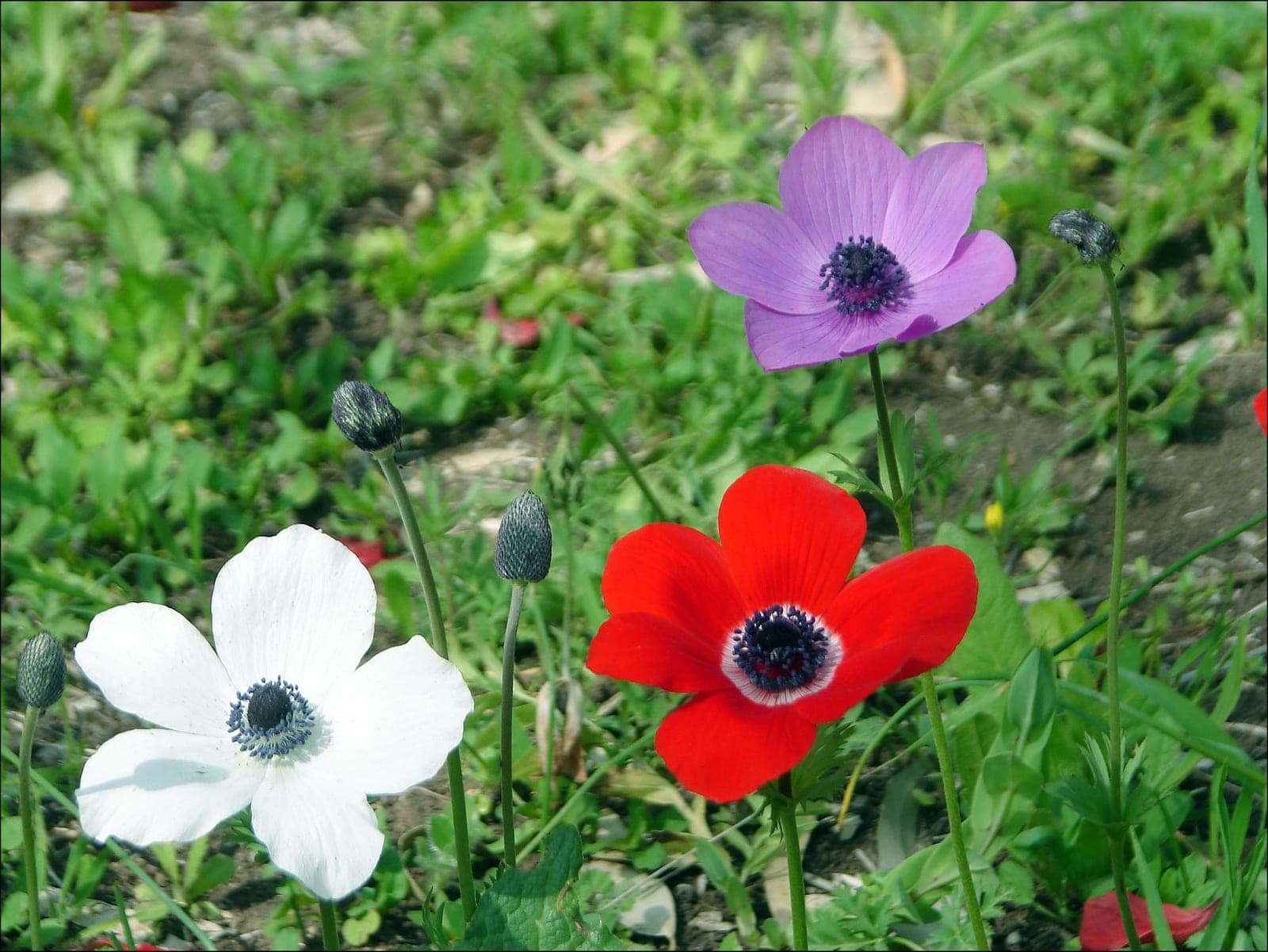
Anemone 'Wild Swan' is a compact hybrid windflower introduced by Bressingham Gardens that holds the RHS Award of Garden Merit. Its white petals carry a striking blue-violet reverse, and it produces new buds continuously from late spring into fall - a flowering span that far exceeds most anemones and makes it valuable across multiple seasons in the border.
It is more cold-hardy and considerably less invasive than the common Japanese anemone hybrids, suiting it to smaller gardens. It performs best in moist, well-drained, moderately fertile soil; in warmer zones, afternoon shade reduces heat stress. Mulch crowns after the ground cools in fall in zones 4–5. Divide clumps every three to four years in spring to sustain vigor.
Powdery mildew
White or grey powdery coating on leaves - usually starting on older growth in humid conditions or when nights cool.
Improve air circulation by thinning plants. Apply neem oil or potassium bicarbonate spray at first sign. Avoid overhead watering.
Foliar Nematode
Angular brown or black patches on leaves, bounded by leaf veins, starting on lower foliage and moving upward. Affected leaves wither but stay attached.
Remove and destroy infected leaves and surrounding debris. Avoid overhead watering and wetting foliage. Space plants for airflow and do not compost affected material. Severely infested plants should be dug out and discarded.
Anemone Leaf Smut
Raised dark streaks and blisters on leaves and stems that rupture to release black powdery spores; affected leaves distort and die back.
Remove and destroy infected foliage as it appears. Avoid overhead watering and crowding. Dispose of all debris in fall rather than composting it, and divide congested clumps to improve air circulation.
Botrytis (grey mould)
Grey fuzzy mould on petals and stems, worst in cool wet conditions.
Remove affected parts immediately. Improve air circulation. Avoid overhead watering. Apply copper fungicide if severe.
Root rot
Plants wilt, yellow, and stunt even in moist soil; lower stems and roots turn brown, soft, and mushy and the plant may collapse. Most common in heavy, wet, or poorly drained ground.
Improve drainage and stop overwatering, and never plant too deep. Lift and destroy badly affected plants along with the soil around the roots. Grow in raised or free-draining beds to prevent it returning.