
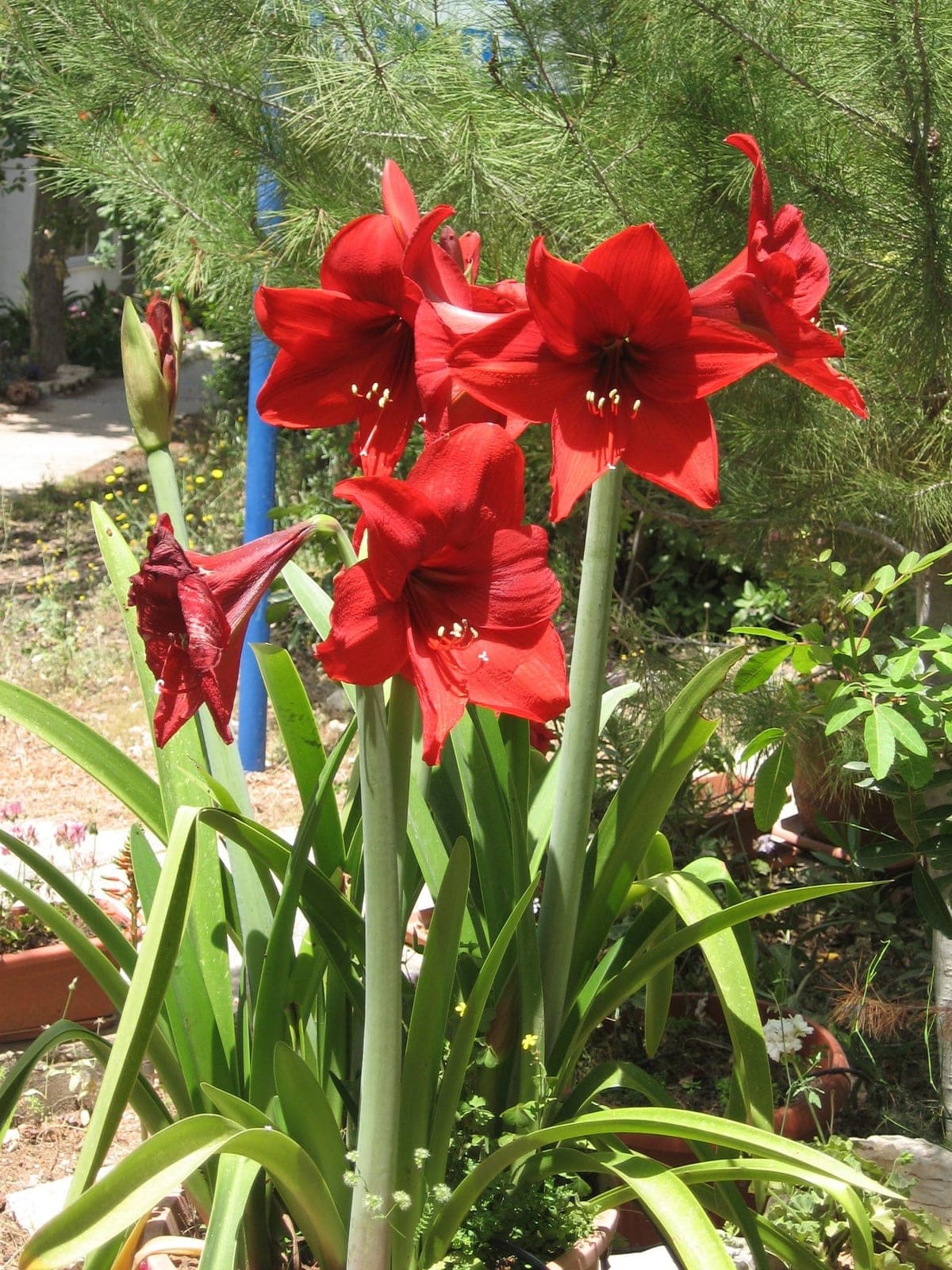
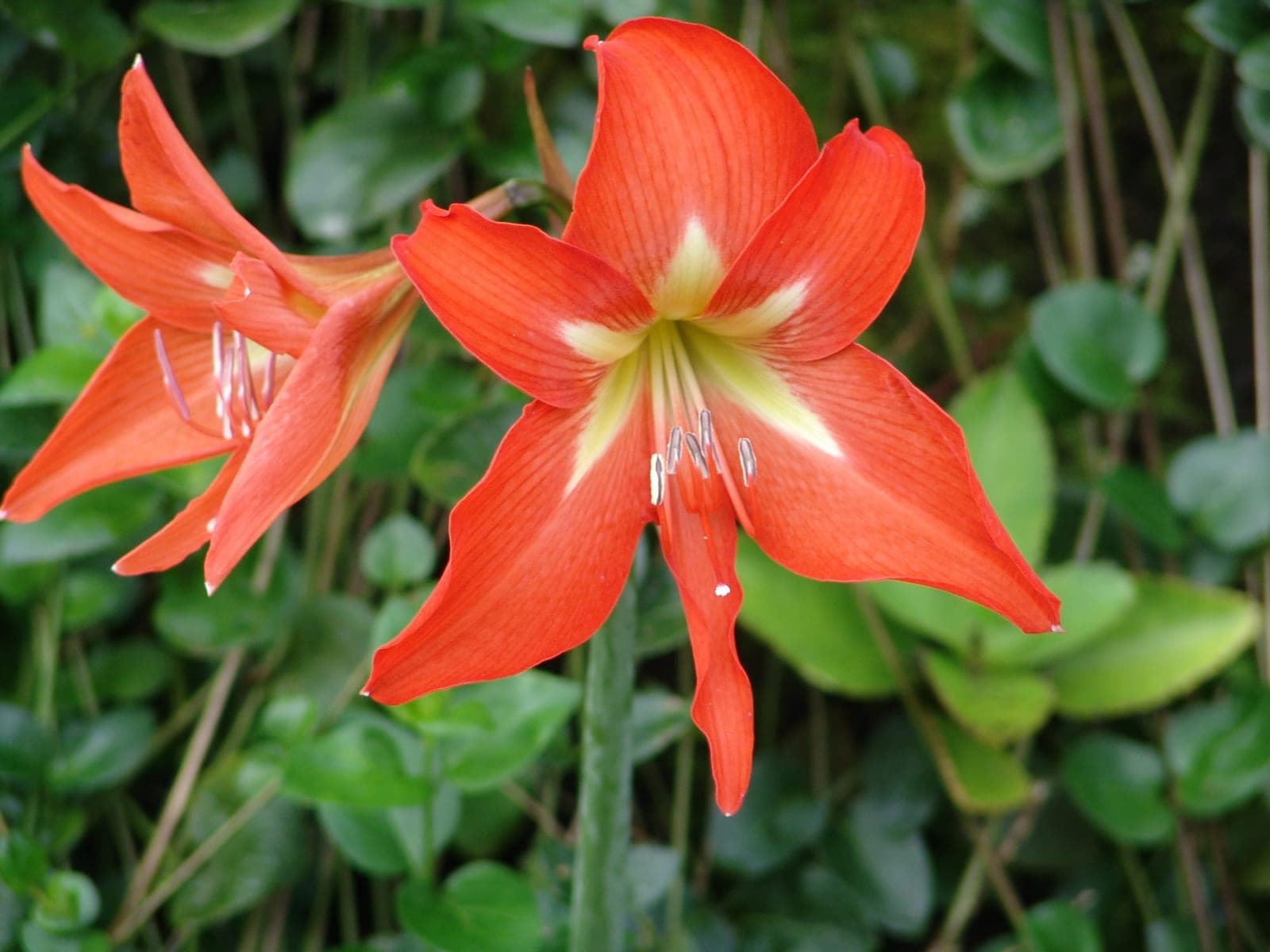
Hippeastrum × hybridum is the large-bulbed hybrid sold commercially as amaryllis, developed primarily from South American species in the genus Hippeastrum. Despite the trade name, it is unrelated to the true Amaryllis genus, which is native to South Africa. Hollow stalks 18–30 inches tall carry 2–6 large trumpet-shaped flowers in shades of red, pink, white, orange, salmon, and bicolor combinations. Strap-like leaves appear before, with, or after the flower stalks. All parts of the plant, especially the bulb, contain lycorine alkaloids and are toxic to dogs, cats, and horses if ingested.
In zones 9–11, bulbs remain in the ground year-round and naturalize over time, producing reliable spring growth each year. In zones 8a–8b, a layer of mulch over the planting site helps bulbs survive occasional frost. Plant bulbs with the upper third above soil in a well-drained, fertile bed. For indoor forcing, pot a bulb in fall or early winter in a container slightly wider than the bulb, leaving the upper third exposed, and place in a warm, bright location. After flowering, maintain foliage through summer to rebuild the bulb before the next dormant cycle.
Hippeastrum Red Blotch
Red or orange-red streaks, spots, and sunken lesions on bulb scales, emerging leaf sheaths, flower stalks, and petals. Infected stalks may be distorted or fail to open fully. Severe cases leave large maroon to dark-red patches across all above-ground tissue.
Remove and destroy all affected plant material. Before planting, soak bulbs for 30 minutes in a dilute bleach solution or apply a copper-based fungicide drench. Avoid overhead irrigation and improve air circulation. Do not reuse soil from beds where infected bulbs were grown.
Botrytis (grey mould)
Grey fuzzy mould on petals and stems, worst in cool wet conditions.
Remove affected parts immediately. Improve air circulation. Avoid overhead watering. Apply copper fungicide if severe.
Root rot
Plants wilt, yellow, and stunt even in moist soil; lower stems and roots turn brown, soft, and mushy and the plant may collapse. Most common in heavy, wet, or poorly drained ground.
Improve drainage and stop overwatering, and never plant too deep. Lift and destroy badly affected plants along with the soil around the roots. Grow in raised or free-draining beds to prevent it returning.
Lily Basal Rot
Bulb scales brown and soften at the base; stems yellow, wilt, and collapse at or just above soil level. Pink or white fungal growth may be visible on rotted bulb tissue when dug.
Discard infected bulbs; do not replant lilies in the same location for at least three years. Improve soil drainage before replanting. Dust new bulbs with sulfur powder prior to planting. Avoid overwatering and soil compaction around the root zone.
Mosaic virus
Yellowing, mottled, or distorted leaves. No cure - spread by aphids.
Remove and destroy infected plants. Control aphid populations to prevent spread. Do not propagate from infected tubers.