
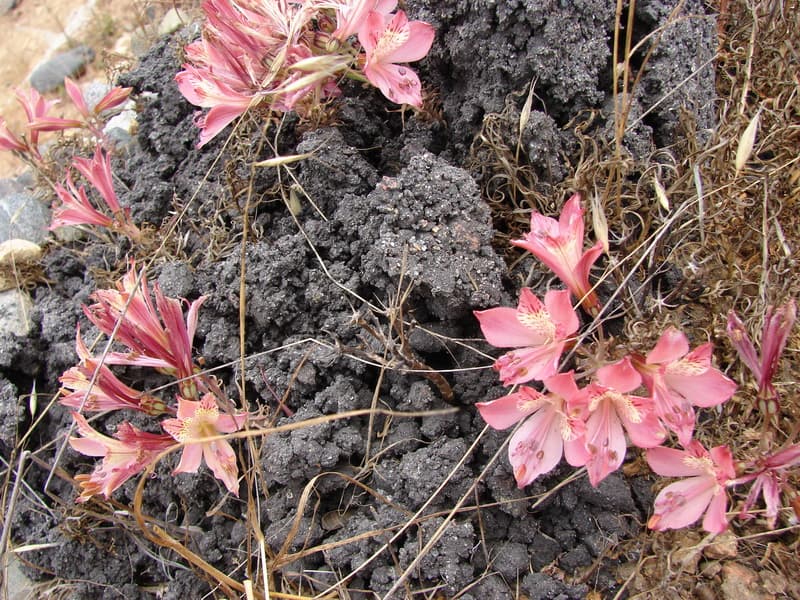
Alstroemeria hookeri is a compact, mat-forming tuberous perennial native to coastal and Patagonian Chile. Unlike the tall florist hybrids, it stays low and produces clusters of small pink to rose-red flowers in spring, making it well suited to rock gardens, raised beds, and the front of a border.
As a Patagonian species it follows a winter-active growth cycle: shoots emerge in fall, growth peaks through winter and spring, then the plant goes fully dormant when summer heat arrives. Sharp drainage is non-negotiable; tubers sitting in wet summer soil rot quickly. Plant in gritty or sandy, near-neutral to slightly alkaline soil. In zone 7, mulch over dormant tubers after the first fall frost to protect against hard freezes.
Indigenous peoples of Patagonia and the Andes consumed the starchy tubers of wild Alstroemeria species as food. Contact with the foliage can trigger allergic contact dermatitis in sensitive individuals; the sap contains tulipalins, the same compounds responsible for contact reactions in commercial cut-flower handlers.
Botrytis (grey mould)
Grey fuzzy mould on petals and stems, worst in cool wet conditions.
Remove affected parts immediately. Improve air circulation. Avoid overhead watering. Apply copper fungicide if severe.
Root rot
Plants wilt, yellow, and stunt even in moist soil; lower stems and roots turn brown, soft, and mushy and the plant may collapse. Most common in heavy, wet, or poorly drained ground.
Improve drainage and stop overwatering, and never plant too deep. Lift and destroy badly affected plants along with the soil around the roots. Grow in raised or free-draining beds to prevent it returning.
Fusarium wilt
Sudden wilting, brown streaks in stems, yellowing leaves. Affects sweet basil varieties most.
No cure. Remove and destroy plants. Do not replant in the same spot for 3+ years. Choose resistant varieties.