
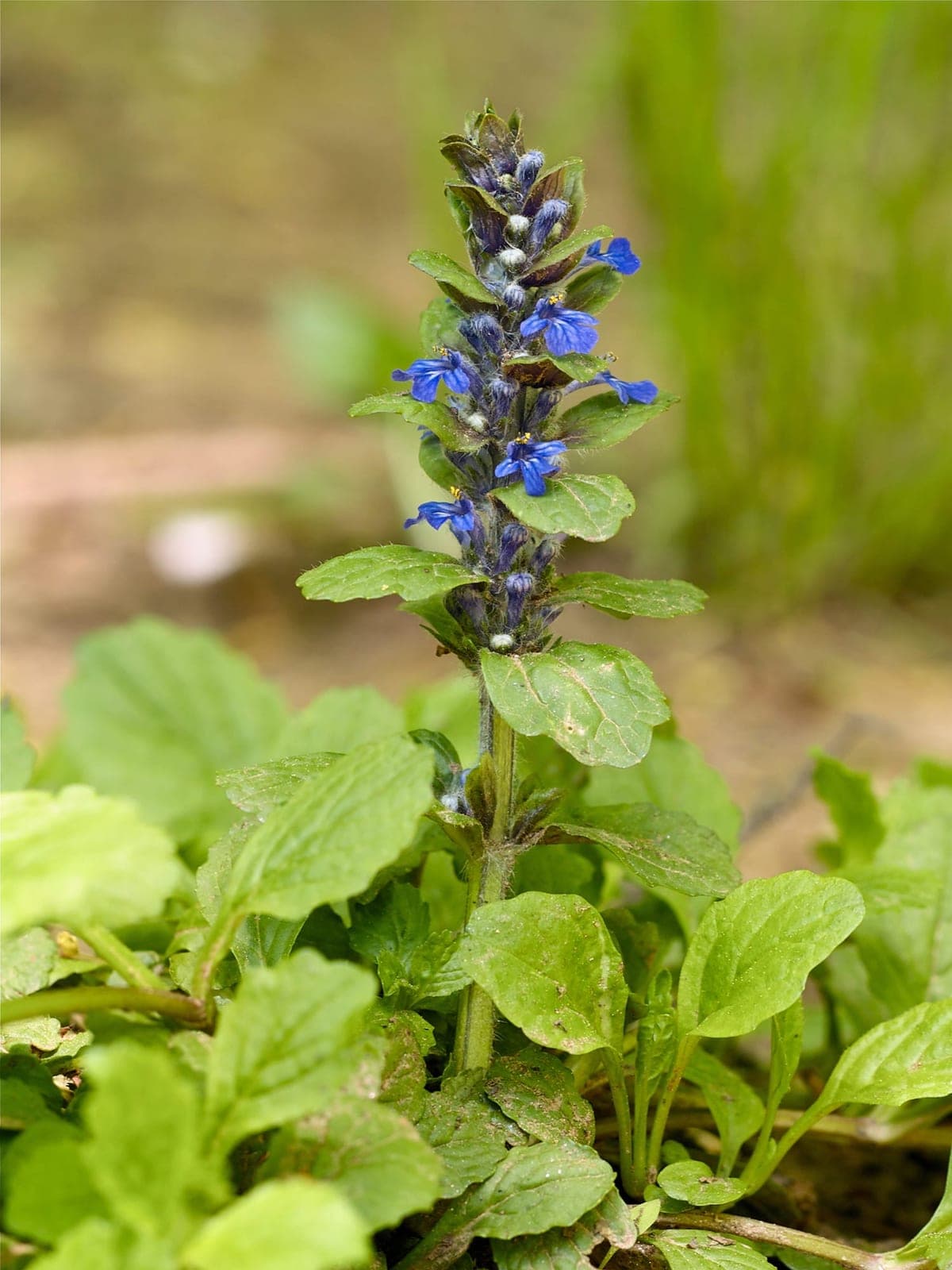
Ajuga reptans 'Black Scallop' is a low-growing perennial ground cover in the mint family, selected for leaves that are nearly black-purple, glossy, and distinctively scalloped at the margins. It spreads by stolons to form a dense, weed-suppressing mat suited to planting under trees, along slopes, and at the front of shaded borders. Short spikes of cobalt-blue flowers appear in mid-spring.
Foliage color is richest in full sun; plants in deep shade produce greener leaves. Crown rot is the chief cultural problem and occurs most often in poorly drained or compacted soil. A soil pH of 5.5–7.0 suits the plant well. Mulch lightly around, not over, the crowns to retain moisture without inviting rot. Division every two to three years keeps colonies vigorous and reduces disease pressure where plants have grown dense.
Ajuga reptans has a history of use in European herbalism as an astringent and wound-healing herb. Phytochemical research has identified iridoids and diterpenes in the genus with demonstrable anti-inflammatory activity.
Crown Rot
Lower leaves yellow and wilt; the base of the rosette turns brown and soft, sometimes with white fungal threads at the soil line. Plants collapse in wet conditions.
Remove and destroy affected plants. Improve drainage and avoid overhead watering. Do not mulch directly against the crown. Space plants for airflow and avoid replanting in the same wet spot.
Powdery mildew
White or grey powdery coating on leaves - usually starting on older growth in humid conditions or when nights cool.
Improve air circulation by thinning plants. Apply neem oil or potassium bicarbonate spray at first sign. Avoid overhead watering.