
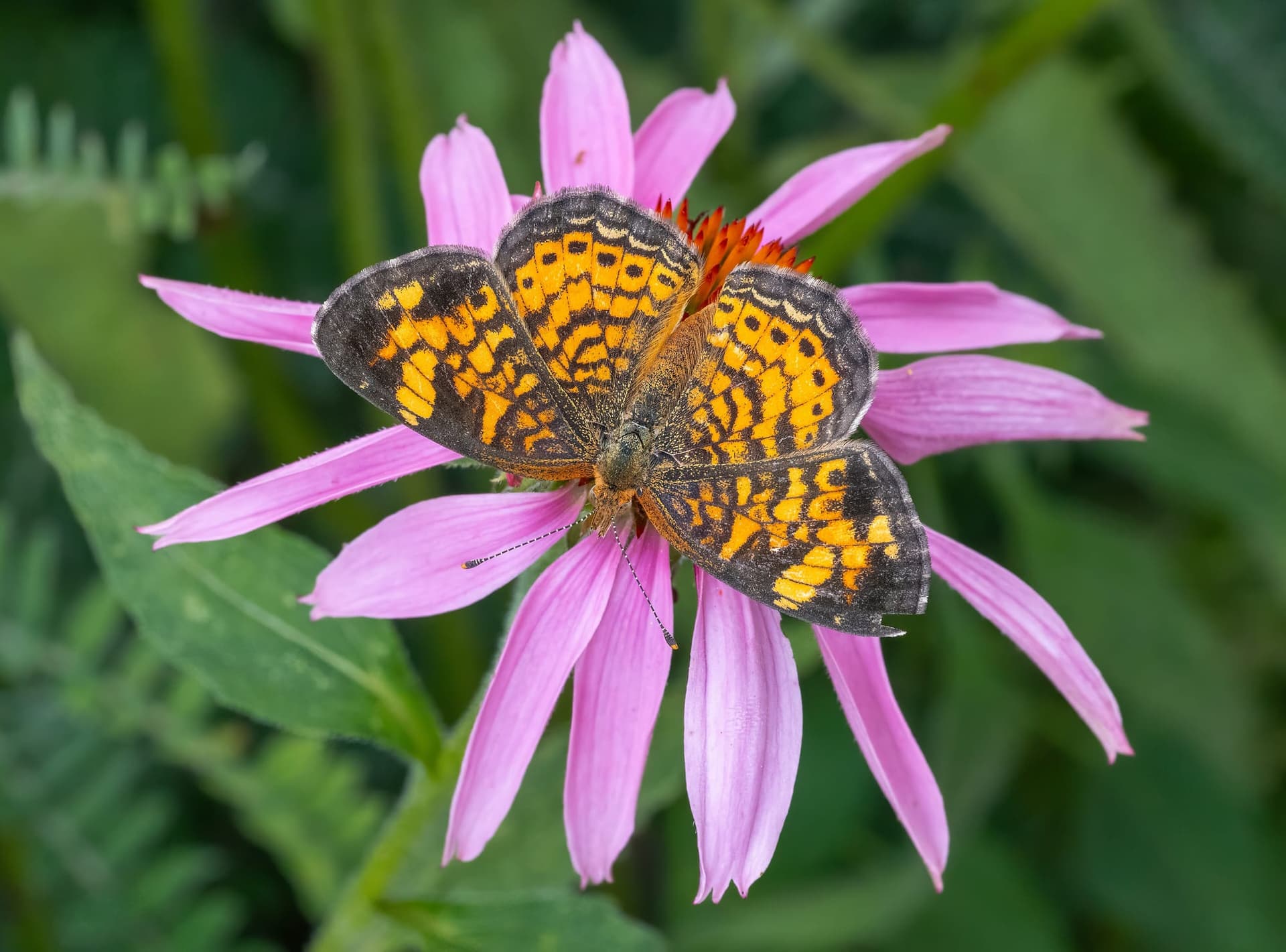
Pearl Crescent
The Pearl Crescent is a small native butterfly found across most of North America east of the Rocky Mountains. It is one of the most commonly seen butterflies in open gardens, meadows, and roadsides, and gardeners in upstate New York will encounter it regularly from late spring through fall. Despite its abundance, it is a genuine pollinator and a reliable indicator of a healthy, flower-rich garden.
Larvae feed almost exclusively on native asters, particularly species in the genus Symphyotrichum. This tight relationship with asters makes the plant a critical host for the species, not just a nectar source for adults. Pearl Crescents produce multiple broods per season in Zone 6b, with numbers often peaking in late summer when asters begin to bloom and males can be seen mud-puddling on bare ground.
Because Pearl Crescents depend on native asters at every stage of their life cycle, a garden that includes several aster species can support the butterfly from egg to adult without any supplemental management.
The Pearl Crescent is a generalist pollinator that visits a wide variety of open-faced flowers as an adult while relying on native asters as larval host plants.
Pearl Crescents cannot be purchased and must be attracted. Plant native asters such as New England aster (Symphyotrichum novae-angliae) and smooth aster (S. laeve) to serve as larval host plants and late-season nectar sources. Supplement with goldenrod, swamp milkweed, and coneflower for adult nectar from spring through fall. Leave patches of bare or lightly vegetated ground in sunny spots, which males use for mud-puddling and territory holding.
Open, sunny garden areas with a mix of native wildflowers and some bare ground work best. Avoid using broad-spectrum insecticides, particularly on or near asters where larvae may be feeding. Mowing should be timed to avoid destroying aster foliage during the peak larval period in late summer and fall.