
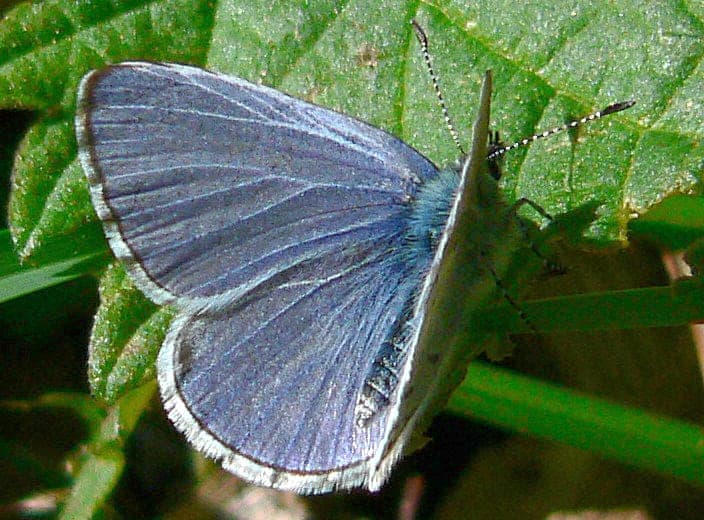
Spring Azure
The Spring Azure is one of the earliest butterflies to appear in Zone 6b gardens, often flying in April before most other species have emerged. It belongs to the family Lycaenidae, a group commonly called gossamer-winged butterflies. Its small size and pale blue wings make it easy to overlook, but as an early-season pollinator it fills a gap when few other insects are active.
Adults feed on nectar from spring-blooming plants, including dogwood, wild cherry, viburnum, and blueberry. Larvae feed on the flower buds and developing fruits of these same host plants. The caterpillars produce a sugary secretion that attracts ants, which then defend the larvae from predators — a mutualistic relationship well documented across the Lycaenidae family and one reason the species does well in gardens that tolerate ant activity.
Because the Spring Azure flies so early in the season, it pollinates native shrubs at a time when competition from other insects is low. Its presence in a garden is a reasonable indicator that native host plants are nearby and that pesticide pressure in the surrounding area is not severe.
The Spring Azure is an early-season pollinator, visiting native shrubs and spring-blooming flowers before most other butterfly species are active.
Plant native host shrubs such as flowering dogwood, wild cherry, viburnum species, and blueberry to give larvae a place to develop. Add early-blooming nectar sources including native willows and native plums. Avoid broad-spectrum pesticide applications in April and May when adults are on the wing.
Gardens with native shrubs along a woodland edge or fence row, combined with tolerance for ants and minimal pesticide use, are most likely to support this species. Leaving areas of leaf litter between plantings provides additional ground-level habitat.