
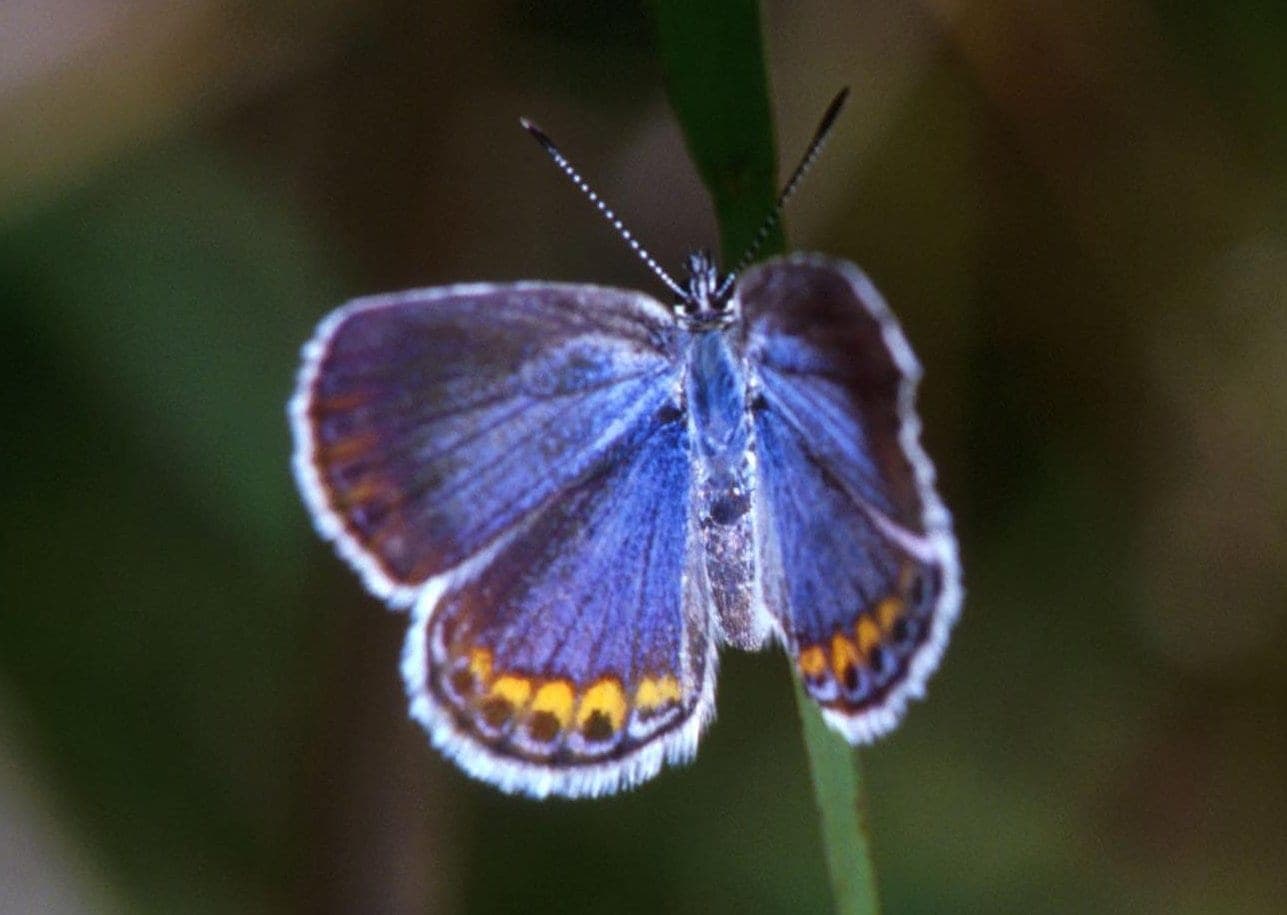
Karner Blue
The Karner blue is a small, federally endangered butterfly native to oak savannas and pine barrens across the northeastern United States and Great Lakes region. In New York, it survives at only a handful of sites, most notably the Albany Pine Bush Preserve. Gardeners within or near these areas who grow wild lupine are among the few private landowners who can meaningfully contribute to the species' recovery.
The butterfly has two flight periods each year: late spring, roughly May through June, and midsummer, roughly July through early August. Its larvae feed exclusively on wild lupine (Lupinus perennis), so the plant's presence is the single most important factor in supporting reproduction. Adults take nectar from a range of open-habitat wildflowers but will not breed without lupine growing nearby in a sunny, sandy setting.
The Karner blue's decline is tied to the suppression of fire in pine barrens and oak savanna ecosystems. These habitats historically depended on periodic burning to remain open enough for lupine to persist. Conservation programs now use prescribed fire and mechanical clearing to restore suitable conditions, and butterfly populations have responded positively where habitat management is sustained.
Pollinator that visits a range of open-habitat wildflowers as an adult while depending on wild lupine as the sole larval host plant.
The Karner blue cannot be introduced directly. To attract it in areas where local populations exist, establish wild lupine (Lupinus perennis) from seed or local-ecotype transplants in full sun with well-drained, sandy or gravelly soil. Supplement with open-habitat nectar plants such as butterfly weed (Asclepias tuberosa), lance-leaved coreopsis, and native clovers. Contact the Albany Pine Bush Preserve Commission or New York State DEC for guidance specific to your location before attempting habitat plantings intended for this species.
Sandy or gravelly soil, full sun, and minimal canopy cover are required. Wild lupine must be present and well-established. Avoid all insecticide applications, including broad-spectrum organics. Mowing should be timed outside the two flight windows and lupine should be allowed to set seed before any disturbance. Grass competition should be managed by hand-weeding or spot treatment rather than broadcast herbicide.