
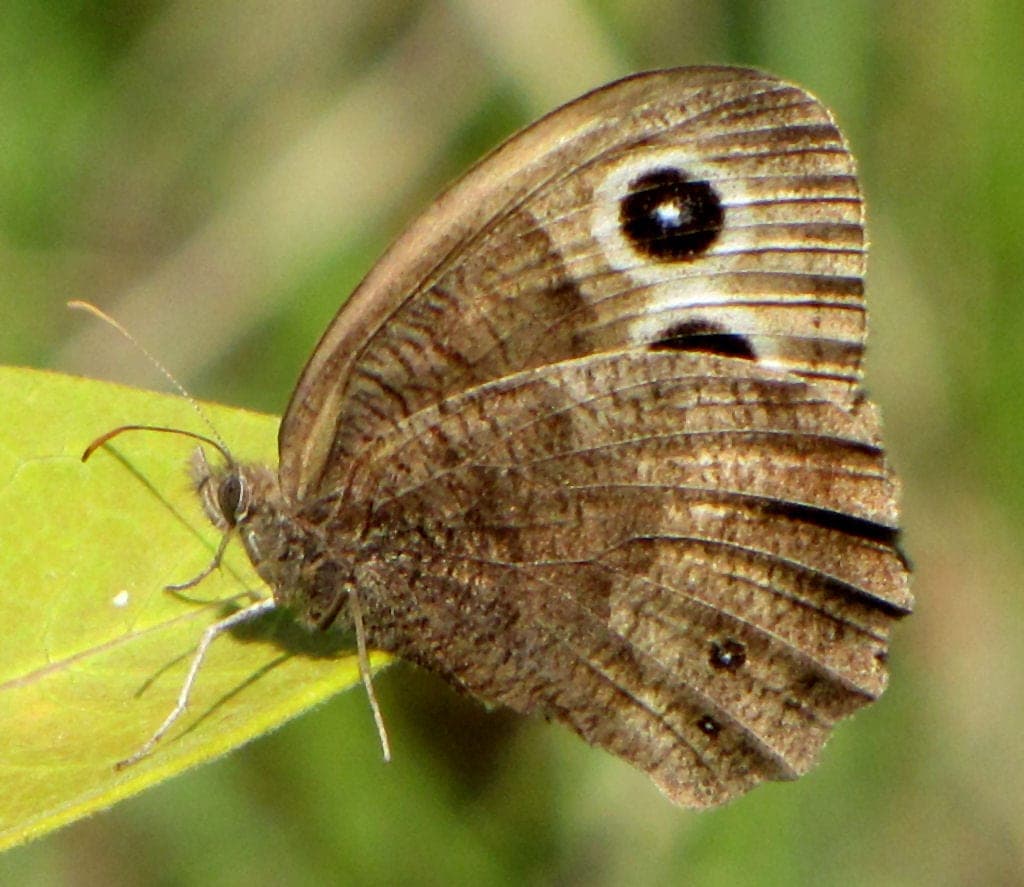
Common Wood Nymph
The Common Wood Nymph is a medium to large butterfly in the brush-foot family Nymphalidae, widespread across North America and one of the more recognizable satyrids in northeastern gardens and meadows. It is identified by warm brown wings and prominent yellow-ringed eyespots on the forewings, which vary considerably in size across its range. Gardeners working with native plants or maintaining meadow-style plantings in upstate New York will encounter it reliably through the summer months.
Adults fly from late June through September, with peak activity in July and August. They favor open, grassy areas and woodland edges, spending much of their time low to the ground. Larvae feed exclusively on native grasses, including purpletop tridens, little bluestem, and various panic grasses, so a garden that includes a grass component or a naturalized edge is far more likely to support a breeding population. Adults take nectar from wildflowers but will also feed on rotting fruit and tree sap, making them somewhat less reliant on dense floral resources than many other butterfly species.
The species overwinters as a newly hatched first-instar larva that does not feed until spring, meaning populations depend on grasses remaining undisturbed through winter. Its presence in or near a garden is a reliable indicator that native grass diversity is intact and that pesticide pressure is low, conditions that benefit a broad range of other pollinators as well.
Incidental pollinator that transfers pollen while feeding on nectar from native wildflowers and other open-faced blooms.
Plant native grasses such as little bluestem (Schizachyrium scoparium), purpletop tridens (Tridens flavus), and switchgrass (Panicum virgatum) as larval host plants. Provide adult nectar sources including mountain mint (Pycnanthemum virginianum), black-eyed Susan (Rudbeckia hirta), and common milkweed (Asclepias syriaca). Leave grass stems standing through winter to protect overwintering first-instar larvae. Big bluestem is the best host, and bushy bluestem in the Southwest.
Meadow-style plantings combining native grasses and forbs, ideally adjacent to a shrubby or wooded edge. Avoid late-summer and fall mowing when adults are active and larvae are hatching. Eliminate or sharply reduce pesticide applications across and around the planting area. Plant hosts and nectar perennials in clumps of several rather than singly, so the butterflies can find them. A few flat stones in full sun give them a place to warm up, and a shallow dish of damp sand or mud gives them water and minerals. Avoid insecticides, organic ones included, because they kill caterpillars along with the pests. Buy by botanical name so you get the native species and not a lookalike.