
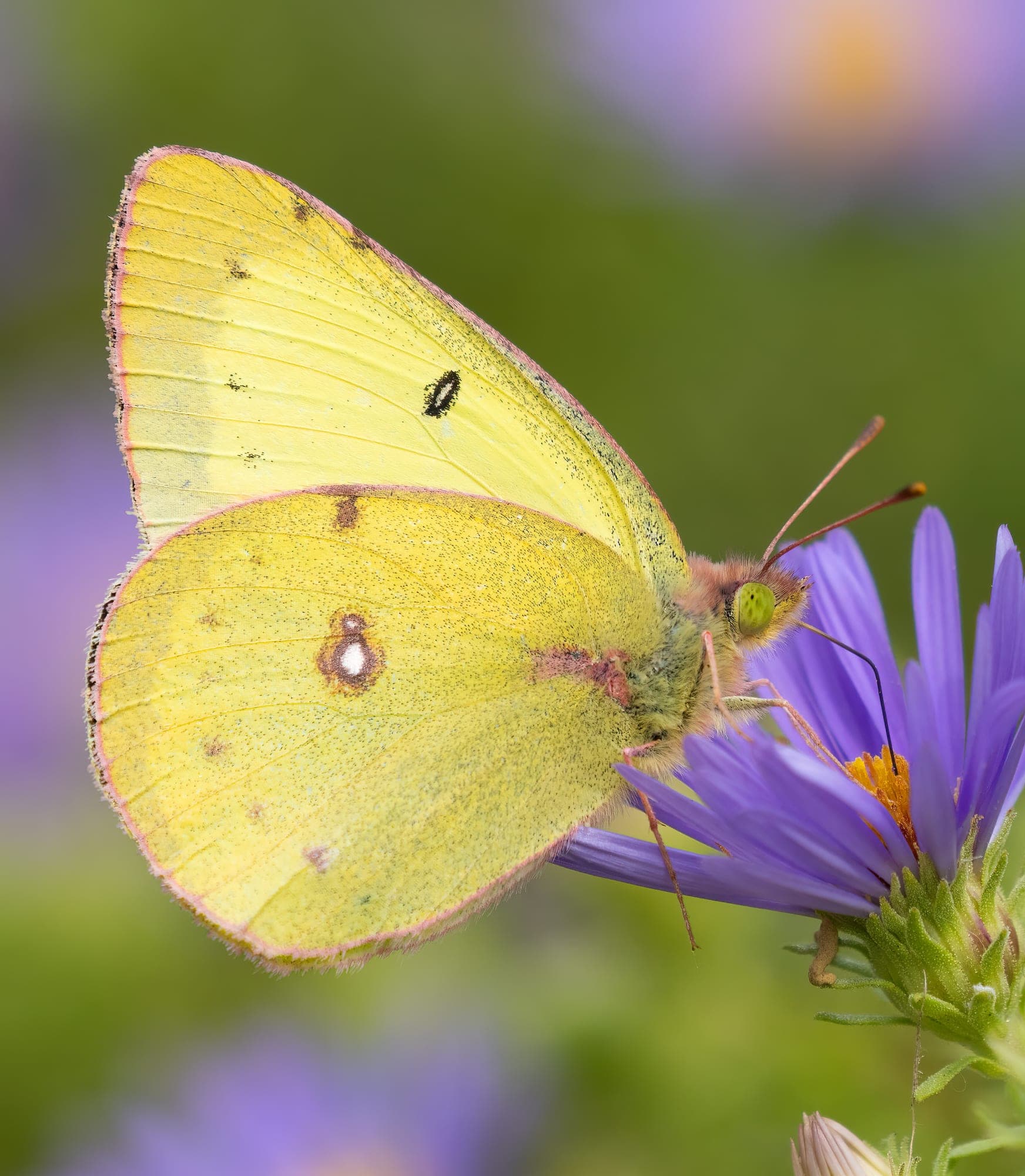
Clouded Sulphur
The clouded sulphur is one of the most familiar butterflies in North America and one of the earliest to appear in upstate New York gardens each spring. Males are bright sulfur yellow with solid black wing borders; females are yellow or occasionally white, a variant called the alba form. Gardeners often notice them drifting low over open lawns and meadows from late April onward, visiting clover and a wide range of other flowers.
This species produces multiple broods each season, with adults flying continuously from spring through October in Zone 6b. Larvae are green and well-camouflaged on leguminous host plants, primarily clovers, alfalfa, and vetches. Adults are far less selective and will nectar on many garden flowers. Males frequently gather at mud puddles in a behavior called puddling, taking up moisture and dissolved minerals.
Clouded sulphurs are considered useful indicator species for open-habitat quality. Their consistent presence across a property signals a healthy mix of flowering plants and undisturbed ground. As early and late-season pollinators, they fill gaps when specialist bees are less active, making them a reliable contributor to garden pollination throughout a long flight season.
The clouded sulphur is a generalist pollinator that visits a broad range of garden flowers across a long flight season from spring through fall.
Allow white or red clover to grow in lawn areas or dedicated patches to provide a larval host plant. Plant nectar sources such as goldenrod, asters, milkweed, and coneflowers to support adults. Reducing mowing frequency in early spring gives overwintering pupae time to emerge before ground disturbance. Native false indigos (Baptisia spp.) are a good perennial host.
Open, sunny areas with a mix of leguminous groundcover and flowering perennials attract and retain clouded sulphurs. Avoid broad-spectrum insecticide applications in clover-rich areas, and leave some bare or slightly damp soil for puddling. Gardens with consistent late-season bloom are especially valuable for supporting the final broods. Plant hosts and nectar perennials in clumps of several rather than singly, so the butterflies can find them. A few flat stones in full sun give them a place to warm up, and a shallow dish of damp sand or mud gives them water and minerals. Avoid insecticides, organic ones included, because they kill caterpillars along with the pests. Buy by botanical name so you get the native species and not a lookalike.