
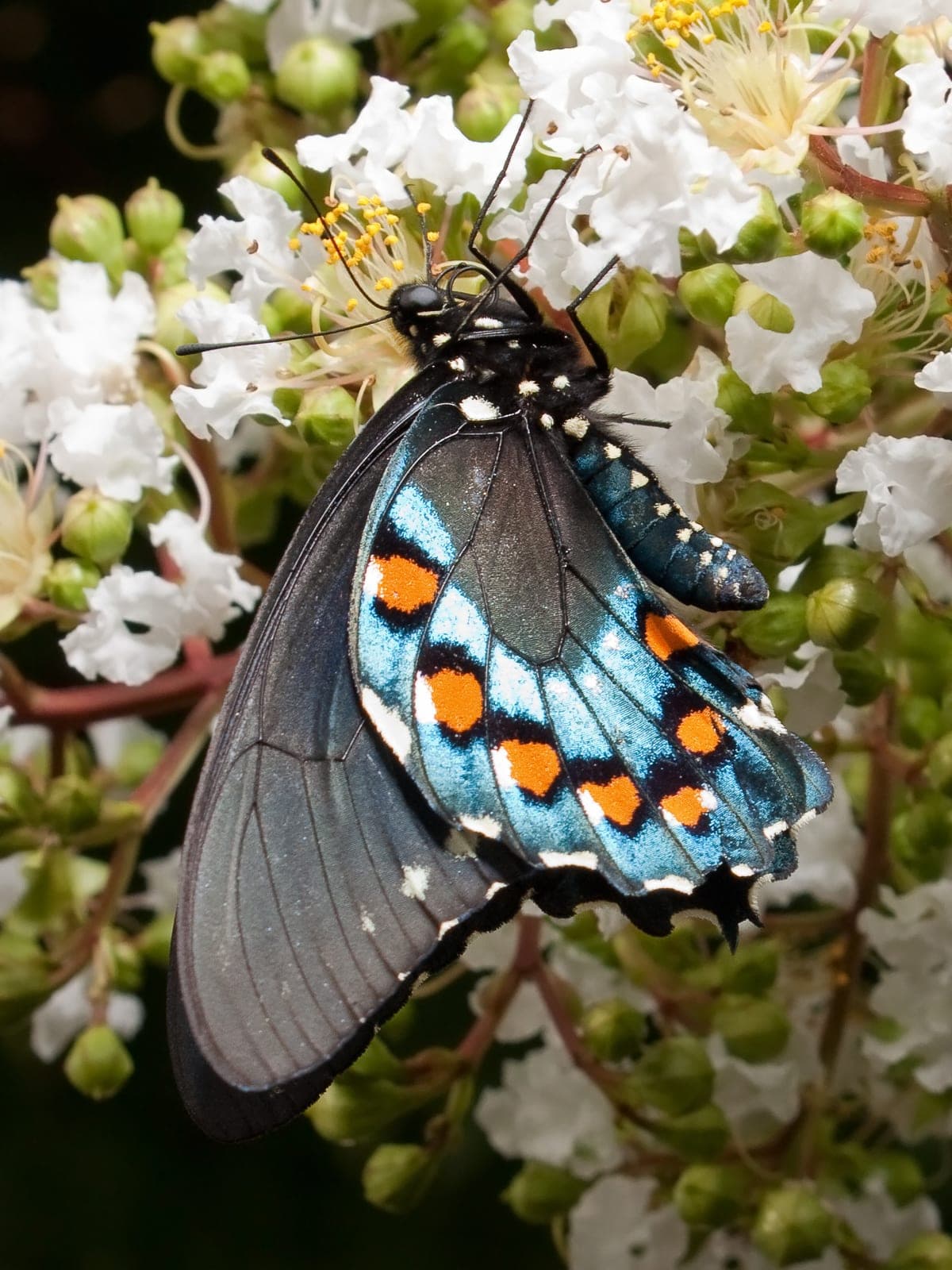
Pipevine Swallowtail
The pipevine swallowtail is a large black butterfly with iridescent blue hindwings, found across North America from southern Canada into Central America. In upstate New York it sits near the northern edge of its range, making it an uncommon but rewarding garden visitor. Gardeners who want to see it reliably need to grow its host plant, Aristolochia, since the caterpillars will not survive on anything else.
Caterpillars feed exclusively on plants in the genus Aristolochia, commonly called pipevine or Dutchman's pipe. As they feed, they sequester aristolochic acids from the plant tissue into their own bodies. Those toxins carry through metamorphosis into the adult butterfly, making pipevine swallowtails unpalatable to most predators. This chemical defense is so effective that several unrelated butterfly species, including the spicebush swallowtail and the red-spotted purple, have evolved to mimic the pipevine swallowtail's coloration as protection.
Adults visit a wide range of nectar sources and are capable pollinators. They show a preference for tubular or deep-throated flowers and will readily work phlox, thistle, azalea, and native milkweeds. Because the species produces multiple broods per season in warmer portions of its range, a garden with both host plants and reliable nectar can support adults from late spring well into fall.
Adult pipevine swallowtails are pollinators that visit a broad range of flowering plants while foraging for nectar.
Plant Aristolochia macrophylla (Dutchman's pipe vine) as the primary host plant. This native vine is hardy to Zone 4 and can be trained along a fence or trellis. Supplement with nectar sources known to attract swallowtails: native phlox, milkweed species, Joe Pye weed, and ironweed. Avoid insecticides, particularly broad-spectrum pyrethroids, which kill caterpillars and adults. Any native pipevine works, not just Dutchman's pipe.
A garden near a woodland edge with established Aristolochia vines provides the best conditions. Dense plantings of nectar-rich native perennials extend adult foraging time. Avoid frequent soil disturbance near host plants and eliminate pesticide use in areas where caterpillars are present. Plant hosts and nectar perennials in clumps of several rather than singly, so the butterflies can find them. A few flat stones in full sun give them a place to warm up, and a shallow dish of damp sand or mud gives them water and minerals. Avoid insecticides, organic ones included, because they kill caterpillars along with the pests. Buy by botanical name so you get the native species and not a lookalike.