Miss Willmott's ghost
A silvery, spectral sea holly turns up unbidden in gardens all over England, and the story goes that the woman it is named for put it there herself.
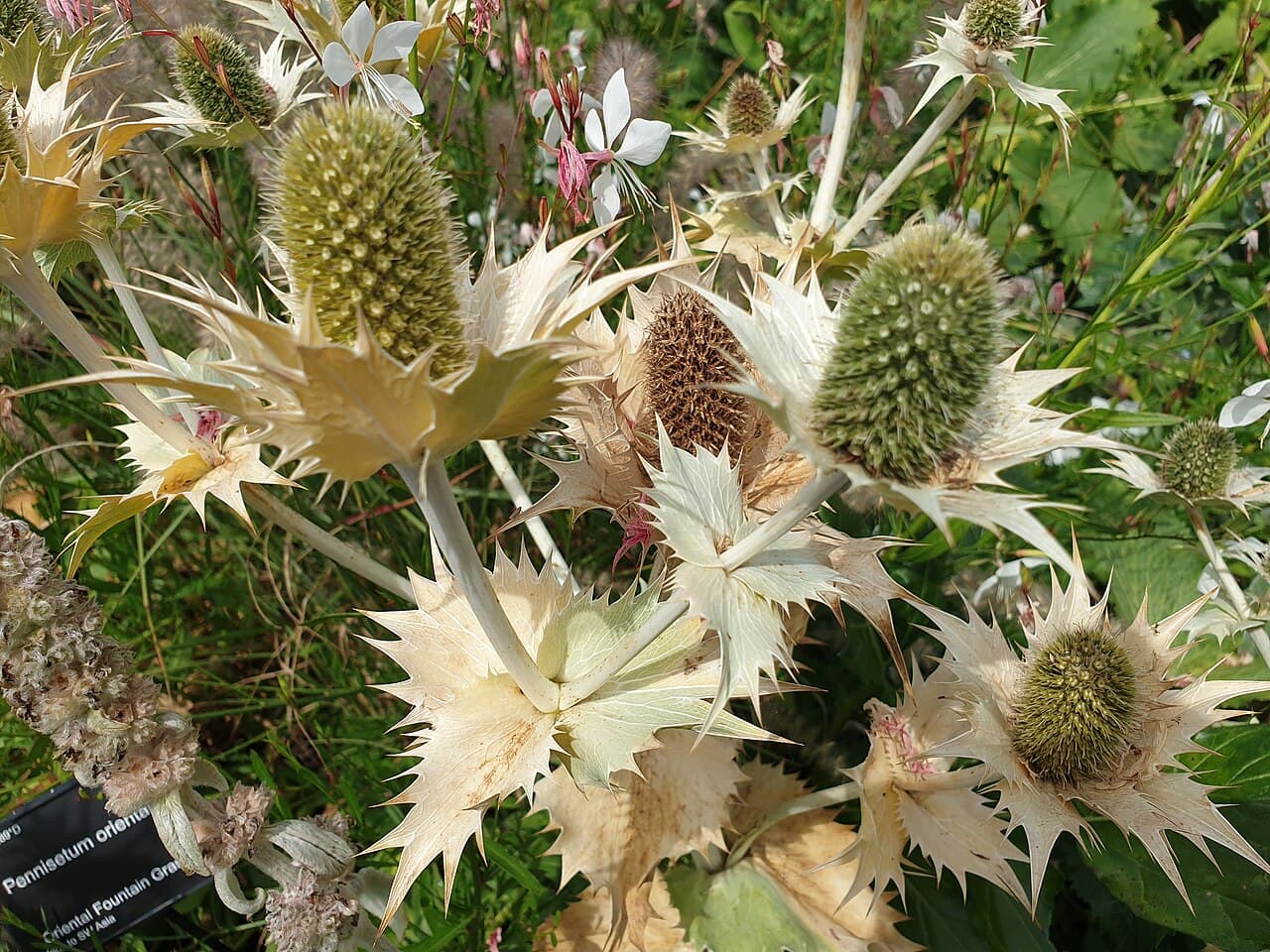
Eryngium giganteum is a strange, luminous thing — a biennial sea holly that throws up branching heads of steely, cone-shaped flowers, each ringed by a ruff of stiff, silver-white bracts that seem to hold their own faint light at dusk. It self-sows freely and turns up where you did not plant it, pale and ghostly among the other flowers, and this is how it came by its common name: Miss Willmott's ghost. The legend is that Ellen Willmott so admired it that she carried its seed in her pockets and scattered it secretly in the borders of gardens she visited, so that weeks later a silver stranger would rise among her host's plants — her calling card. It is a wonderful story. It is almost certainly not true; it appears nowhere until the 1960s, decades after her death, and has no confirmed source. But it has stuck to her the way the plant sticks to a garden, because it fits what people remembered of her.
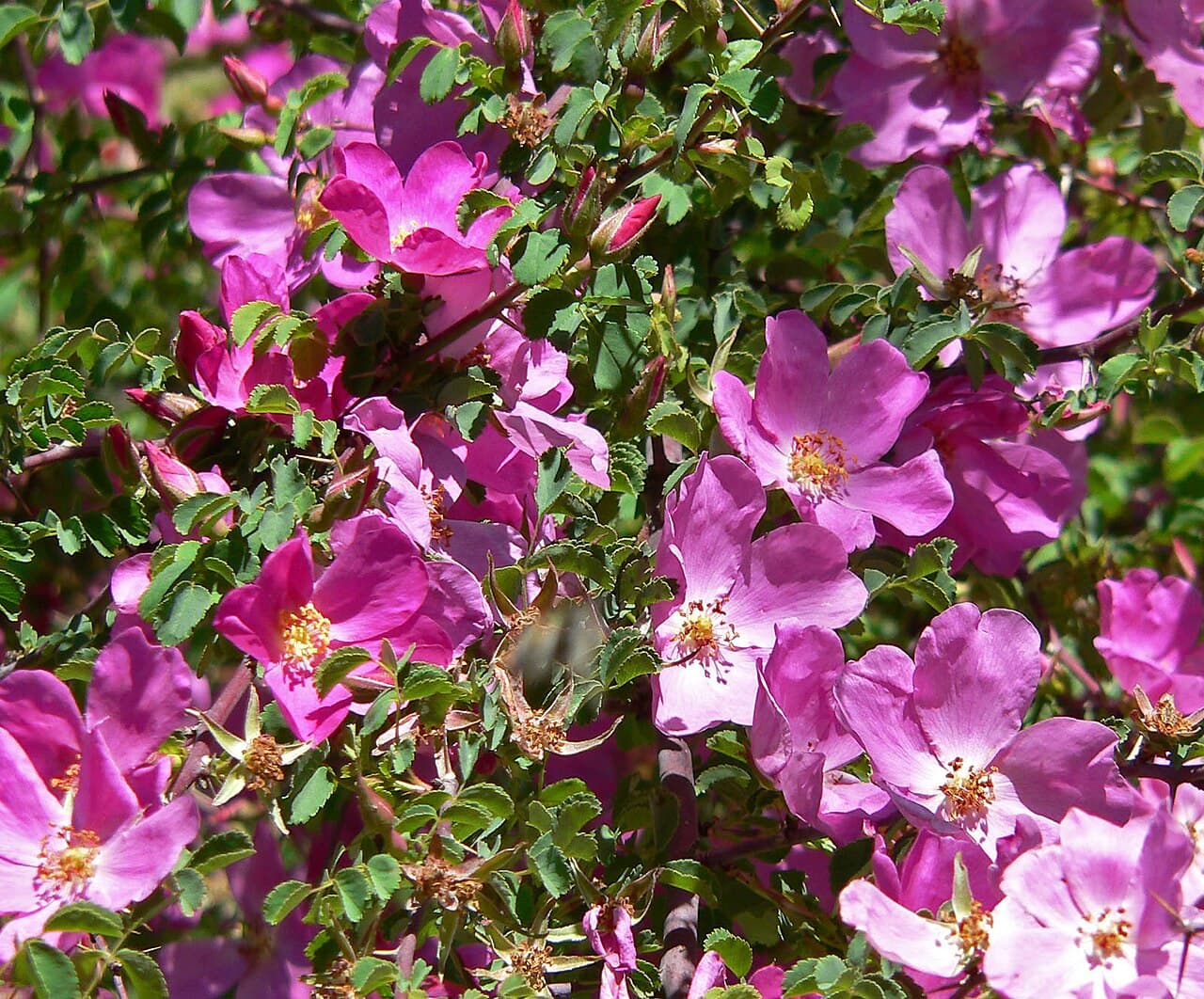
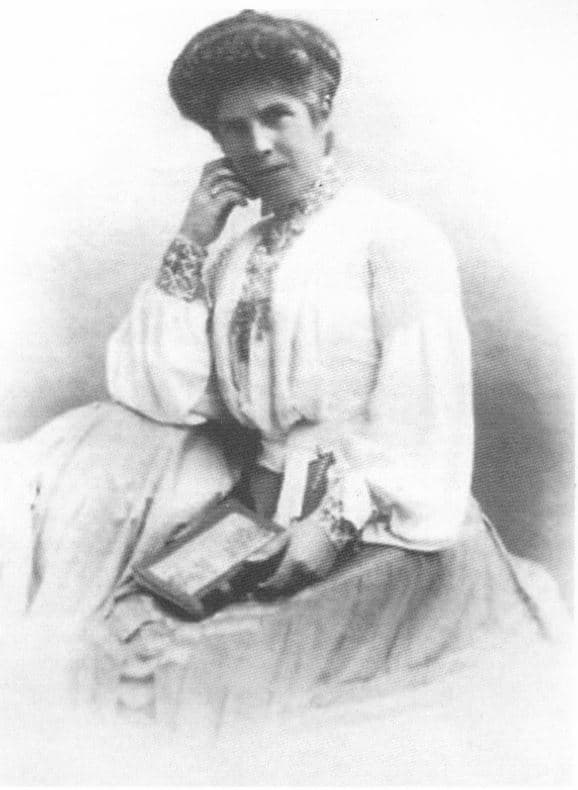
Ellen Willmott was one of the great horticulturists of her age. In 1897 she and Gertrude Jekyll became the first two women to receive the Royal Horticultural Society's Victoria Medal of Honour, its highest award. A large inheritance let her give her whole life to plants, and she gave it lavishly: at Warley Place in Essex she employed as many as a hundred and four gardeners, and kept two more gardens besides, one in France and one in Italy, so that she gardened across three countries at once. She grew something like a hundred thousand kinds of plant, financed the great plant-hunter Ernest Wilson's expeditions to China, hybridised narcissus, wrote a scholarly two-volume study of the genus Rosa, and photographed her borders with a large-format camera reportedly carried behind her by a footman. More than sixty plants — some say two hundred — still bear her name or Warley's: willmottiae, warleyensis, scattered through the catalogues.
Willmott lived entirely on her own terms, in an age with little patience for a woman who did. She never married and answered to no one; her fortune and her whole attention went to plants rather than to a household, and she ran three great gardens and a hundred gardeners with an exacting eye that brooked no carelessness. She defended her life's work by her own hand, too — she kept a revolver, and she booby-trapped the beds of her rarest bulbs against the thieves who came for them. It is tempting to call this eccentric; it is nearer the truth to call it the resolve of a woman who had built something extraordinary and would let no one help themselves to it. She was ahead of her time, and she plainly knew it.
I think of all this when the sea holly comes up unbidden in a corner of the garden, silver and unasked for. Whether or not she ever really scattered its seed, it is a fitting monument — a plant that will not stay where it is put, that outlives the gardener and keeps arriving, uninvited and unmistakable, long after the medals and the hundred gardeners and the three great gardens are gone. If you want your own ghost, sow it fresh in summer and let it go to seed; it wants sharp drainage and full sun and, once it has decided to stay, no help from you at all.