
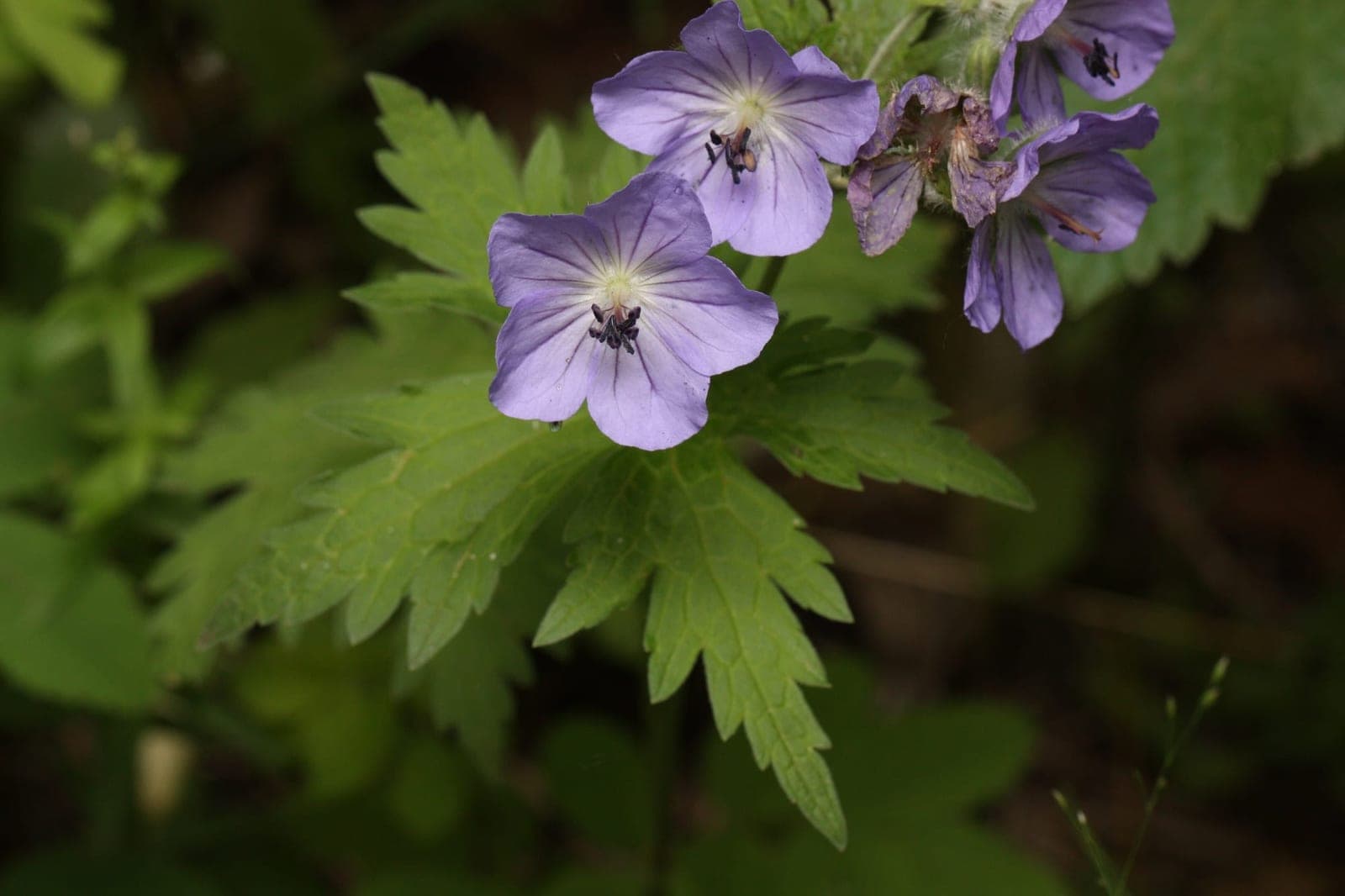
Geranium erianthum is a cold-hardy native perennial found across Alaska, the Pacific Northwest, northern Russia, Japan, and China. It produces blue-violet flowers with darker vein patterning over deeply divided, densely hairy leaves from late spring into summer. The pubescence on stems and leaves is the trait that gives the plant its common name and distinguishes it from related species. It is one of the few ornamental perennials that performs reliably in zones 2 and 3, where garden options are limited, and it draws native bees and bumblebees consistently.
In the wild it grows in meadows, open forest edges, and roadsides from coastal lowlands to subalpine elevations. In gardens it establishes readily in moist, well-drained soil and tolerates partial shade under a light canopy. It spreads slowly by rhizome and self-seeds at a manageable rate. Clumps can be divided every three to four years to maintain vigor. In the coldest zones a light mulch applied after the ground freezes helps protect shallow roots through freeze-thaw cycles.
Ecoregions:TundraNorthwestern Forested MountainsMarine West Coast Forest
Powdery mildew
White or grey powdery coating on leaves - usually starting on older growth in humid conditions or when nights cool.
Improve air circulation by thinning plants. Apply neem oil or potassium bicarbonate spray at first sign. Avoid overhead watering.
Fungal leaf spot
Brown or purplish spots on the leaves, often ringed with a yellow halo, that spread and merge in warm, humid, or wet weather; heavily spotted leaves yellow and drop early.
Pick off spotted leaves and clear fallen debris to remove overwintering spores. Improve air circulation by thinning, and water at the base so foliage dries quickly. If it persists, apply a copper- or sulfur-based fungicide at the first sign.
Botrytis (grey mould)
Grey fuzzy mould on petals and stems, worst in cool wet conditions.
Remove affected parts immediately. Improve air circulation. Avoid overhead watering. Apply copper fungicide if severe.