
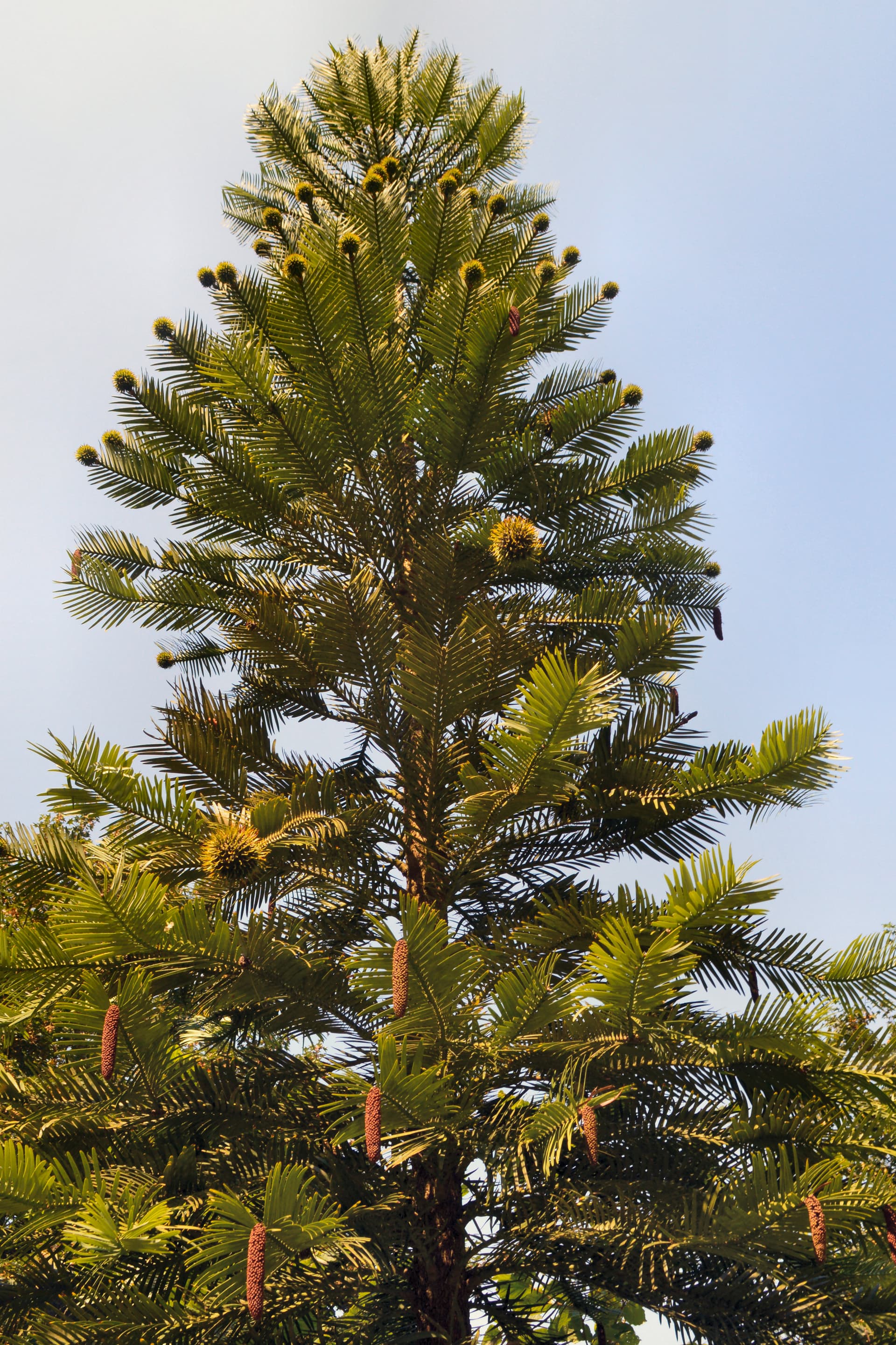
Wollemia nobilis is a conifer known only from fossils until 1994, when a small wild population was found growing in sandstone gorges in Wollemi National Park, 150 km northwest of Sydney. Fewer than 100 mature trees exist in the wild. It belongs to Araucariaceae, a family tracing back to the Triassic, and is the sole species in its genus. For gardeners in zones 9–11, it is among the most historically significant specimen trees available in cultivation.
In gardens it is slow-growing, typically reaching 15–30 ft over many decades, though wild trees exceed 100 ft. The bark is dark and knobbly, widely compared to bubble wrap, and the foliage is flat and fern-like with a naturally tiered, layered habit. Trees are multi-stemmed and produce both male and female cones. Given shelter from desiccating wind, adequate drainage, and consistent moisture, Wollemi pines establish reliably across a range of garden soils. Container cultivation is viable for many years. In its native gorges, soils are sandstone-derived, acidic, and free-draining - replicating those conditions improves establishment.
The wild location was kept secret until 2000; seeds were released commercially in 2005 to reduce poaching pressure and ensure genetic material existed outside the single known wild site. Phytophthora root rot is among the primary documented biosecurity threats to the wild population, and access to the site remains restricted for that reason.
Phytophthora Root Rot
Wilting despite moist soil, yellowing leaves, stunted growth, and dark, decayed roots and crown tissue. Vines may collapse during hot weather.
Plant in well-draining soil and avoid waterlogging. Remove and destroy affected vines. Improve drainage with raised beds or amended soil and avoid overwatering.
Root rot
Plants wilt, yellow, and stunt even in moist soil; lower stems and roots turn brown, soft, and mushy and the plant may collapse. Most common in heavy, wet, or poorly drained ground.
Improve drainage and stop overwatering, and never plant too deep. Lift and destroy badly affected plants along with the soil around the roots. Grow in raised or free-draining beds to prevent it returning.