
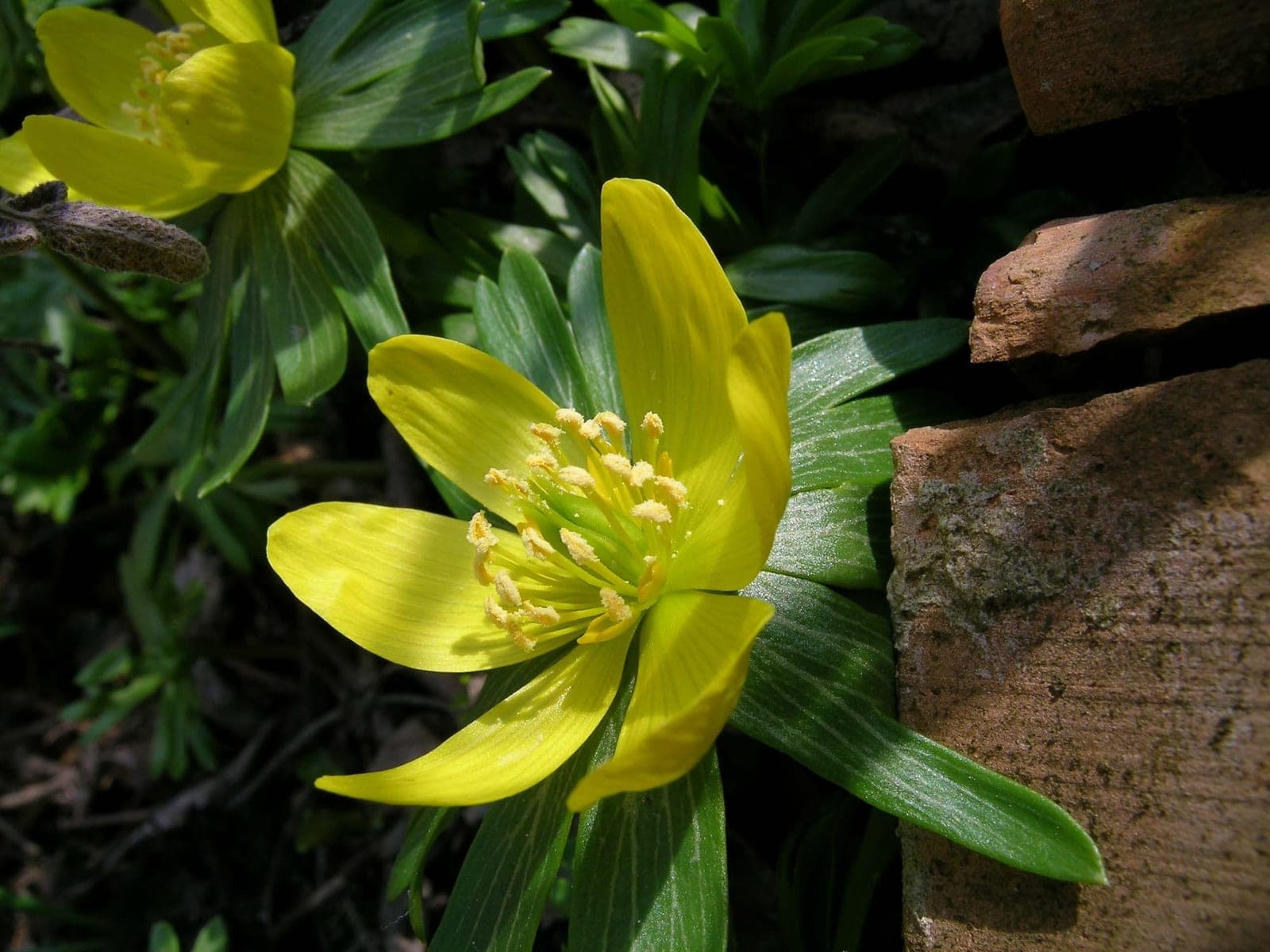
Winter aconite is a small tuberous perennial in the buttercup family, native to calcareous woodland in France, Italy, and the Balkans. It is among the first plants to flower each year, often producing bright yellow cups surrounded by a green leaf-like ruff while the ground is still frozen or snow-covered. In favorable spots under deciduous trees it naturalizes over time into dense golden carpets.
Tubers are small, knobby, and prone to desiccation; soaking them overnight in lukewarm water before fall planting dramatically improves establishment rates. Eranthis thrives in alkaline to neutral soils rich in humus, with consistent moisture during its brief winter-spring growing season and tolerance of dry conditions during summer dormancy. Once a colony is established, plants self-seed freely and spread without intervention. Top-dressing with leaf mold after foliage dies back maintains soil humus and marks the planting zone to prevent accidental summer disturbance.
The early flowers are a valuable pollen and nectar source for emerging queen bumblebees and other cold-tolerant pollinators when few other plants are in bloom. All parts of the plant are toxic, like most of the buttercup family, and deer, rabbits and rodents leave the tubers alone. The flowers have a faint honey scent that animals pay no attention to; the protection is chemical.
Botrytis (grey mould)
Grey fuzzy mould on petals and stems, worst in cool wet conditions.
Remove affected parts immediately. Improve air circulation. Avoid overhead watering. Apply copper fungicide if severe.
Crown Rot
Lower leaves yellow and wilt; the base of the rosette turns brown and soft, sometimes with white fungal threads at the soil line. Plants collapse in wet conditions.
Remove and destroy affected plants. Improve drainage and avoid overhead watering. Do not mulch directly against the crown. Space plants for airflow and avoid replanting in the same wet spot.
Damping Off
Seedlings collapse at the soil line with thin, water-soaked stems; seeds may fail to emerge or rot before sprouting.
Sow in well-draining mix, avoid overwatering, and ensure good airflow. Remove affected seedlings and let the surface dry between waterings.