
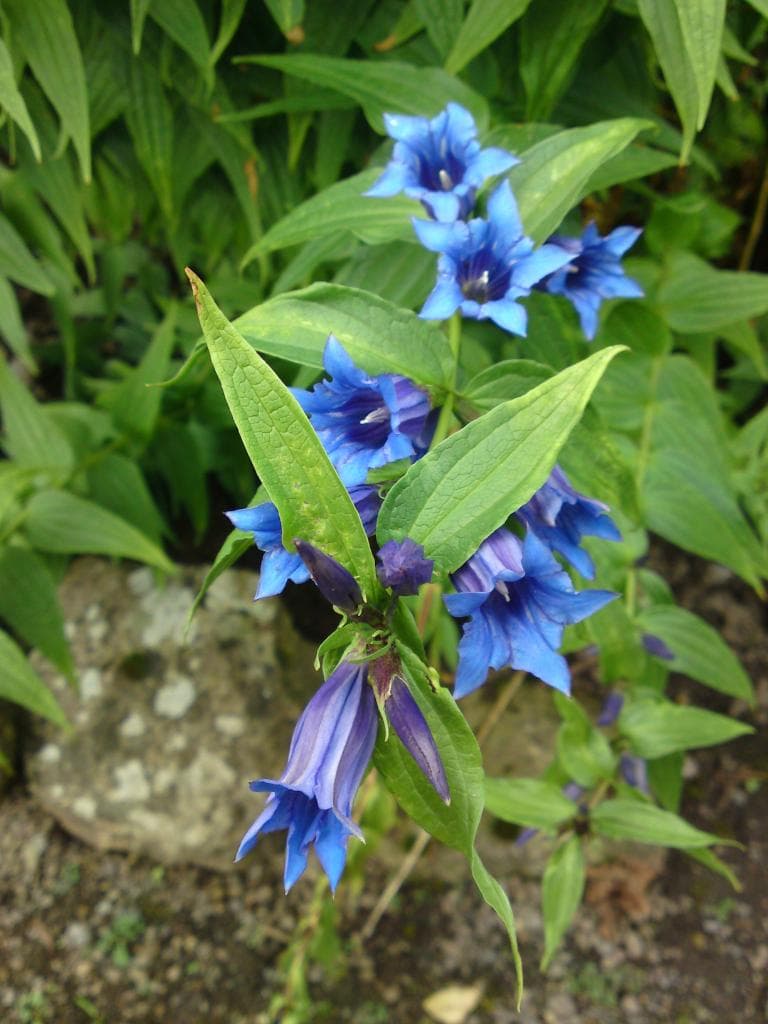
Gentiana asclepiadea is a European montane perennial valued for its arching stems lined with willow-shaped leaves and paired, deep blue to violet tubular flowers that open from late summer into fall - a period when blue-flowering perennials are rare. Plants reach 18–36 inches and are very long-lived where conditions suit them.
Native to montane woodland edges and clearings in central and eastern Europe, it performs best in cool, slightly acidic to neutral, humus-rich soil with consistent moisture and dappled shade. It struggles through hot, dry summers and is best suited to Pacific Northwest, upper Midwest, and northeastern gardens. Established plants resent division and transplanting; propagate by seed or allow self-seeding. A deep organic mulch stabilizes moisture and temperature at the root zone.
The narrow, tubular flowers are accessible only to long-tongued bumblebees, making willow gentian a valuable late-season nectar source when few other plants are still in flower.
Crown Rot
Lower leaves yellow and wilt; the base of the rosette turns brown and soft, sometimes with white fungal threads at the soil line. Plants collapse in wet conditions.
Remove and destroy affected plants. Improve drainage and avoid overhead watering. Do not mulch directly against the crown. Space plants for airflow and avoid replanting in the same wet spot.
Root rot
Plants wilt, yellow, and stunt even in moist soil; lower stems and roots turn brown, soft, and mushy and the plant may collapse. Most common in heavy, wet, or poorly drained ground.
Improve drainage and stop overwatering, and never plant too deep. Lift and destroy badly affected plants along with the soil around the roots. Grow in raised or free-draining beds to prevent it returning.
Botrytis (grey mould)
Grey fuzzy mould on petals and stems, worst in cool wet conditions.
Remove affected parts immediately. Improve air circulation. Avoid overhead watering. Apply copper fungicide if severe.
Fungal leaf spot
Brown or purplish spots on the leaves, often ringed with a yellow halo, that spread and merge in warm, humid, or wet weather; heavily spotted leaves yellow and drop early.
Pick off spotted leaves and clear fallen debris to remove overwintering spores. Improve air circulation by thinning, and water at the base so foliage dries quickly. If it persists, apply a copper- or sulfur-based fungicide at the first sign.