
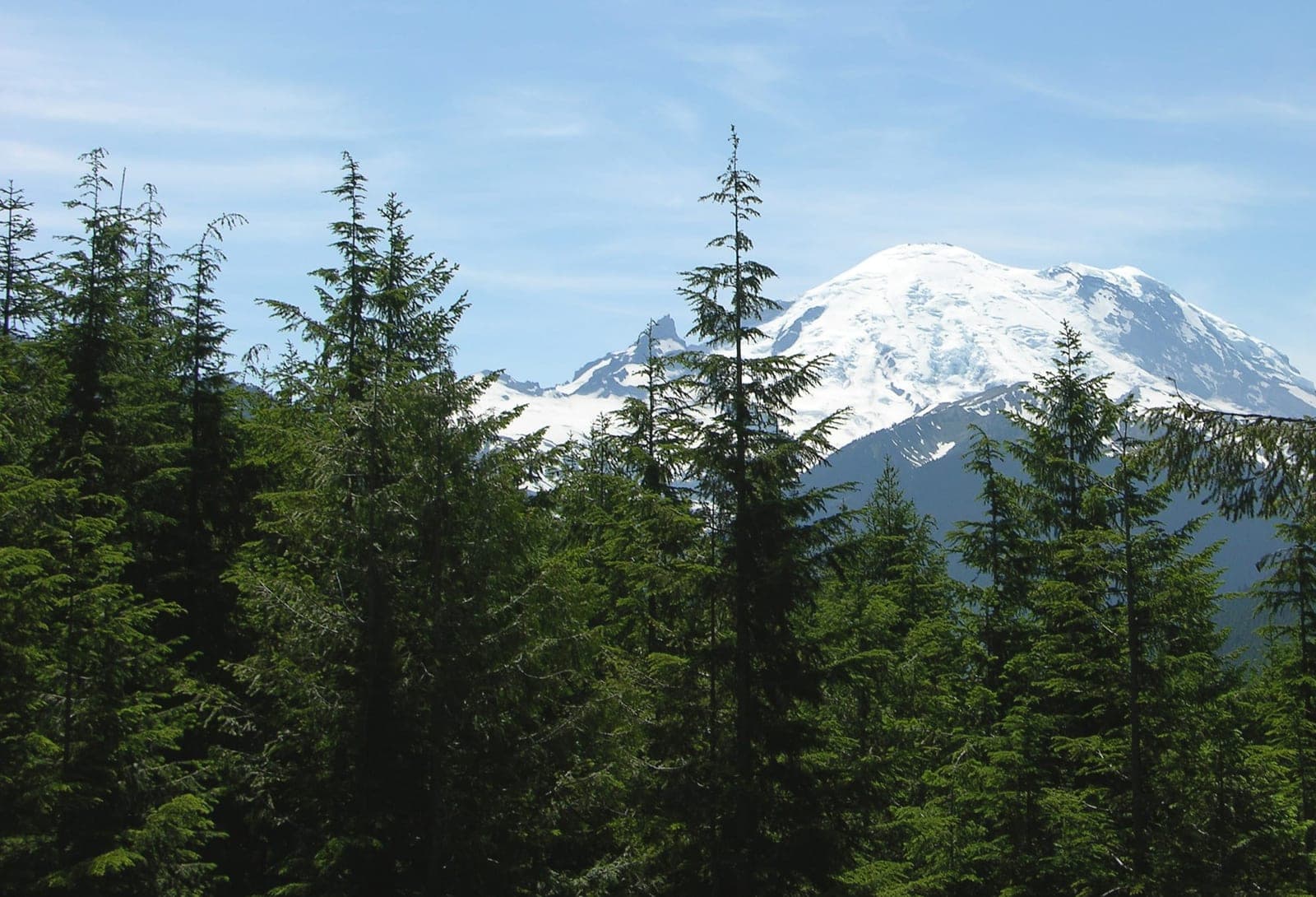
Western hemlock (Tsuga heterophylla) is the dominant conifer of Pacific Northwest coastal rainforests and the state tree of Washington. It grows to 70 m or more in the wild, identified by a drooping terminal leader and needles that vary noticeably in length along the same shoot. In home landscapes it functions as a large specimen, windbreak, or dense evergreen screen, tolerating more shade than almost any other conifer in its range.
It requires cool, consistently moist conditions and acidic, humus-rich soil. Highly shade-tolerant, it germinates and establishes readily under a closed canopy and frequently colonizes nurse logs in nature. Poorly drained or drought-prone sites cause rapid decline. A deep wood-chip mulch layer helps retain soil moisture and moderate root-zone temperature. In zones 6–8b it is reliably cold-hardy but shows visible stress during prolonged summer drought.
Indigenous peoples of the Pacific Northwest ate the inner bark (cambium) fresh in spring or dried it into cakes. The bark's exceptional tannin content made this species a major commercial source of vegetable tannin for the leather industry into the early twentieth century; bark tannin was also applied externally for wound healing and skin ailments.
Ecoregions:Northwestern Forested MountainsMarine West Coast Forest
Armillaria Root Rot
Thinning, yellowing canopy with progressive dieback; white, fan-shaped mycelial mats visible beneath bark at or just below the soil line; honey-colored mushroom clusters appearing at the trunk base or on surface roots in autumn.
No chemical cure exists. Improve drainage and avoid any injury to roots or trunk. Remove severely infected trees along with as much root material as possible. Do not replant susceptible species in the same spot.
Phytophthora Root Rot
Wilting despite moist soil, yellowing leaves, stunted growth, and dark, decayed roots and crown tissue. Vines may collapse during hot weather.
Plant in well-draining soil and avoid waterlogging. Remove and destroy affected vines. Improve drainage with raised beds or amended soil and avoid overwatering.