
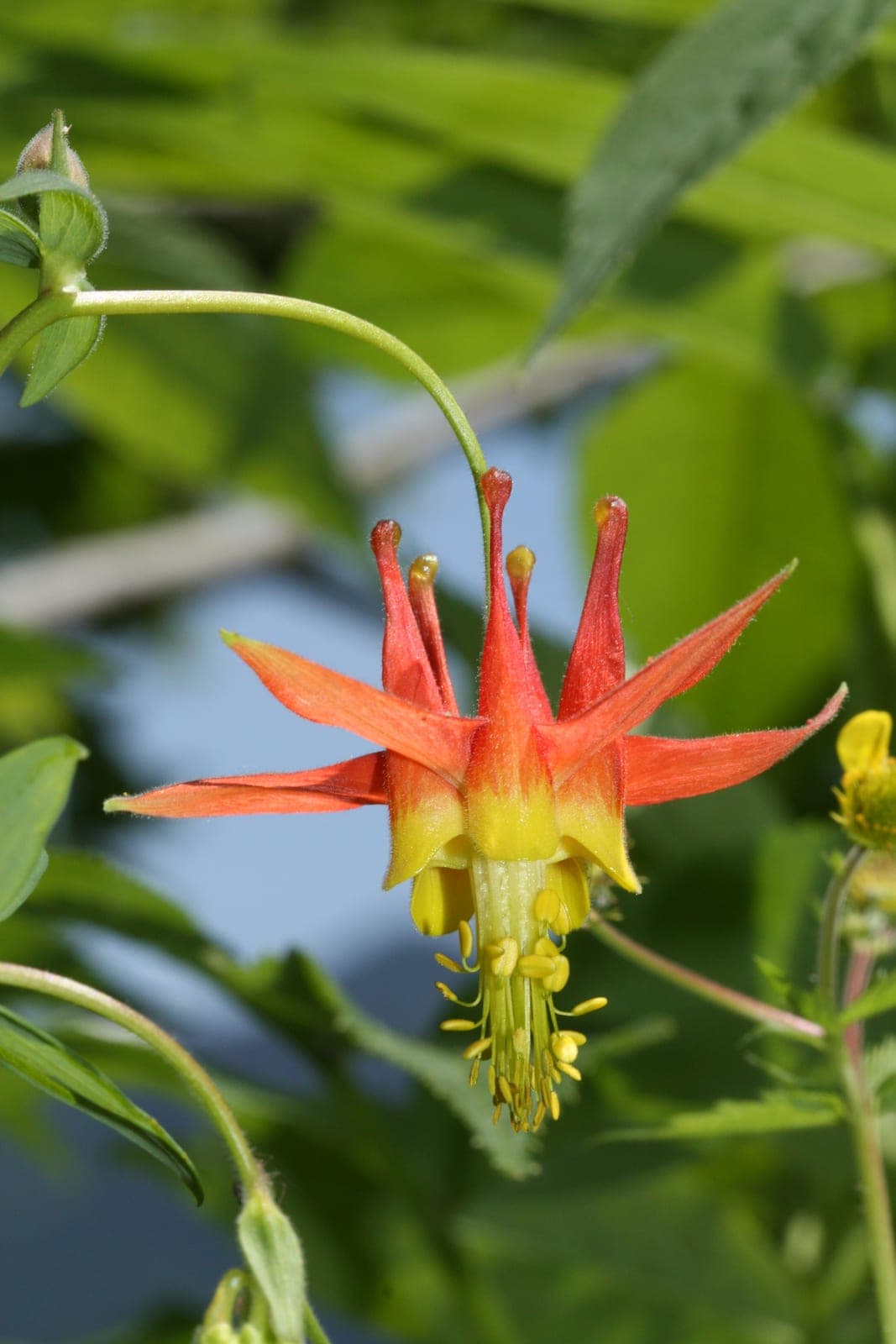
Aquilegia formosa is a native wildflower of western North America, ranging from Alaska to Baja California and east into Montana and Wyoming. It produces nodding red and yellow flowers with long backward-projecting nectar spurs from late spring through midsummer. The species is an important nectar source for rufous and Allen's hummingbirds and several long-tongued native bees, making it well suited to wildlife-focused gardens throughout its range.
Western columbine is short-lived, typically persisting three to five years, but self-seeds freely in loose, moderately moist soil. It performs best in partial shade in the warmer parts of its range and tolerates full sun where summers stay cool. Native to open woods, stream banks, and rocky slopes up to subalpine elevations, it thrives with consistent moisture and a light organic mulch to keep roots cool. Leaf miners commonly disfigure foliage by midsummer; cutting plants to the base after seed set produces clean new basal growth and reduces miner pressure the following season. Avoid heavy nitrogen fertilization, which promotes dense, lush growth most susceptible to powdery mildew.
Several Indigenous peoples of western North America, including the Ohlone and Nlaka'pamux, used parts of Aquilegia formosa in traditional practice for fever and skin complaints. The seeds and roots contain toxic alkaloids including magnoflorine and berberine; internal use outside of traditional preparation is not safe.
Ecoregions:Northwestern Forested MountainsMarine West Coast ForestNorth American DesertsMediterranean California
Powdery mildew
White or grey powdery coating on leaves - usually starting on older growth in humid conditions or when nights cool.
Improve air circulation by thinning plants. Apply neem oil or potassium bicarbonate spray at first sign. Avoid overhead watering.
Crown Rot
Lower leaves yellow and wilt; the base of the rosette turns brown and soft, sometimes with white fungal threads at the soil line. Plants collapse in wet conditions.
Remove and destroy affected plants. Improve drainage and avoid overhead watering. Do not mulch directly against the crown. Space plants for airflow and avoid replanting in the same wet spot.
Rust
Orange to brown raised pustules on the undersides of leaves, with yellow spotting on the upper surface. Heavy infections cause leaves to yellow and drop.
Remove and destroy infected leaves. Avoid overhead watering and improve air circulation. Apply a sulfur or copper-based fungicide if it spreads. Clear plant debris in fall.