
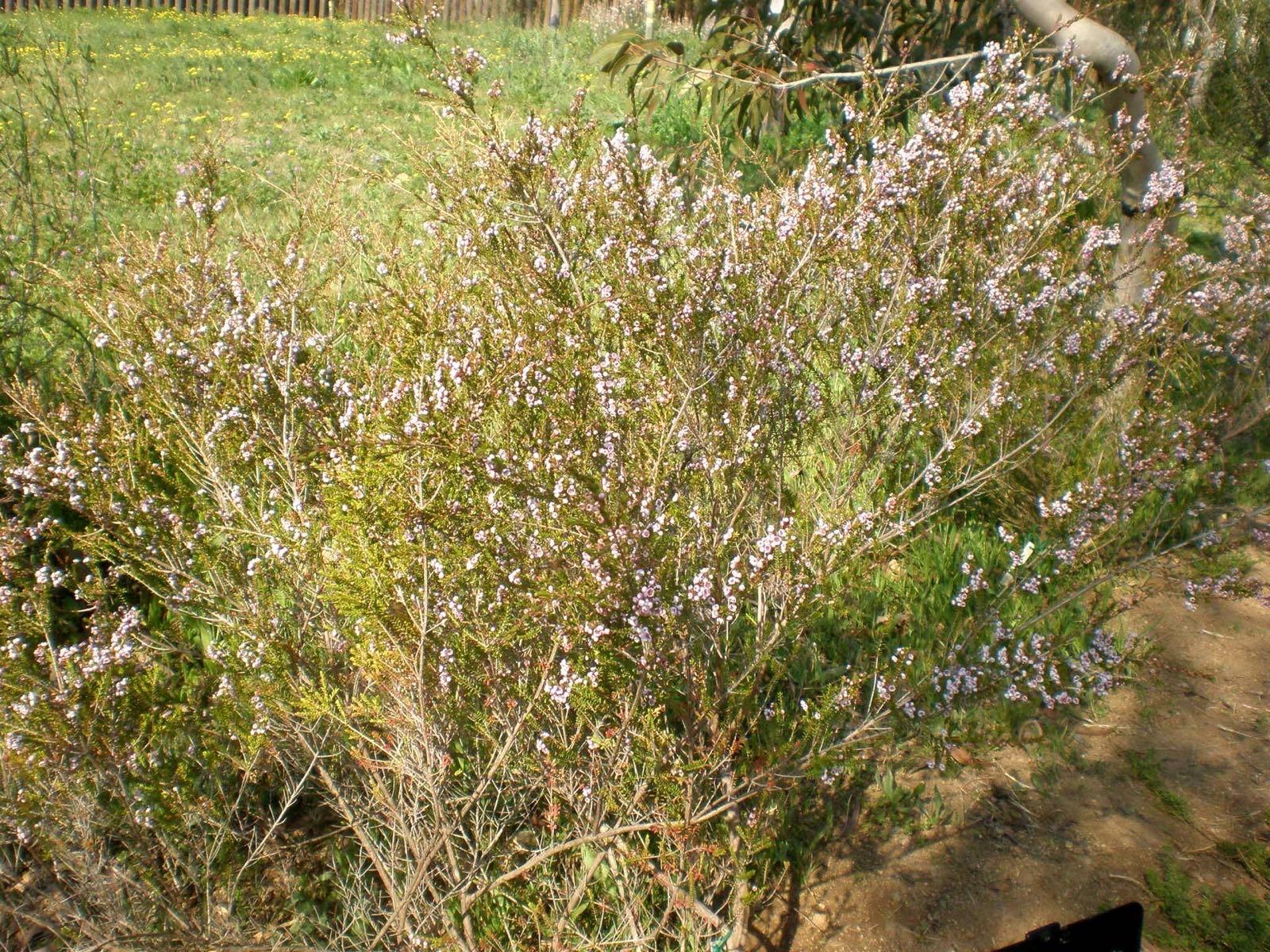
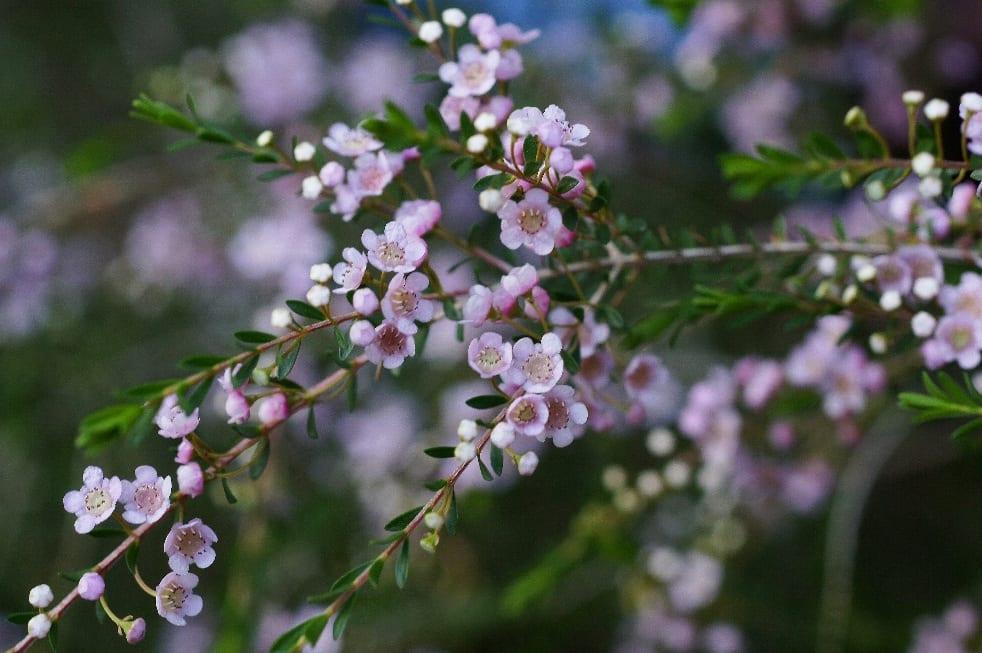
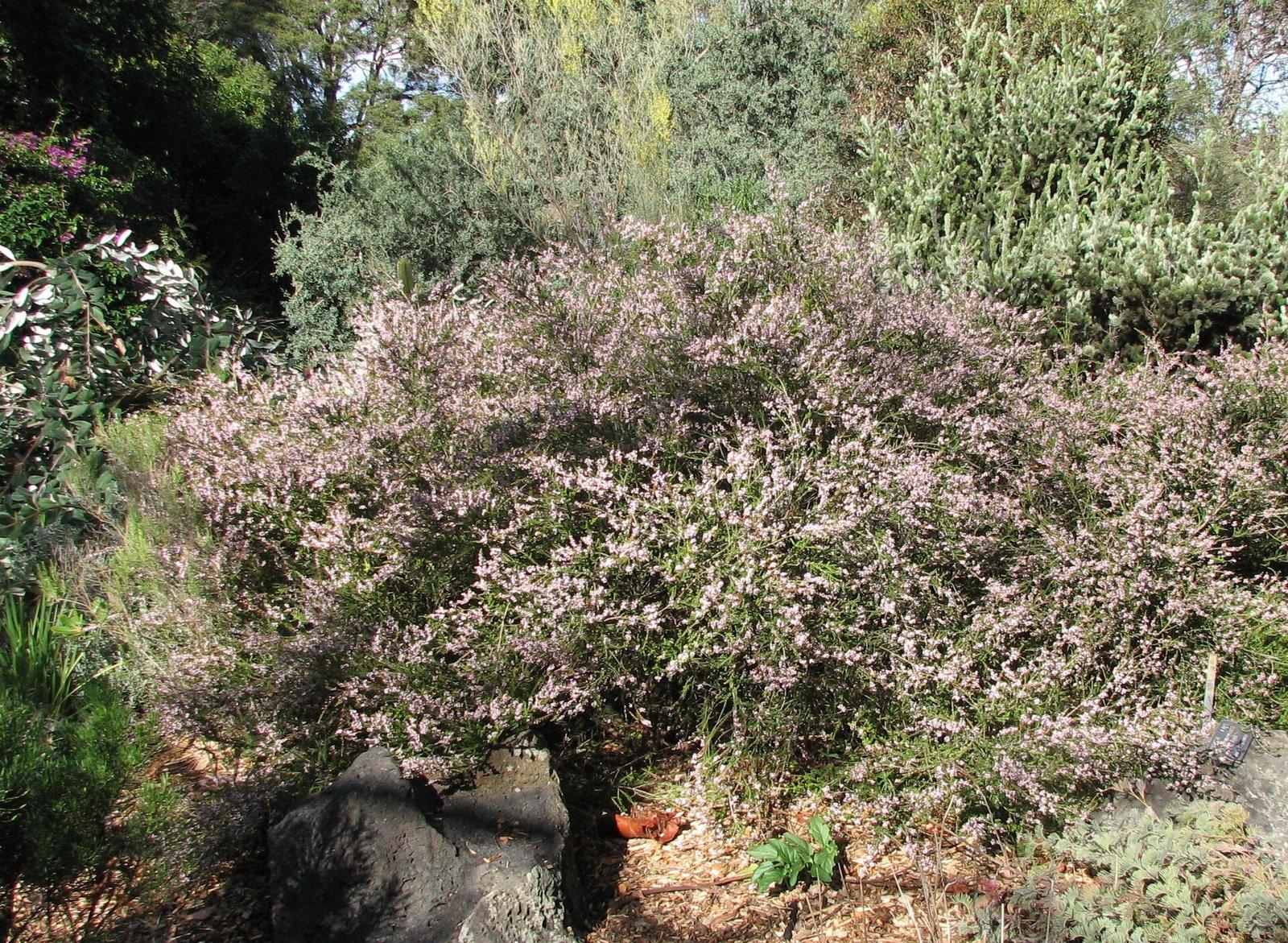
 'Payne's Hybrid' (also sold as 'F.C. Payne') - a dense, wide-spreading form smothered in pale pink flowers. Photo: Melburnian, CC BY-SA 3.0.
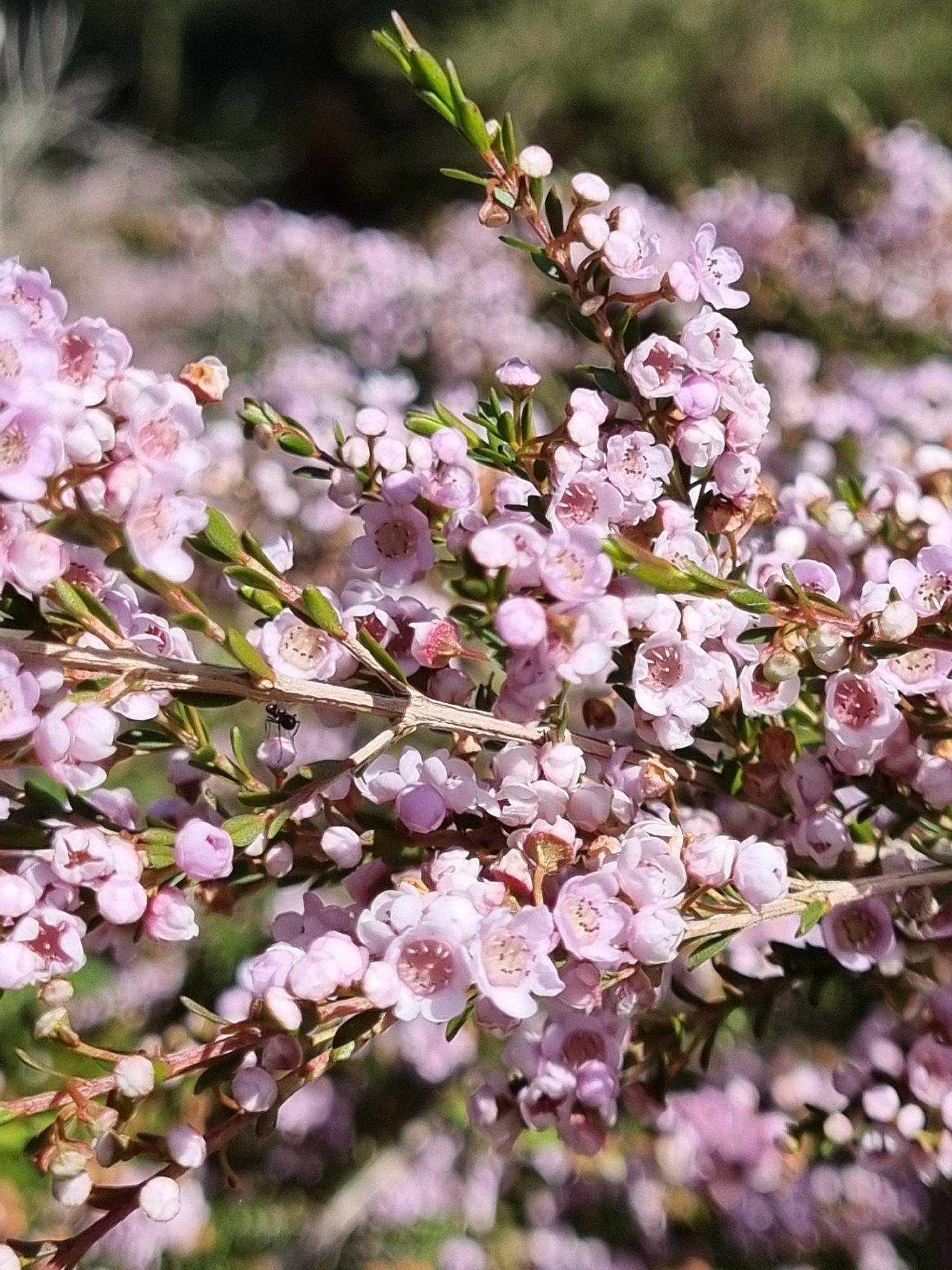 'Supernova' - larger pink-centred flowers packed along the arching stems. Photo: Elaine Fieth, CC BY 4.0.
Rock thryptomene is a low, spreading shrub native to rocky outcrops and sandy heathlands of southwest Western Australia, where it belongs to the Myrtaceae family. It produces masses of small pale pink flowers along arching stems from late winter through spring, making it one of the more floriferous Australian natives suited to warm-climate gardens. It is sold both as the straight species and under the trade name 'Payne's Hybrid', sometimes listed as Thryptomene paynei.
It thrives in full sun to part shade with excellent drainage and very low irrigation once established, reflecting its Mediterranean-climate origin. It tolerates sandy and gravelly soils but resents clay or waterlogged conditions. Keep soil pH slightly acidic to neutral and mulch lightly to conserve moisture without trapping humidity at the crown. Light pruning after the main flowering period keeps growth compact and encourages the following season's display; avoid cutting into old, leafless wood.
The delicate sprays of tiny five-petaled flowers are valued by the cut flower industry as a long-lasting filler material in arrangements, a commercial role that has driven its wider cultivation outside its native range.
These dates are for Zone 6b. Enter your ZIP to time every job to your own frost dates.
- buy · Feb 13 - Feb 27Buy plants - about two months before planting out
- cut · Apr 17 - May 8Prune by up to a third after flowering, or cut sprays for the vase, to keep the arching habit dense
- plant · Apr 24 - May 8Plant container-grown stock after last frost in a sunny, sharply drained site
- plant · Aug 21 - Sep 18Take semi-hardwood cuttings from the current season's growth to propagate
- watch · Oct 16In containers or marginal sites, move under cover or fleece before the first hard frost
Problems & troubleshooting
Common problems
Myrtle Rust
Bright yellow-orange powdery pustules erupt on young shoots, leaves, and buds. Heavily infected growing tips become distorted, stunted, or killed. Older leaves develop smaller, darker brown pustules as infection matures.
Remove and destroy infected plant material immediately. Apply fungicides containing myclobutanil or mancozeb at first appearance of pustules and repeat on label schedule. Avoid overhead irrigation. Monitor new growth closely during warm, humid weather, when the pathogen spreads most rapidly.
Phytophthora Root Rot
Wilting despite moist soil, yellowing leaves, stunted growth, and dark, decayed roots and crown tissue. Vines may collapse during hot weather.
Plant in well-draining soil and avoid waterlogging. Remove and destroy affected vines. Improve drainage with raised beds or amended soil and avoid overwatering.