
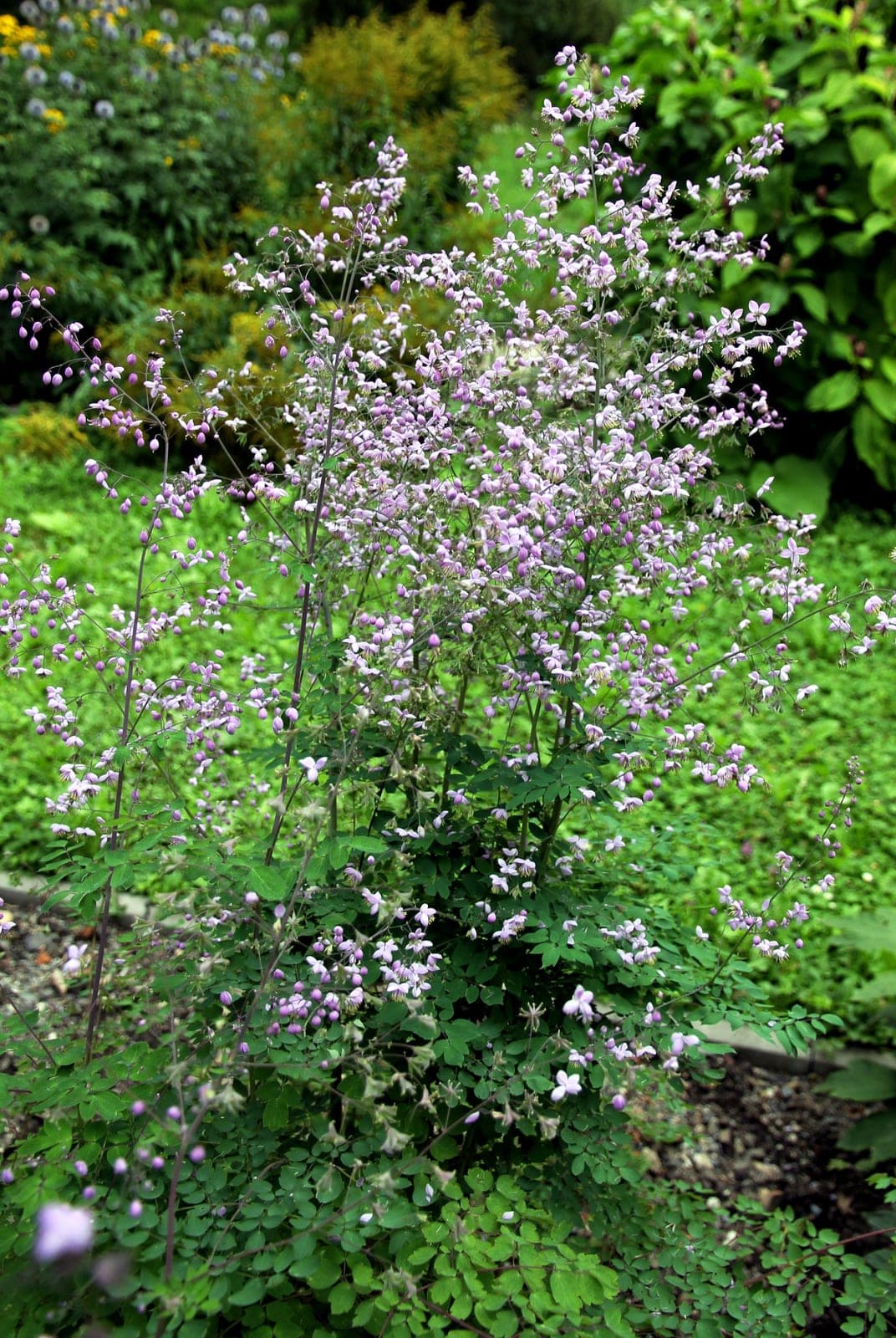
Thalictrum delavayi is a tall herbaceous perennial native to western China, grown for its midsummer panicles of lilac-mauve flowers with contrasting creamy stamens and finely divided, maidenhair-like foliage. Reaching up to 4 ft, it adds vertical structure to the middle or back of a border without visual heaviness. The cultivar 'Hewitt's Double' produces fully double, pompon-like flowers that hold longer on the plant than the species.
Give it moist, humus-rich soil in dappled shade or a sheltered position in full sun where summers are cool. In warmer parts of its range, midday shade reduces stem wilt and extends the season. Tall stems can flop without support; place ring stakes around emerging clumps in spring before growth becomes unmanageable. Established plants self-seed freely; transplant seedlings while small or deadhead to limit spread.
Powdery mildew
White or grey powdery coating on leaves - usually starting on older growth in humid conditions or when nights cool.
Improve air circulation by thinning plants. Apply neem oil or potassium bicarbonate spray at first sign. Avoid overhead watering.
Rust
Orange to brown raised pustules on the undersides of leaves, with yellow spotting on the upper surface. Heavy infections cause leaves to yellow and drop.
Remove and destroy infected leaves. Avoid overhead watering and improve air circulation. Apply a sulfur or copper-based fungicide if it spreads. Clear plant debris in fall.
Fungal leaf spot
Brown or purplish spots on the leaves, often ringed with a yellow halo, that spread and merge in warm, humid, or wet weather; heavily spotted leaves yellow and drop early.
Pick off spotted leaves and clear fallen debris to remove overwintering spores. Improve air circulation by thinning, and water at the base so foliage dries quickly. If it persists, apply a copper- or sulfur-based fungicide at the first sign.