
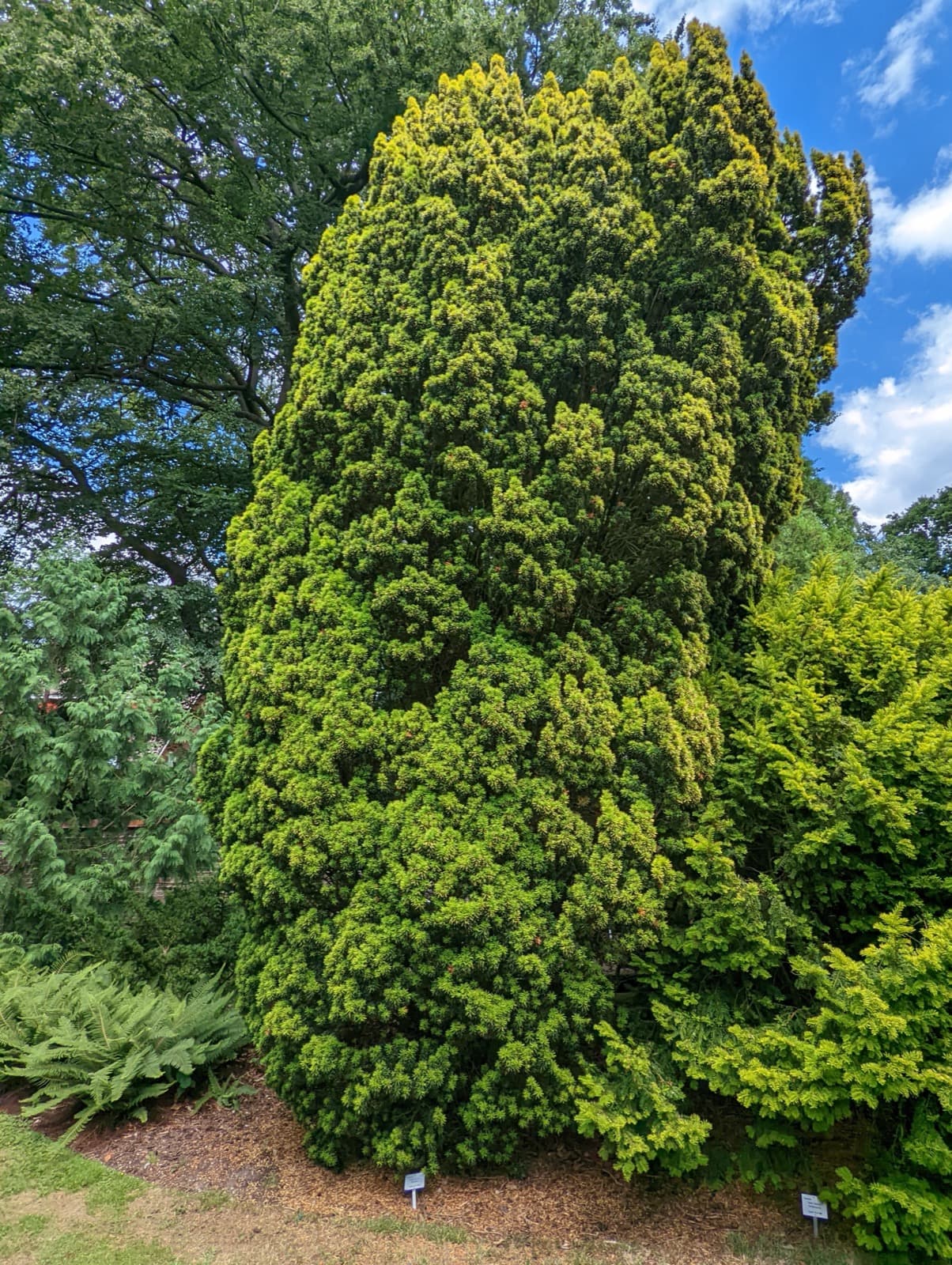
Taxus baccata 'Standishii' is a slow-growing female cultivar of English yew with a strict columnar habit and bright golden-yellow foliage. The narrow, upright form provides strong vertical structure in confined spaces and reads well year-round as an evergreen. Foliage color is most intense in full sun and fades toward yellow-green in shadier positions.
Growth rate is roughly 2–3 inches per year, typically reaching 5–6 feet in 20 years and potentially exceeding 10 feet over several decades. The species is extraordinarily long-lived. Preferred soil pH is 5.5–7.0; good drainage is essential, as prolonged saturation causes fatal root rot. A 2–3 inch mulch layer helps stabilize soil moisture and temperature. Female plants produce small red arils in autumn that are attractive to birds. All parts - bark, foliage, and seeds - are highly toxic to humans and most livestock; only the fleshy aril wall is non-toxic. The plant tolerates hard pruning and is well suited to formal topiary.
Paclitaxel (Taxol), derived from Taxus bark, is a clinically established chemotherapy compound used against ovarian, breast, and lung cancers.
Phytophthora Root Rot
Wilting despite moist soil, yellowing leaves, stunted growth, and dark, decayed roots and crown tissue. Vines may collapse during hot weather.
Plant in well-draining soil and avoid waterlogging. Remove and destroy affected vines. Improve drainage with raised beds or amended soil and avoid overwatering.
Root rot
Plants wilt, yellow, and stunt even in moist soil; lower stems and roots turn brown, soft, and mushy and the plant may collapse. Most common in heavy, wet, or poorly drained ground.
Improve drainage and stop overwatering, and never plant too deep. Lift and destroy badly affected plants along with the soil around the roots. Grow in raised or free-draining beds to prevent it returning.
Taxus Needle Blight
Needles turn brown from the tip inward and remain attached to stems. Affected twigs develop dark, sunken lesions. Tiny black fungal fruiting bodies may appear on dead tissue. Dieback spreads progressively through the canopy branch by branch.
Prune affected growth at least 6 inches below visible infection, sterilizing tools between cuts with 70% alcohol or 10% bleach solution. Dispose of all pruned material away from the planting. Apply copper-based fungicide in early spring before new growth emerges. Space plants adequately and avoid overhead irrigation to reduce canopy moisture.