
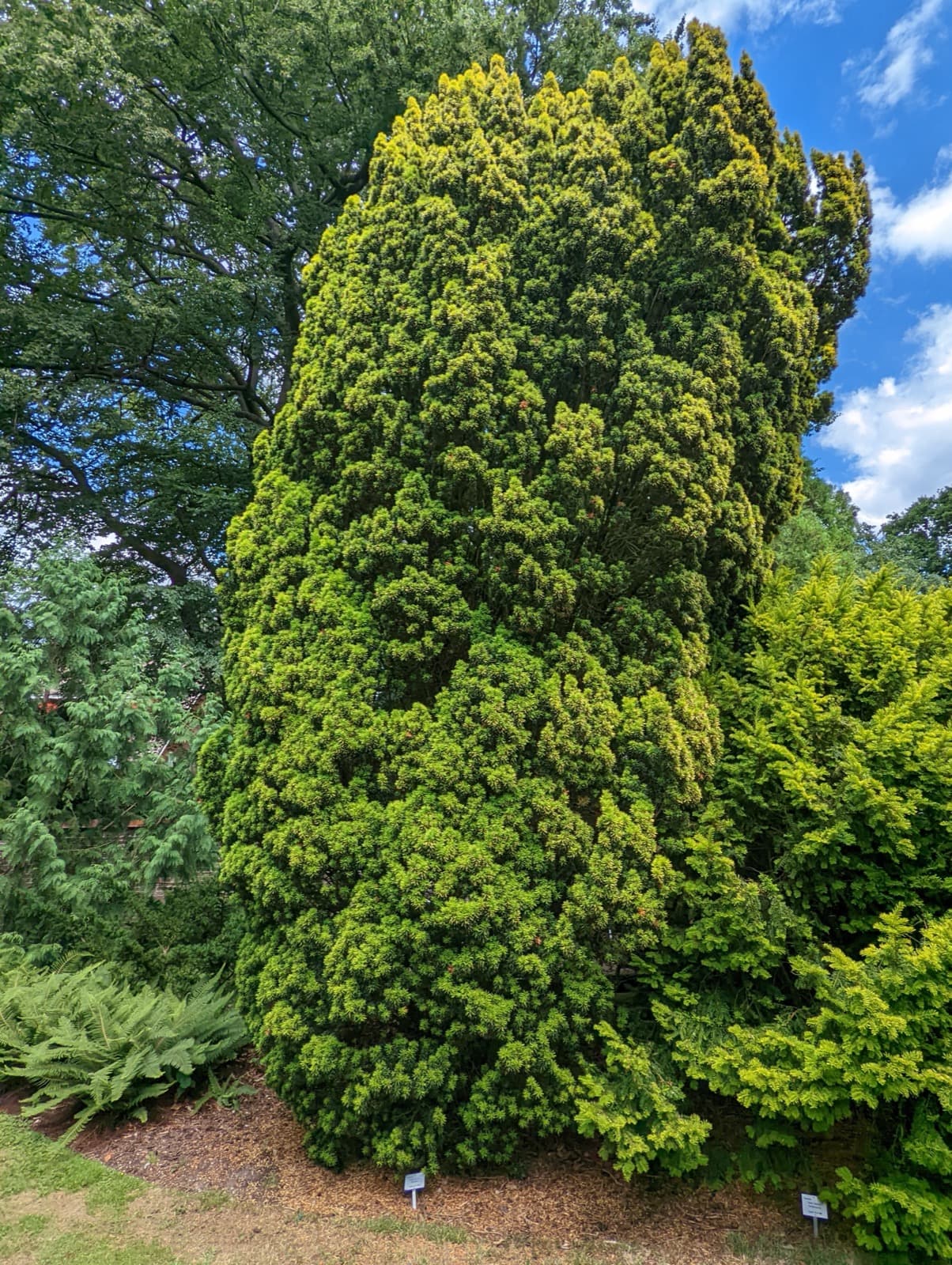
Taxus baccata 'David' is a narrowly columnar English yew with bright golden-yellow new growth that matures to golden-green. It delivers reliable year-round vertical structure in formal borders, foundation plantings, and mixed conifer collections. It is a male clone and produces no berries.
Growth is very slow - typically 3–6 inches per year - ultimately reaching 10 or more feet over several decades. The cultivar tolerates a wide range from full sun to heavy shade, but demands excellent drainage; waterlogged soil is the primary cause of decline. Foliage color is most vivid in full sun and trends toward yellow-green in shade. Shelter from desiccating winter winds improves performance at the colder end of its range, and a shallow layer of wood chip mulch around the root zone helps moderate winter soil temperature.
The foliage of Taxus baccata is the commercial source of 10-deacetylbaccatin III, the taxane compound used for semi-synthetic production of paclitaxel (Taxol), a chemotherapy agent used against several cancers. All parts of the plant except the red aril surrounding the seed contain taxine alkaloids toxic to humans, horses, and cattle - a relevant consideration in gardens used by children or livestock.
Phytophthora Root Rot
Wilting despite moist soil, yellowing leaves, stunted growth, and dark, decayed roots and crown tissue. Vines may collapse during hot weather.
Plant in well-draining soil and avoid waterlogging. Remove and destroy affected vines. Improve drainage with raised beds or amended soil and avoid overwatering.
Armillaria Root Rot
Thinning, yellowing canopy with progressive dieback; white, fan-shaped mycelial mats visible beneath bark at or just below the soil line; honey-colored mushroom clusters appearing at the trunk base or on surface roots in autumn.
No chemical cure exists. Improve drainage and avoid any injury to roots or trunk. Remove severely infected trees along with as much root material as possible. Do not replant susceptible species in the same spot.
Phomopsis Blight
Irregular brown lesions on leaves, stems, and fruit. Stem lesions can girdle the plant, causing wilting above the infection point. Fruit develops sunken, dark, water-soaked spots that expand and rot rapidly in warm, wet conditions. Small black fruiting bodies may be visible inside older lesions.
Remove and destroy all infected tissue. Avoid overhead irrigation and improve air circulation through adequate spacing. Apply copper-based fungicide at first symptoms and repeat every 7–10 days during wet weather. Rotate out of the nightshade family for at least 3 years and start with certified disease-free transplants.