
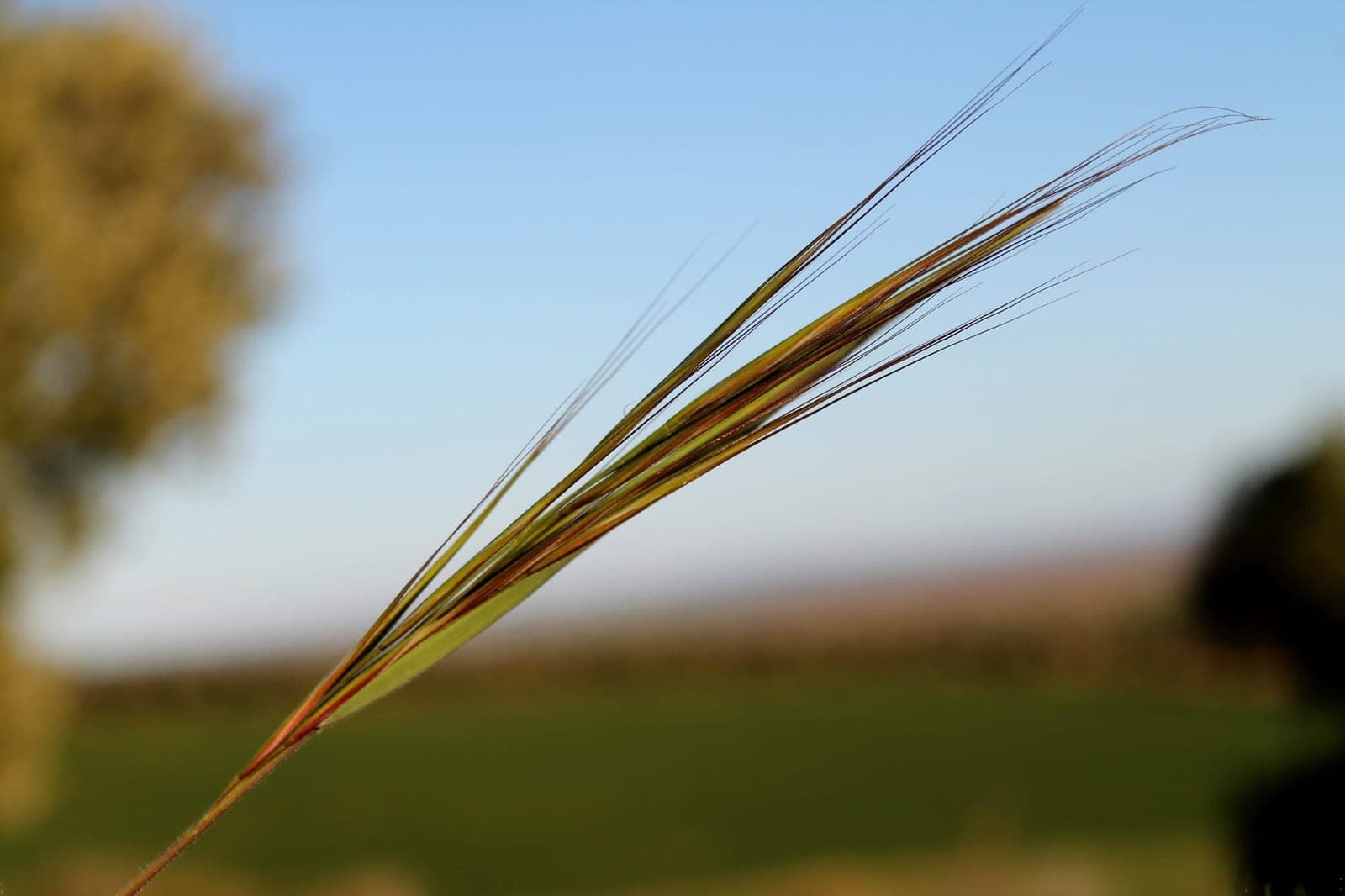
Stipa gigantea, commonly called golden oats or giant feather grass, is a semi-evergreen perennial grass native to the Iberian Peninsula and Morocco. The cultivar 'Goldilocks' is selected for its vivid, bright gold seed heads. The plant forms a low mound of narrow, arching, blue-green leaves from which it sends up wiry stems in late spring, reaching 5–6 ft and bearing large, open panicles of oat-like spikelets that catch the light and persist well into winter.
It thrives in full sun and sharply drained soil, including poor, sandy, or rocky ground. Rich soil encourages lax, floppy stems. Established plants are drought tolerant and long-lived. The clump needs minimal maintenance - comb out dead foliage by hand in late winter rather than cutting it hard back, as the semi-evergreen base does not regenerate reliably from bare stems. Waterlogged conditions, especially over winter, are the primary cause of failure. The clump resents disturbance and is best left in place unless the center begins to die out.
Rust
Orange to brown raised pustules on the undersides of leaves, with yellow spotting on the upper surface. Heavy infections cause leaves to yellow and drop.
Remove and destroy infected leaves. Avoid overhead watering and improve air circulation. Apply a sulfur or copper-based fungicide if it spreads. Clear plant debris in fall.
Root rot
Plants wilt, yellow, and stunt even in moist soil; lower stems and roots turn brown, soft, and mushy and the plant may collapse. Most common in heavy, wet, or poorly drained ground.
Improve drainage and stop overwatering, and never plant too deep. Lift and destroy badly affected plants along with the soil around the roots. Grow in raised or free-draining beds to prevent it returning.