
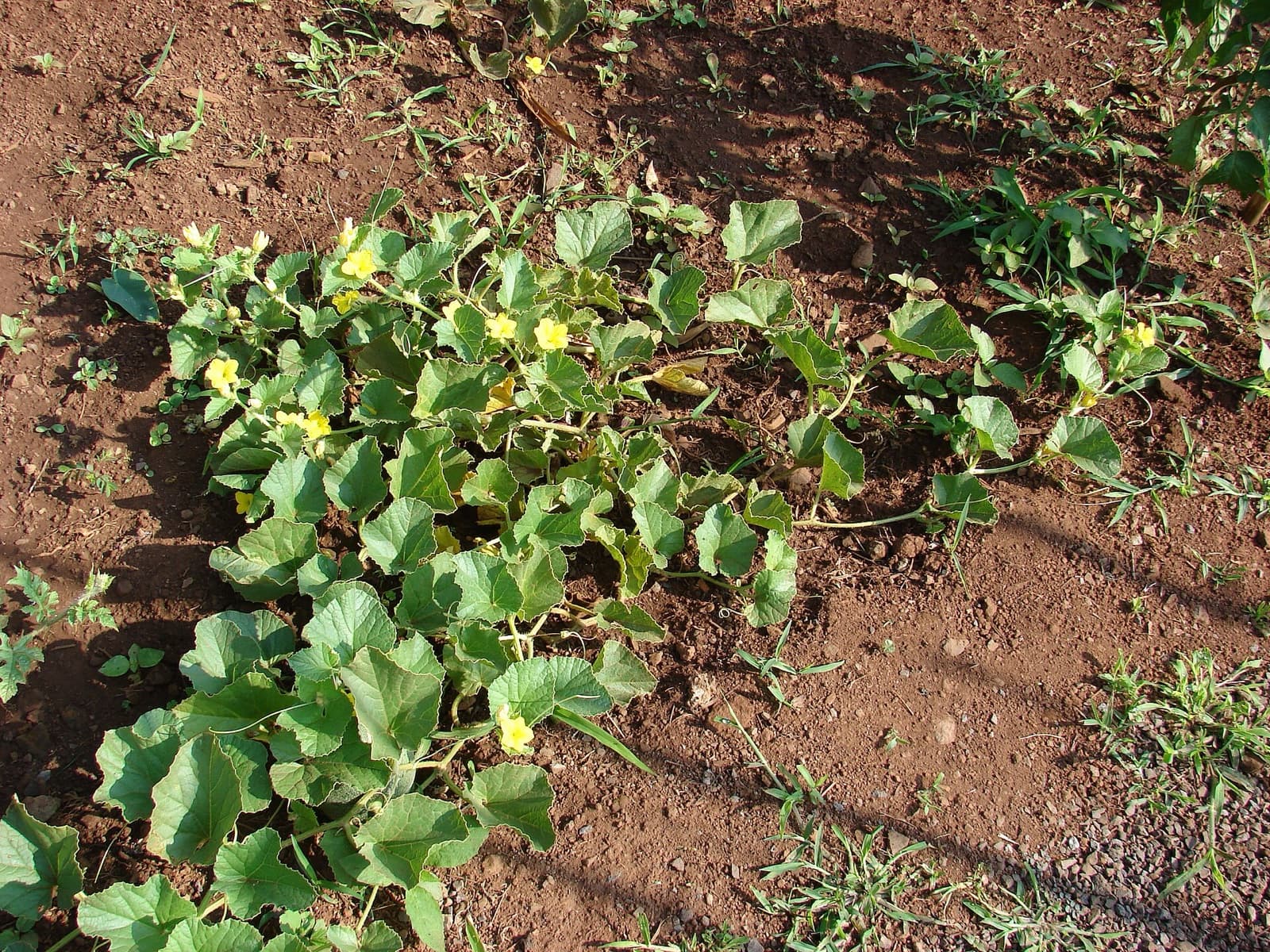
Acorn squash is the small, deeply ribbed, dark green winter squash, about the size of a large grapefruit, with sweet, mildly nutty orange flesh. It is a Cucurbita pepo, the same species as zucchini, delicata and pumpkin, and it was grown by Indigenous farmers in North America long before European settlement. 'Table Queen' is the classic variety; 'Table Ace' and 'Honey Bear' are more compact, and there are golden and white forms too.
Sow it once the soil is warm, past 65°F, in full sun and rich soil, two or three seeds per hill with 3 to 4 feet between hills. Traditional varieties run as vines 6 to 8 feet long; newer bush types stay within a few feet. Fruit is ready about 80 to 90 days from sowing.
Pick it when the rind is dark and dull, the patch that sat on the ground has turned orange-yellow, and a thumbnail will not dent the skin. Leave an inch of stem. Unlike butternut, acorn squash does not need a long cure and does not store long either: it keeps one to two months in a cool, dry place. Squash vine borer and powdery mildew are the main problems.
These dates are for Zone 6b. Enter your ZIP to time every job to your own frost dates.
- buy · Feb 6 - Feb 20Order seed - about two months before sowing
- sow · Apr 17 - May 1Direct sow seed once the soil has warmed past 65°F, 2–3 seeds per hill, thinning to the strongest
- watch · Any time in summerWatch for squash vine borer and cucumber beetles; check the base of stems weekly
- watch · Any time in summerImprove airflow and watch for powdery mildew as nights cool
- cut · Oct 9 - Oct 23Harvest when the rind is dark and dull, the patch touching the ground has turned orange-yellow, and a thumbnail won't dent it; cut with an inch of stem. Acorn squash keeps one to two months and needs no long cure