
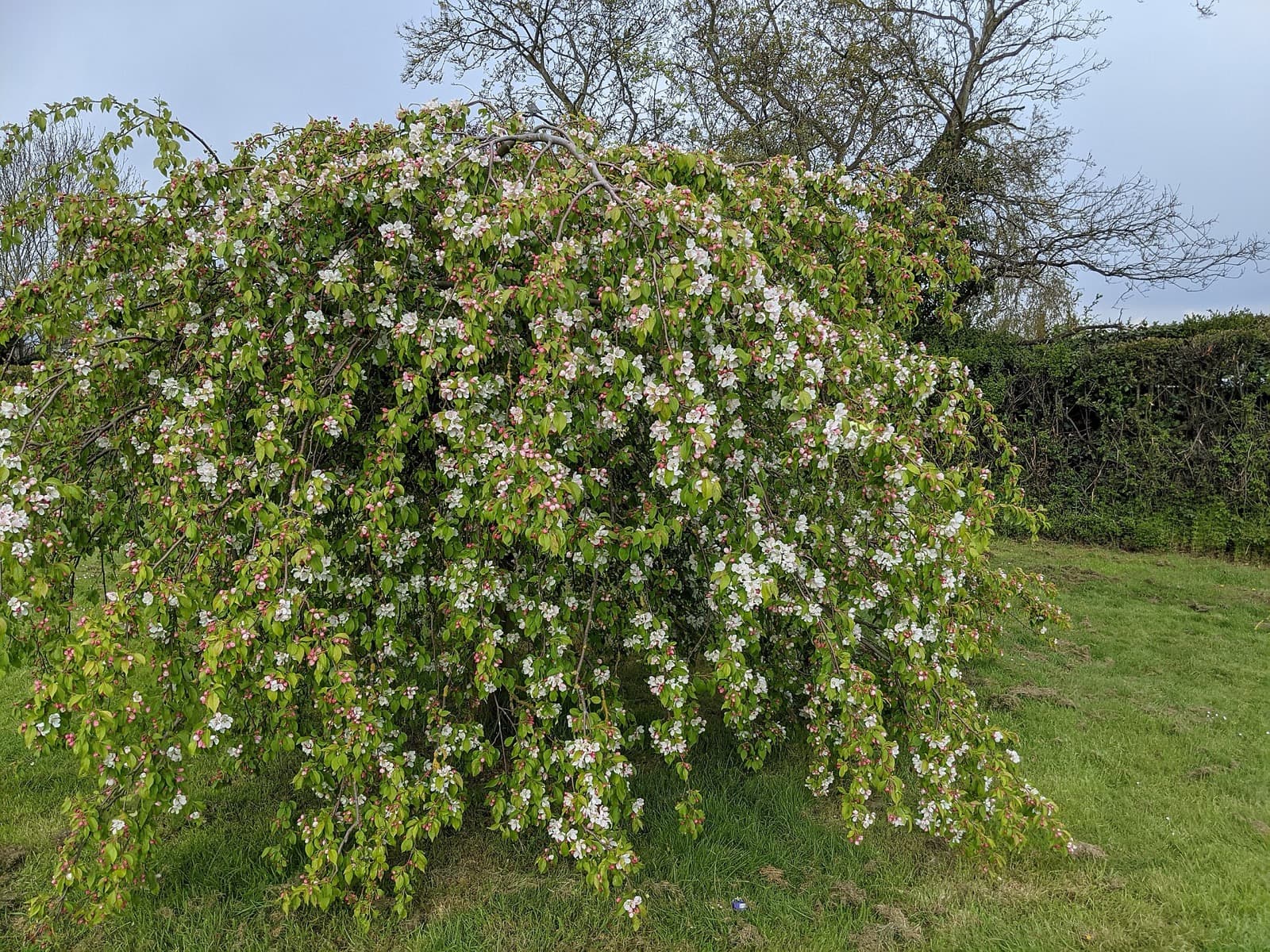
Spring Rain is a weeping crabapple cultivar selected for its pendulous branch structure, dense white flowers in mid-spring, and persistent small red fruit that holds through winter. It delivers year-round garden interest: showy spring flowering, ornamental fruit from late summer onward, and visible branch architecture through winter that supports birds foraging on retained fruit.
The cultivar is rated with good resistance to apple scab and fire blight relative to older crabapple selections, which matters in humid climates where those diseases routinely disfigure susceptible trees. Plant in full sun with well-drained soil; consistently wet roots promote crown rot and reduce longevity. Prune only in late winter while fully dormant, making clean cuts to limit fire blight entry points. Remove upright water sprouts promptly, as they disrupt the weeping form and are prone to infection. Watch for suckers emerging below the graft union and remove them flush at their origin before they overtake the weeping top-graft.
Crabapple fruit is high in pectin and tart enough for jellies and preserves. A single specimen yields modest quantities, but the fruit is fully usable harvested in fall or after the first frost when it softens slightly.
Fire Blight
Water-soaked, wilting blossoms and young stems that rapidly turn brown to black. Infected shoot tips curl into a characteristic shepherd's crook. Bark beneath the infection may show reddish-brown discoloration.
Prune infected wood 8–12 inches below visible symptoms during dry weather. Sterilize tools with 70% isopropyl alcohol or a 10% bleach solution between cuts. Avoid high-nitrogen fertilizers that produce soft, disease-susceptible growth. Copper-based bactericides applied at early flowering can reduce spread in high-pressure years.
Apple Scab
Olive-green to brown velvety spots appear on leaf upper surfaces; infected leaves curl, yellow, and drop prematurely. Fruit develops raised, dark, corky lesions that crack as the apple expands; heavily infected fruit is stunted and misshapen. Severe spring infections can defoliate a tree by midsummer.
Rake and destroy all fallen leaves each autumn to eliminate the overwintering ascospore source. Apply fungicide beginning at green-tip stage and repeat every 7–14 days through petal fall - timing to wet periods is critical because primary infection follows spring rain events when spores are released from leaf litter. Captan, myclobutanil, and copper-based products are commonly used. Avoid overhead irrigation. Where scab pressure is consistently high, plant a scab-resistant pollinizer variety alongside Honeycrisp.
Cedar-Apple Rust
Hard, reddish-brown galls up to 2 inches in diameter form on twigs and small branches. During warm, wet spring weather, galls swell and produce bright orange, gelatinous, finger-like telial horns up to 1 inch long. Repeated infections weaken individual branches. On alternate hosts (apple, crabapple), the disease causes yellow to orange leaf spots, premature defoliation, and distorted fruit.
Prune and bag galls before telial horns emerge in spring; do not compost removed material. Apply a preventive fungicide - myclobutanil or propiconazole - to high-value apple or crabapple hosts nearby during the spring spore release window. Where feasible, avoid siting Juniperus virginiana within several hundred feet of apple orchards. Choosing rust-resistant apple and crabapple cultivars breaks the disease cycle more reliably than chemical control alone.
Powdery mildew
White or grey powdery coating on leaves - usually starting on older growth in humid conditions or when nights cool.
Improve air circulation by thinning plants. Apply neem oil or potassium bicarbonate spray at first sign. Avoid overhead watering.
Botryosphaeria Canker
Dark, sunken cankers on stems and major branches, most often occurring after drought stress or mechanical wounding. Bark peeled back from affected areas reveals brown, discolored wood beneath. Branch tips wilt and die back progressively inward.
Prune infected branches at least 6 inches below the visible canker margin using sterilized tools, and dispose of all cuttings away from the garden. Reduce plant stress by maintaining consistent irrigation during dry periods and avoiding bark wounds during maintenance. No curative fungicide is available; keeping plants vigorous is the primary preventive strategy.
Crown Rot
Lower leaves yellow and wilt; the base of the rosette turns brown and soft, sometimes with white fungal threads at the soil line. Plants collapse in wet conditions.
Remove and destroy affected plants. Improve drainage and avoid overhead watering. Do not mulch directly against the crown. Space plants for airflow and avoid replanting in the same wet spot.