
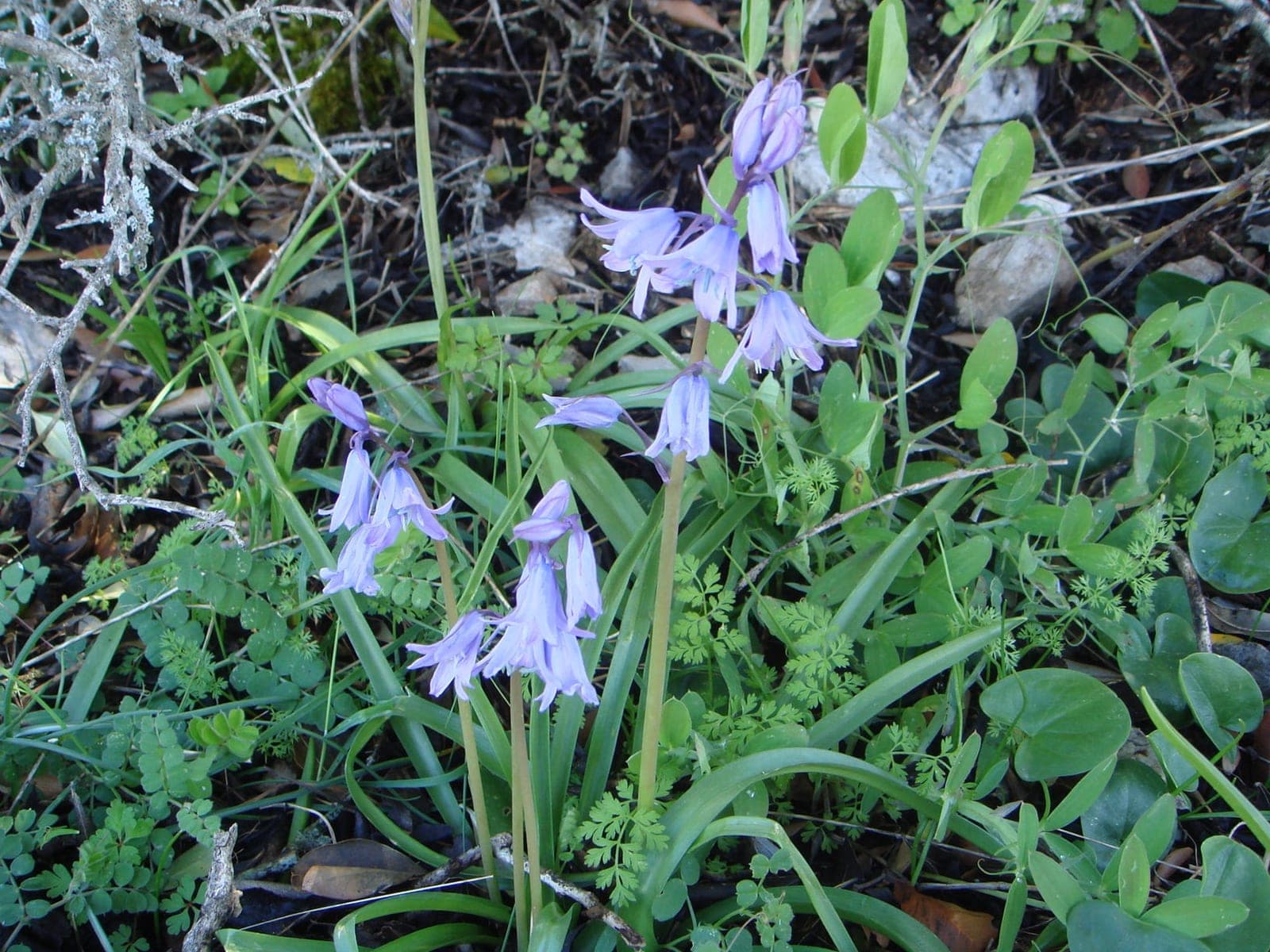
Hyacinthoides hispanica is a bulbous perennial native to the Iberian Peninsula that produces upright stems lined with unscented, bell-shaped flowers in blue, pink, or white during mid-spring. Unlike the English bluebell, the stem stands fully erect and bears flowers on both sides rather than arching to one side. It is widely planted for its reliability beneath deciduous trees, where it receives full light before the canopy closes and slowly builds into long-lived naturalized drifts.
The plant spreads by seed and offsets and can colonize large areas within a few seasons. Where it grows in proximity to native English bluebells (Hyacinthoides non-scripta), it hybridizes freely, and the fertile hybrid readily displaces the native species - a documented conservation concern across the UK and Ireland. It has also escaped into woodlands in parts of North America, so plant it only where you can keep it in check. The same glycosides that make every part of the plant toxic to pets and livestock make it one of the most animal-proof bulbs you can grow: deer, rabbits, voles and squirrels leave it alone. The flowers have little to no scent, so the protection comes from the plant's chemistry, not its smell. Historically, the mucilaginous sap of the dried bulb was used to stiffen linen ruffs and as a bookbinding adhesive.
Botrytis (grey mould)
Grey fuzzy mould on petals and stems, worst in cool wet conditions.
Remove affected parts immediately. Improve air circulation. Avoid overhead watering. Apply copper fungicide if severe.
Narcissus Basal Rot
Brown rot starting at the base of the bulb, spreading upward; soft, decaying tissue and stunted or failed growth in spring. Fungal growth may appear pink or white.
Discard infected bulbs. Plant only firm, healthy bulbs in well-draining soil. Avoid hot, wet conditions during summer dormancy and rotate planting sites.
Root rot
Plants wilt, yellow, and stunt even in moist soil; lower stems and roots turn brown, soft, and mushy and the plant may collapse. Most common in heavy, wet, or poorly drained ground.
Improve drainage and stop overwatering, and never plant too deep. Lift and destroy badly affected plants along with the soil around the roots. Grow in raised or free-draining beds to prevent it returning.
Fungal leaf spot
Brown or purplish spots on the leaves, often ringed with a yellow halo, that spread and merge in warm, humid, or wet weather; heavily spotted leaves yellow and drop early.
Pick off spotted leaves and clear fallen debris to remove overwintering spores. Improve air circulation by thinning, and water at the base so foliage dries quickly. If it persists, apply a copper- or sulfur-based fungicide at the first sign.