
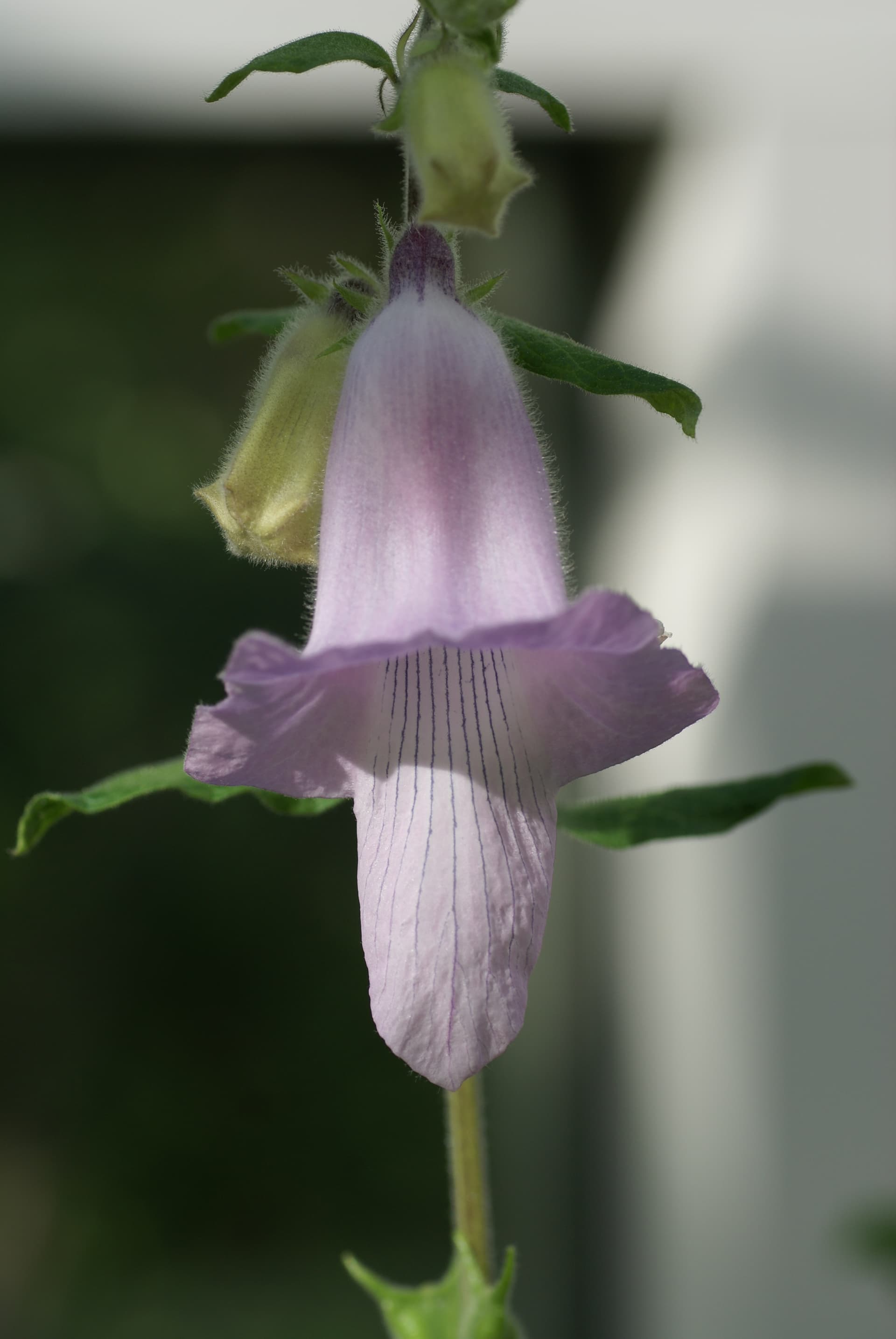
Ceratotheca triloba 'Alba' is a fast-growing annual or tender perennial from southern Africa, in the sesame family (Pedaliaceae). It produces tall, branching stems densely set with white tubular flowers that closely resemble foxglove (Digitalis), giving it strong vertical presence in sunny borders. Plants reach 4–6 feet in a single season without needing rich soil or intensive care.
It thrives in full sun with average, well-drained soil. Hot summers drive the best growth, and the plant tolerates heat and moderate drought far better than true foxgloves. In zones below 9, it is grown as a warm-season annual - start seed indoors 6–8 weeks before last frost or direct-sow once soil reaches 65°F. Seeds need light to germinate and must not be covered. Mature plants develop a taproot and resist late transplanting, but self-seeding is reliable in warm climates.
Young leaves of C. triloba are cooked and eaten as a leafy vegetable in Botswana and other parts of southern Africa, used similarly to spinach.
Powdery mildew
White or grey powdery coating on leaves - usually starting on older growth in humid conditions or when nights cool.
Improve air circulation by thinning plants. Apply neem oil or potassium bicarbonate spray at first sign. Avoid overhead watering.
Damping Off
Seedlings collapse at the soil line with thin, water-soaked stems; seeds may fail to emerge or rot before sprouting.
Sow in well-draining mix, avoid overwatering, and ensure good airflow. Remove affected seedlings and let the surface dry between waterings.
Root rot
Plants wilt, yellow, and stunt even in moist soil; lower stems and roots turn brown, soft, and mushy and the plant may collapse. Most common in heavy, wet, or poorly drained ground.
Improve drainage and stop overwatering, and never plant too deep. Lift and destroy badly affected plants along with the soil around the roots. Grow in raised or free-draining beds to prevent it returning.
Botrytis (grey mould)
Grey fuzzy mould on petals and stems, worst in cool wet conditions.
Remove affected parts immediately. Improve air circulation. Avoid overhead watering. Apply copper fungicide if severe.