
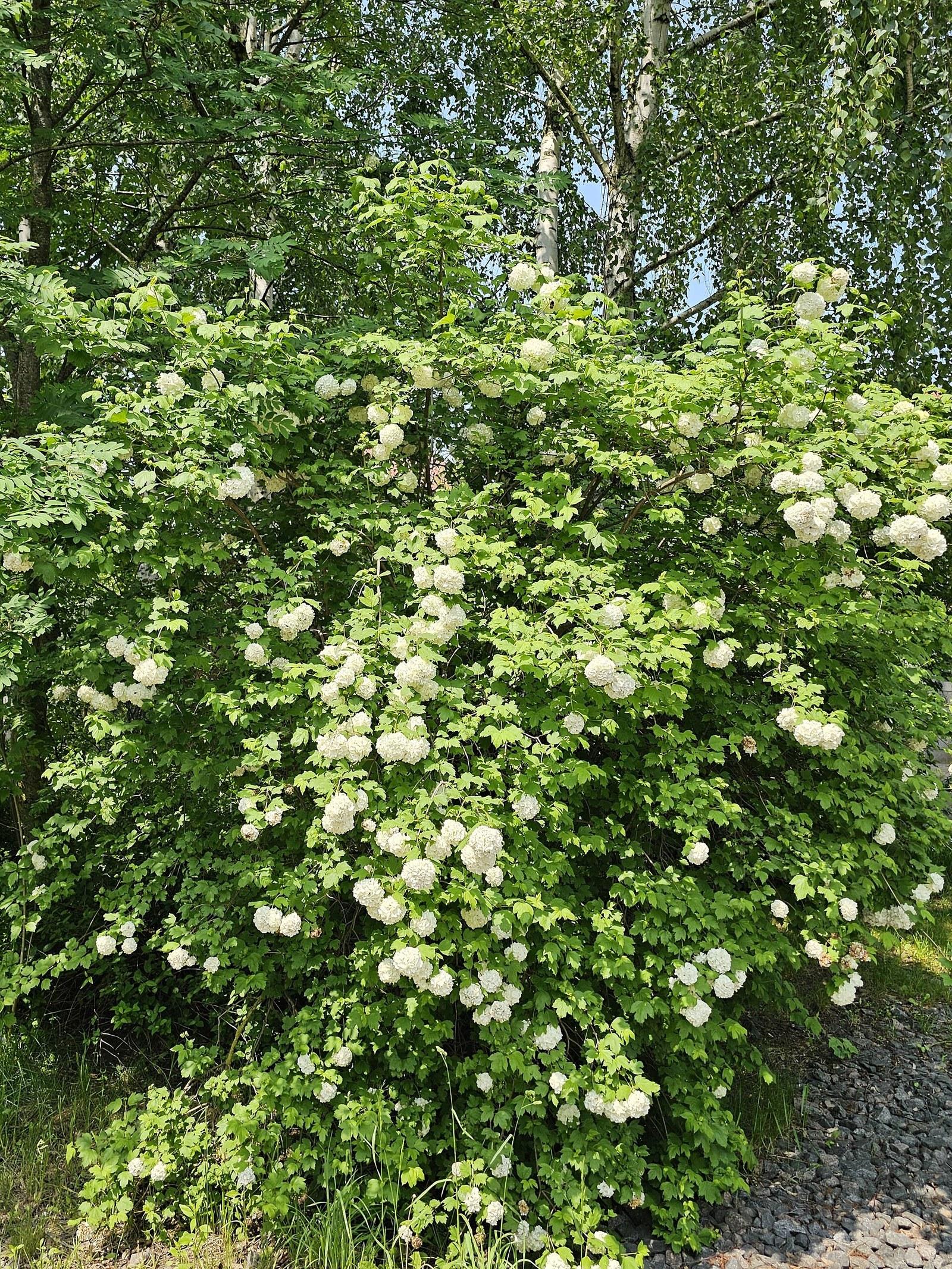
Snowball viburnum is the sterile, double-flowered form of European cranberrybush, sold as Viburnum opulus 'Roseum' (also 'Sterile'). In mid to late spring the whole shrub is covered in 2 to 3 inch balls of white flowers that start pale green, turn bright white, and flush pink as they age. Because every floret is sterile, there are no berries, which also means it does not seed itself the way the fertile species can in the wild.
It grows 8 to 12 feet tall and as wide, in full sun to part shade, in almost any moist, well-drained soil, and is hardy to zone 3. Prune right after the flowers fade, since next year's buds form on the new growth that follows. Fall color runs from yellow to wine red. Deer usually leave it alone, but a hungry herd will browse it. Watch for aphids on soft new growth in spring, and for viburnum leaf beetle where it is established, which can strip the leaves of susceptible viburnums.
It is a plant from Europe and Asia, so it gives wildlife less than native viburnums do. Where a native is wanted, plant American cranberrybush or smooth witherod, and keep this one for the old-fashioned snowball look. See American Cranberrybush for the native cousin.
These dates are for Zone 6b. Enter your ZIP to time every job to your own frost dates.
- watch · Jan 2 - Jan 16Order container-grown shrubs - about two months before planting
- plant · Mar 13Plant container-grown shrubs once the ground is workable. Water in thoroughly, mulch the root zone, and allow 8 to 12 feet of room.
- watch · Mar 27Check new growth for aphids and inspect stem tips for viburnum leaf beetle egg-laying scars. Prune and discard affected shoots before larvae hatch.
- cut · May 29Prune right after the flower balls fade: remove dead, crossing, and crowded stems and shape the shrub. Later pruning removes next year's flower buds.
- watch · Any time in summerCheck foliage for leaf spot and powdery mildew as the canopy fills in. Thin crowded interior stems to improve airflow.
Problems & troubleshooting
Common problems
Fungal leaf spot
Brown or purplish spots on the leaves, often ringed with a yellow halo, that spread and merge in warm, humid, or wet weather; heavily spotted leaves yellow and drop early.
Pick off spotted leaves and clear fallen debris to remove overwintering spores. Improve air circulation by thinning, and water at the base so foliage dries quickly. If it persists, apply a copper- or sulfur-based fungicide at the first sign.
Powdery mildew
White or grey powdery coating on leaves - usually starting on older growth in humid conditions or when nights cool.
Improve air circulation by thinning plants. Apply neem oil or potassium bicarbonate spray at first sign. Avoid overhead watering.
Phytophthora Root Rot
Wilting despite moist soil, yellowing leaves, stunted growth, and dark, decayed roots and crown tissue. Vines may collapse during hot weather.
Plant in well-draining soil and avoid waterlogging. Remove and destroy affected vines. Improve drainage with raised beds or amended soil and avoid overwatering.