
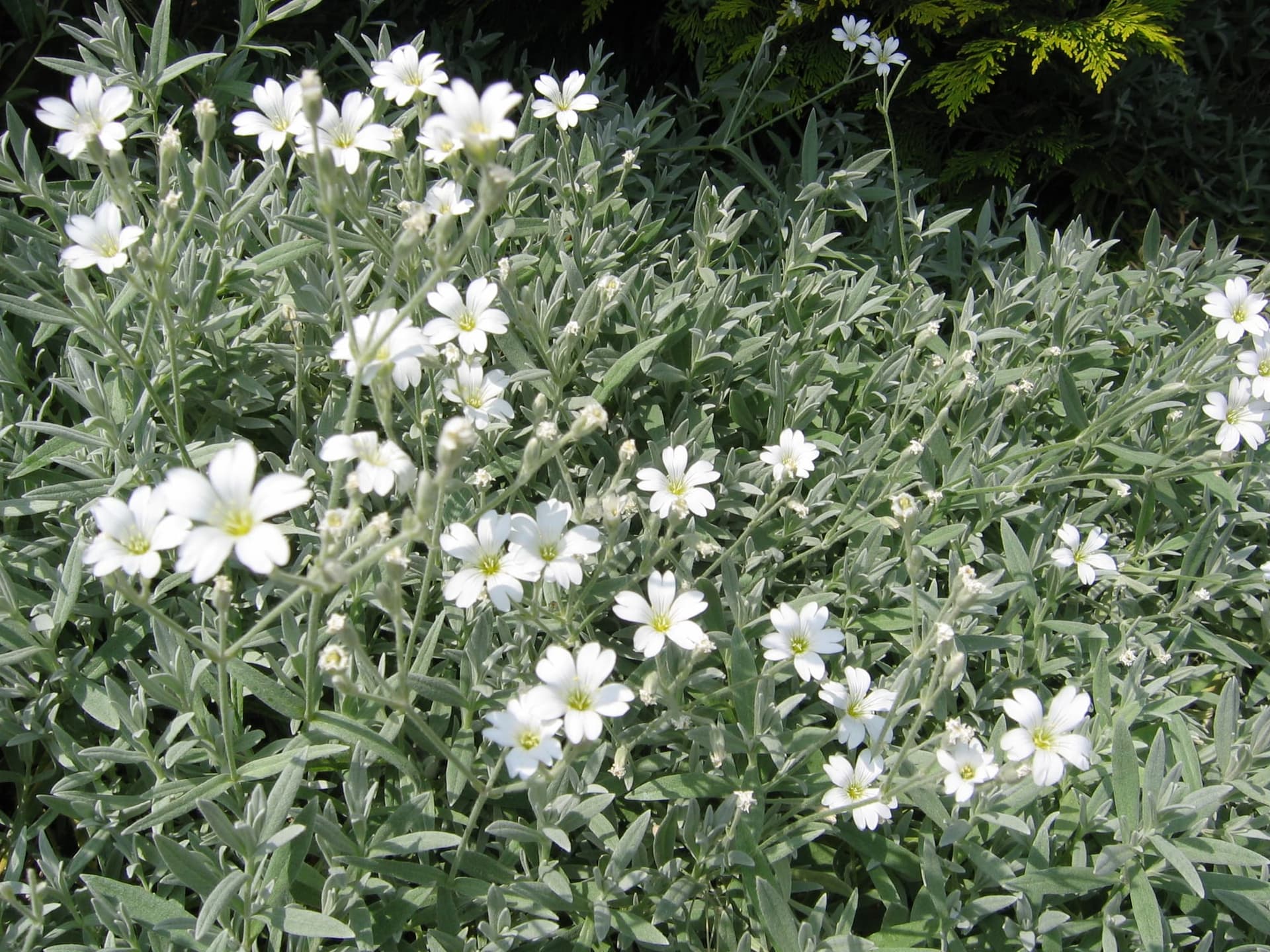
Snow-in-summer is a low, mat-forming perennial native to the alpine regions of central and southern Italy. Dense woolly hairs cover the stems and leaves, producing silvery-grey foliage that remains ornamental through the growing season. In late spring, masses of small star-shaped white flowers cover the mat, making it useful in rock gardens, dry slopes, retaining walls, and sunny border edges where it suppresses weeds.
The plant spreads vigorously by rhizomes and self-seeds readily; outside its native range it can naturalize in disturbed ground. Shearing plants back by a third immediately after flowering limits spread and maintains a compact form. It performs best in poor to average, gritty or sandy soils with excellent drainage; clay or consistently wet soil causes rapid crown rot, and fertile, amended beds encourage soft, floppy growth. Neutral to slightly alkaline pH is preferred. In humid climates, a grit or gravel mulch around crowns improves air circulation and discourages rot.
Crown Rot
Lower leaves yellow and wilt; the base of the rosette turns brown and soft, sometimes with white fungal threads at the soil line. Plants collapse in wet conditions.
Remove and destroy affected plants. Improve drainage and avoid overhead watering. Do not mulch directly against the crown. Space plants for airflow and avoid replanting in the same wet spot.
Root rot
Plants wilt, yellow, and stunt even in moist soil; lower stems and roots turn brown, soft, and mushy and the plant may collapse. Most common in heavy, wet, or poorly drained ground.
Improve drainage and stop overwatering, and never plant too deep. Lift and destroy badly affected plants along with the soil around the roots. Grow in raised or free-draining beds to prevent it returning.
Powdery mildew
White or grey powdery coating on leaves - usually starting on older growth in humid conditions or when nights cool.
Improve air circulation by thinning plants. Apply neem oil or potassium bicarbonate spray at first sign. Avoid overhead watering.
Botrytis (grey mould)
Grey fuzzy mould on petals and stems, worst in cool wet conditions.
Remove affected parts immediately. Improve air circulation. Avoid overhead watering. Apply copper fungicide if severe.