
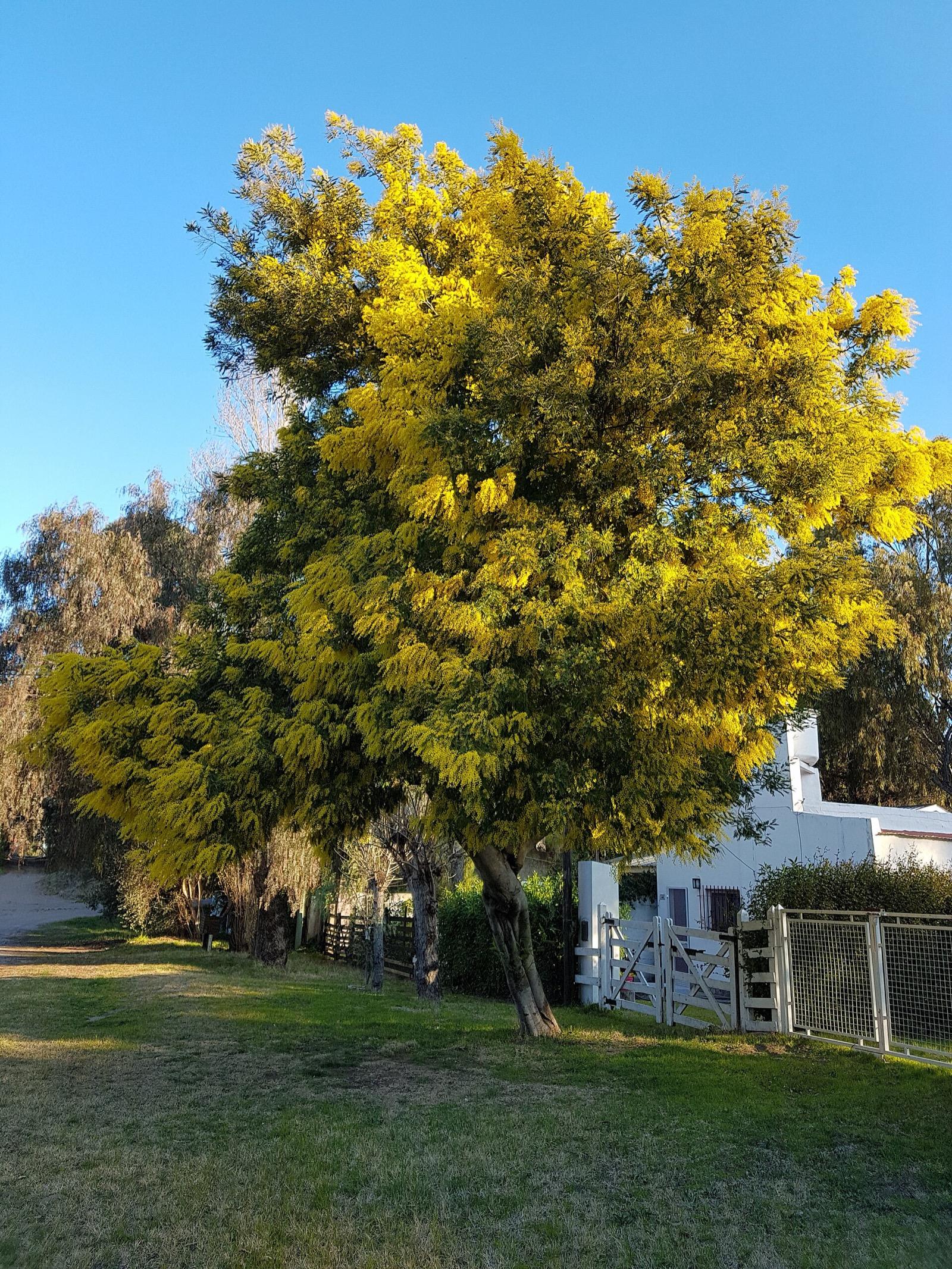
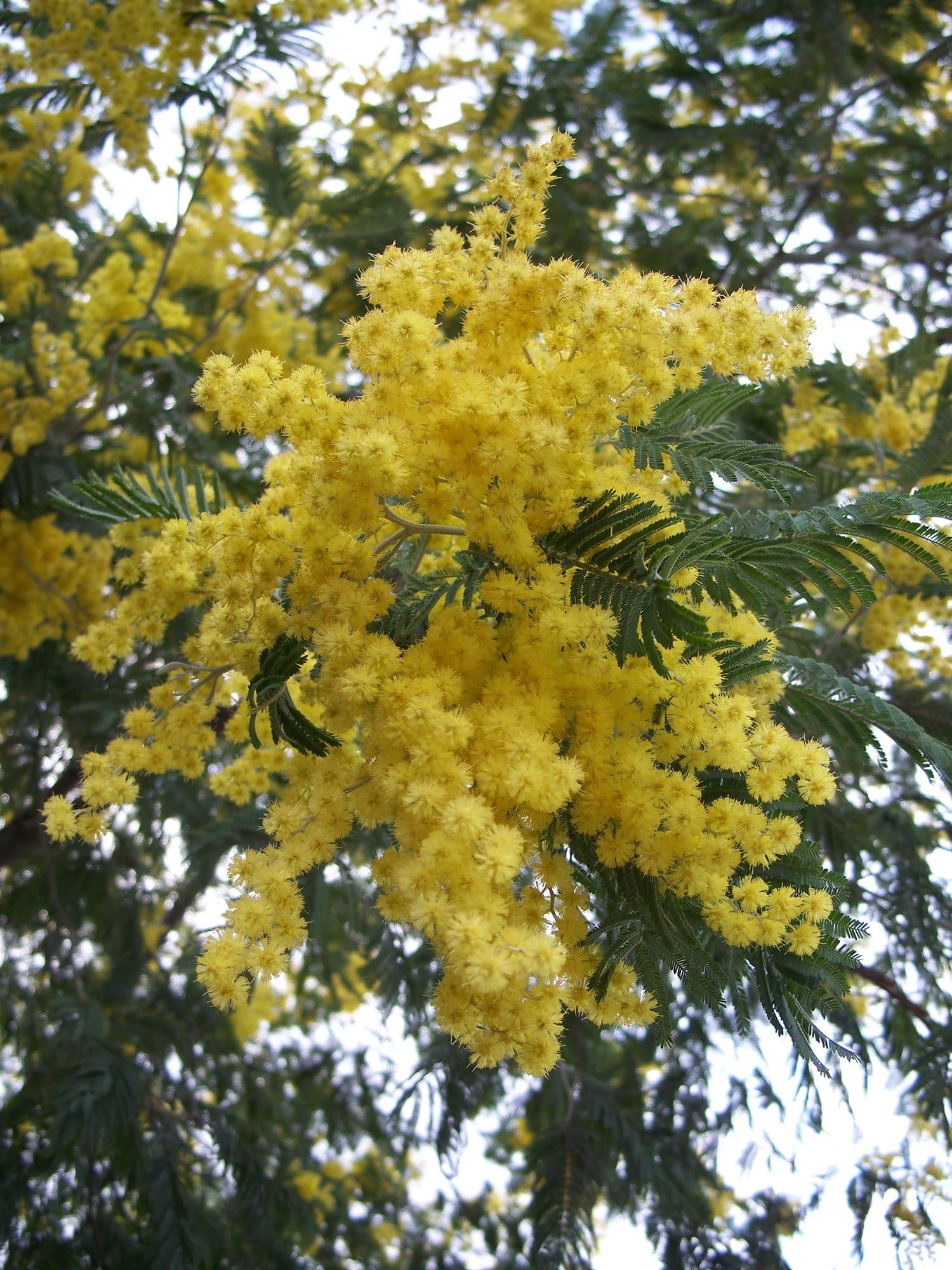
Acacia dealbata is a fast-growing legume tree native to southeastern Australia, valued in temperate gardens for its silvery, finely divided bipinnate foliage and dense clusters of bright yellow spherical flower heads that open in late winter. Known across Europe by its floral trade name mimosa, it is the primary source of the yellow, feathery cut branches sold from January through March. The pairing of silver-blue leaf texture with early-season color is difficult to match with any other tree in its hardiness range.
Growth is rapid - often 3–5 ft per year in establishment - and the roots form nitrogen-fixing symbioses, gradually improving lean soils. It spreads freely by seed and root suckers and is classified as invasive in Mediterranean Europe, southern Africa, and New Zealand; gardeners outside its native range should remove seedlings and suckers before they establish. It is short-lived relative to most trees, typically 20–30 years, and shallow-rooted enough to be prone to wind-throw in exposed positions. Cold hardiness drops sharply below about 15°F, making reliable shelter essential at the lower end of zone 8b.
The flowers are edible and appear in Italian regional cooking as battered and fried fritters and are used to flavor sugar and some liqueurs. Bark high in tannins has a documented history in leather tanning and in traditional astringent preparations for wounds and skin inflammation.
These dates are for Zone 6b. Enter your ZIP to time every job to your own frost dates.
- buy · Feb 13 - Feb 27Buy a young tree - about two months before planting out
- cut · Apr 3 - Apr 24Cut back stems that have flowered by a third straight after bloom to keep the tree compact
- plant · Apr 24 - May 22Plant nursery stock against a sunny, sheltered wall or in an open sunny spot with fast-draining soil, and stake it while young
- cut · May 8 - Aug 28Remove root suckers as soon as they appear, before they form a thicket
Problems & troubleshooting
Common problems
Phytophthora Root Rot
Wilting despite moist soil, yellowing leaves, stunted growth, and dark, decayed roots and crown tissue. Vines may collapse during hot weather.
Plant in well-draining soil and avoid waterlogging. Remove and destroy affected vines. Improve drainage with raised beds or amended soil and avoid overwatering.
Armillaria Root Rot
Thinning, yellowing canopy with progressive dieback; white, fan-shaped mycelial mats visible beneath bark at or just below the soil line; honey-colored mushroom clusters appearing at the trunk base or on surface roots in autumn.
No chemical cure exists. Improve drainage and avoid any injury to roots or trunk. Remove severely infected trees along with as much root material as possible. Do not replant susceptible species in the same spot.
Fungal leaf spot
Brown or purplish spots on the leaves, often ringed with a yellow halo, that spread and merge in warm, humid, or wet weather; heavily spotted leaves yellow and drop early.
Pick off spotted leaves and clear fallen debris to remove overwintering spores. Improve air circulation by thinning, and water at the base so foliage dries quickly. If it persists, apply a copper- or sulfur-based fungicide at the first sign.