
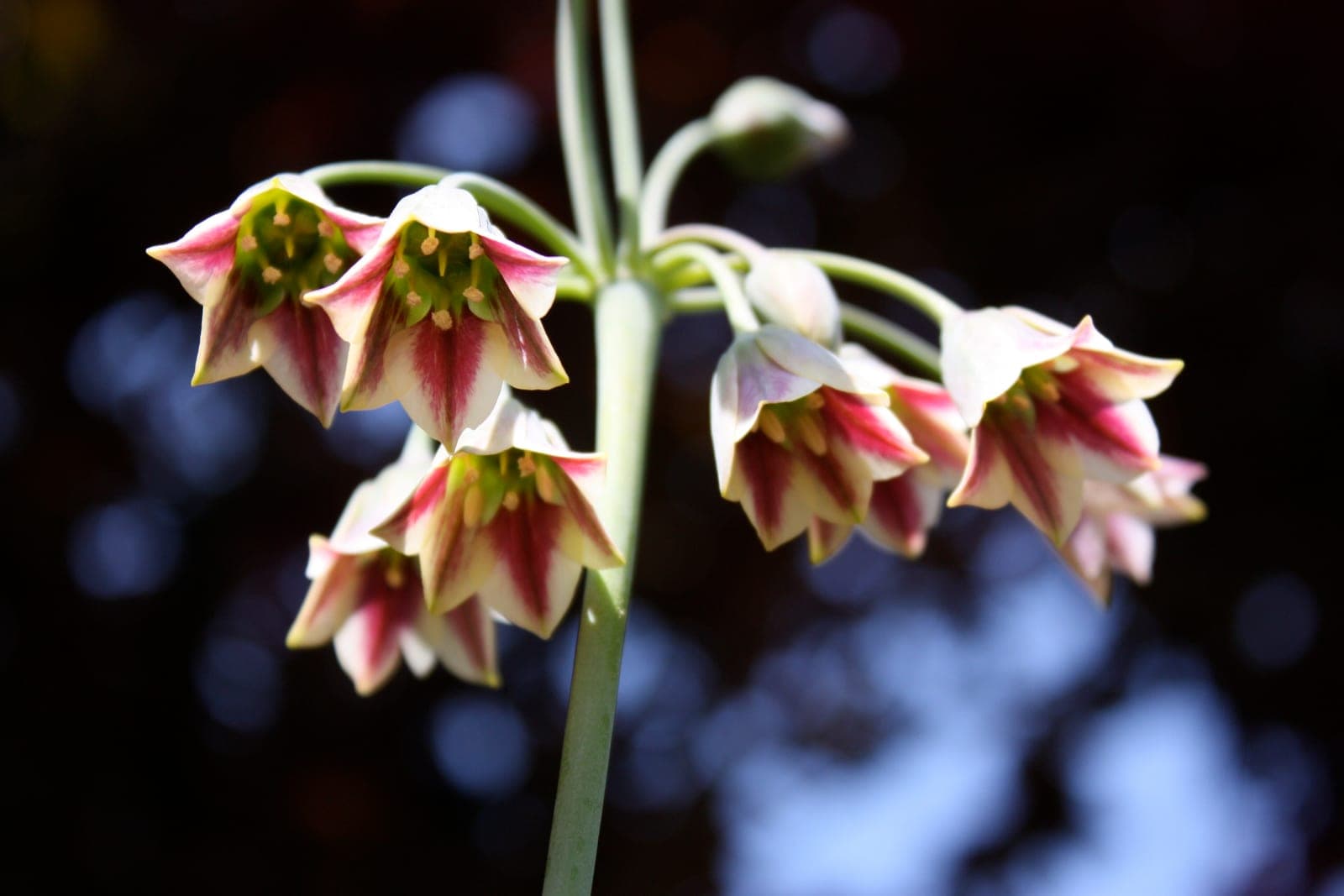
Allium siculum is a tall bulbous perennial native to the Mediterranean region and Middle East, grown both as an ornamental and a culinary herb. It produces loose, pendant clusters of bell-shaped flowers on stems up to 4 feet tall - each bloom creamy white with red-purple veining - making it a strong structural element in mixed borders and cutting gardens.
Bulbs naturalize readily, multiplying by offsets to form dense clumps over time. They tolerate dry summers once established, reflecting their Mediterranean origins. Self-seeding can be prolific; remove spent stalks before seeds disperse if naturalization is unwanted. Plant bulbs in fall at twice the bulb's own depth in sharply drained soil. Mulching lightly over winter is sufficient protection at the cold end of the hardiness range.
All parts carry a mild garlic flavor. Young leaves can be harvested like garlic chives, the bulbs used as a milder garlic substitute in cooking, and the open bells eaten fresh as an edible garnish.
White Rust
White, blister-like pustules on the undersides of leaves with yellow spots on the upper surface; severe infections distort leaves and stems.
Remove and destroy infected leaves, improve air circulation, avoid overhead watering, and rotate brassicas to a new bed each year.
Garlic Basal Rot
Yellowing and dieback of leaves from the tips, stunted plants, and soft brown decay at the base plate of the bulb, often with pink-white fungal growth on roots.
Plant disease-free cloves in well-draining soil, rotate alliums on a 4-year cycle, avoid overwatering, and discard infected bulbs rather than composting them.
Downy mildew
Yellowing on top of leaves with grey-purple fuzz underneath. Spreads rapidly in humid conditions.
Remove affected leaves. Improve air circulation. Avoid overhead watering. Copper spray as preventive.
Root rot
Plants wilt, yellow, and stunt even in moist soil; lower stems and roots turn brown, soft, and mushy and the plant may collapse. Most common in heavy, wet, or poorly drained ground.
Improve drainage and stop overwatering, and never plant too deep. Lift and destroy badly affected plants along with the soil around the roots. Grow in raised or free-draining beds to prevent it returning.