
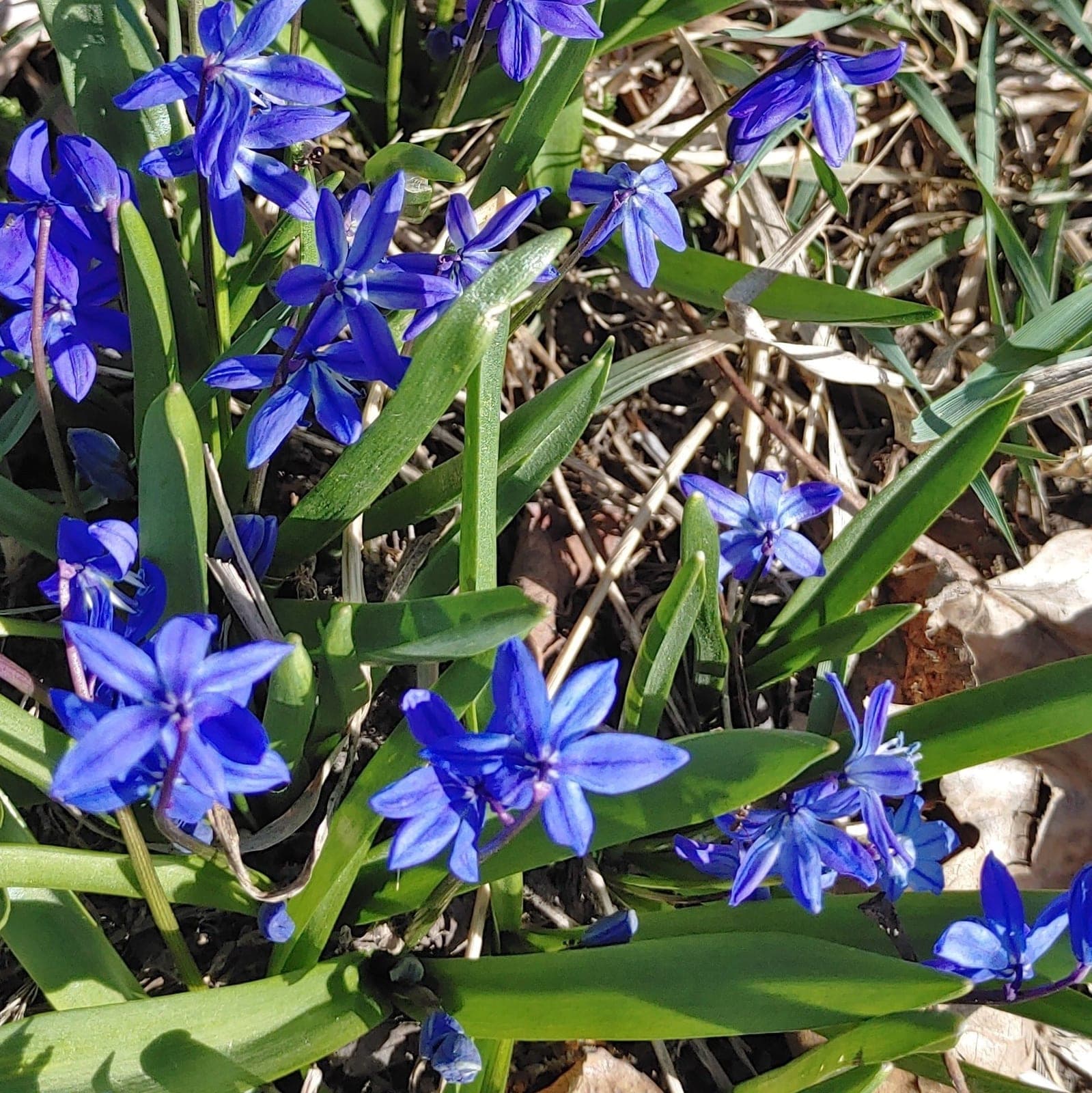
Scilla siberica is a small spring bulb native to southwestern Russia, the Caucasus, and Turkey - not Siberia, despite the name. Each stem carries 2–4 nodding, intensely blue flowers that open as soon as the snow recedes, making it one of the first meaningful color sources after winter. The blue is unusually saturated for a spring bulb and holds well through cold, overcast weather.
Bulbs naturalize readily through self-seeding and offsets, gradually building dense colonies under deciduous trees, along borders, and in lawns. Because plants go fully dormant by early summer, they layer well beneath later-emerging perennials and can be grown in turf that won't be mowed until foliage has yellowed and collapsed. Cold dormancy is essential to performance; plants in zone 8 often decline after a few seasons without reliable winter chill. All parts are toxic, containing cardiac glycosides, and deer, rabbits, voles and squirrels leave the bulbs alone. The flowers are nearly scentless; the protection is chemical, not a smell.
Botrytis (grey mould)
Grey fuzzy mould on petals and stems, worst in cool wet conditions.
Remove affected parts immediately. Improve air circulation. Avoid overhead watering. Apply copper fungicide if severe.
Root rot
Plants wilt, yellow, and stunt even in moist soil; lower stems and roots turn brown, soft, and mushy and the plant may collapse. Most common in heavy, wet, or poorly drained ground.
Improve drainage and stop overwatering, and never plant too deep. Lift and destroy badly affected plants along with the soil around the roots. Grow in raised or free-draining beds to prevent it returning.