
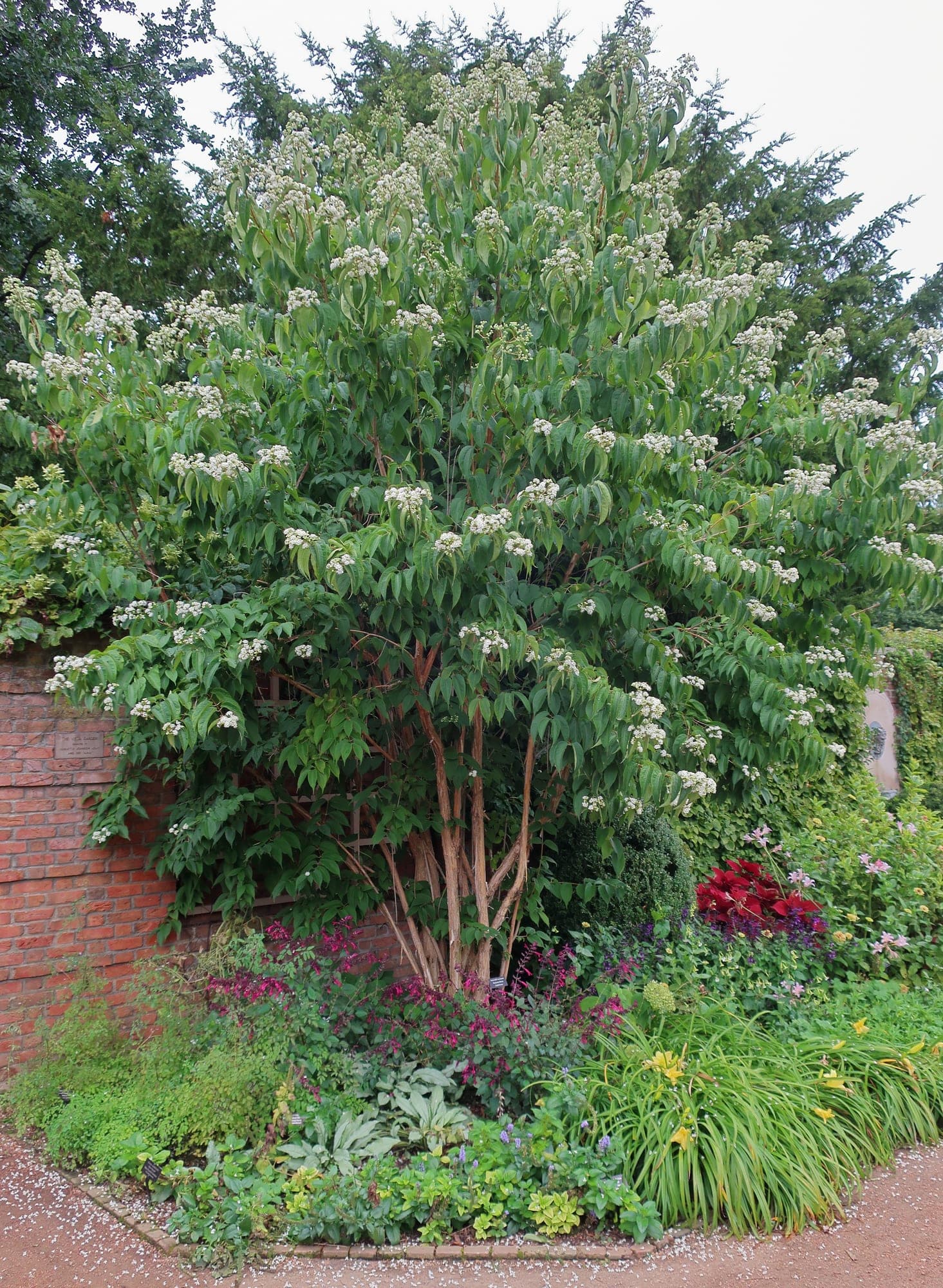
Seven-son flower is a large, multi-stemmed shrub or small single-trunk tree from China, introduced to the United States in 1980. It earns its place for a long run of interest late in the year, when most woody plants have finished. Buds form on the branch tips in early summer, and in late summer clusters of small, fragrant white flowers open all over the canopy, drawing bees and butterflies. As the petals fall, the pink calyces behind them enlarge and turn cherry red to rose-purple around the seed, and the display often looks better than the flowers did and holds for weeks. Tan to gray-brown bark peels in strips on stems of almost any age, which gives the plant good winter structure.
It grows upright and spreading to 10–20 ft, only about half as wide as it is tall, so it fits a small garden as a specimen or corner accent. It does best in full sun with moist, well-drained soil, and it tolerates poor soil, clay, and sand. Plants in shade often fail to color their calyces, so give it sun if the red display is the goal. Fall leaf color is not showy, and some plants suffer stem dieback. It can be limbed up into a single-trunk tree by removing the lower stems, or kept as a fountain-shaped shrub. Deer and bucks sometimes rub the trunks, so protect young stems where bucks are active.
Powdery mildew
White or grey powdery coating on leaves - usually starting on older growth in humid conditions or when nights cool.
Improve air circulation by thinning plants. Apply neem oil or potassium bicarbonate spray at first sign. Avoid overhead watering.
Fungal leaf spot
Brown or purplish spots on the leaves, often ringed with a yellow halo, that spread and merge in warm, humid, or wet weather; heavily spotted leaves yellow and drop early.
Pick off spotted leaves and clear fallen debris to remove overwintering spores. Improve air circulation by thinning, and water at the base so foliage dries quickly. If it persists, apply a copper- or sulfur-based fungicide at the first sign.