
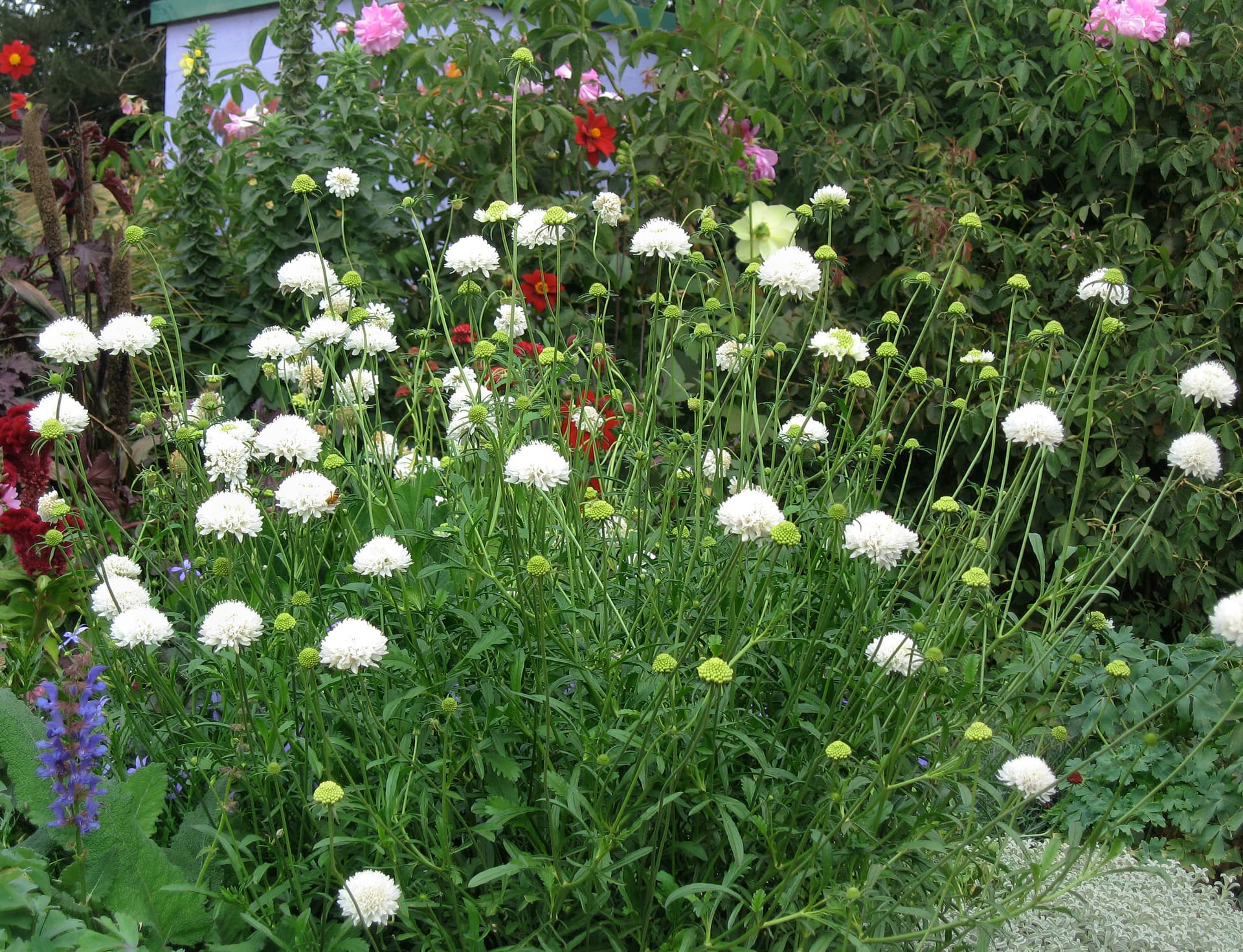
 'Snowmaiden' - fully double white pincushion blooms on the same tall, wiry stems as the species. Photo: anniesannuals, CC BY 2.0.
This deep-purple annual scabious is a cutting-garden staple - long, wiry stems topped with domed pincushion flowers in a wine-dark purple that reads almost black in low light, ageing to attractive papery seed heads if left uncut. Sow successively through early summer for continuous stems into fall.
The more you cut, the more it produces; a plant left to set seed slows down fast. Deadhead or harvest ruthlessly and it will keep flowering right up to hard frost. Pairs beautifully with grasses and other cutting-garden annuals for a moody late-summer palette.
Powdery mildew
White or grey powdery coating on leaves - usually starting on older growth in humid conditions or when nights cool.
Improve air circulation by thinning plants. Apply neem oil or potassium bicarbonate spray at first sign. Avoid overhead watering.
Aphids
Aphididae →Clusters of small soft insects on new growth and flower buds.
Knock off with a strong jet of water. Ladybirds and lacewings are natural predators. Insecticidal soap as last resort.