
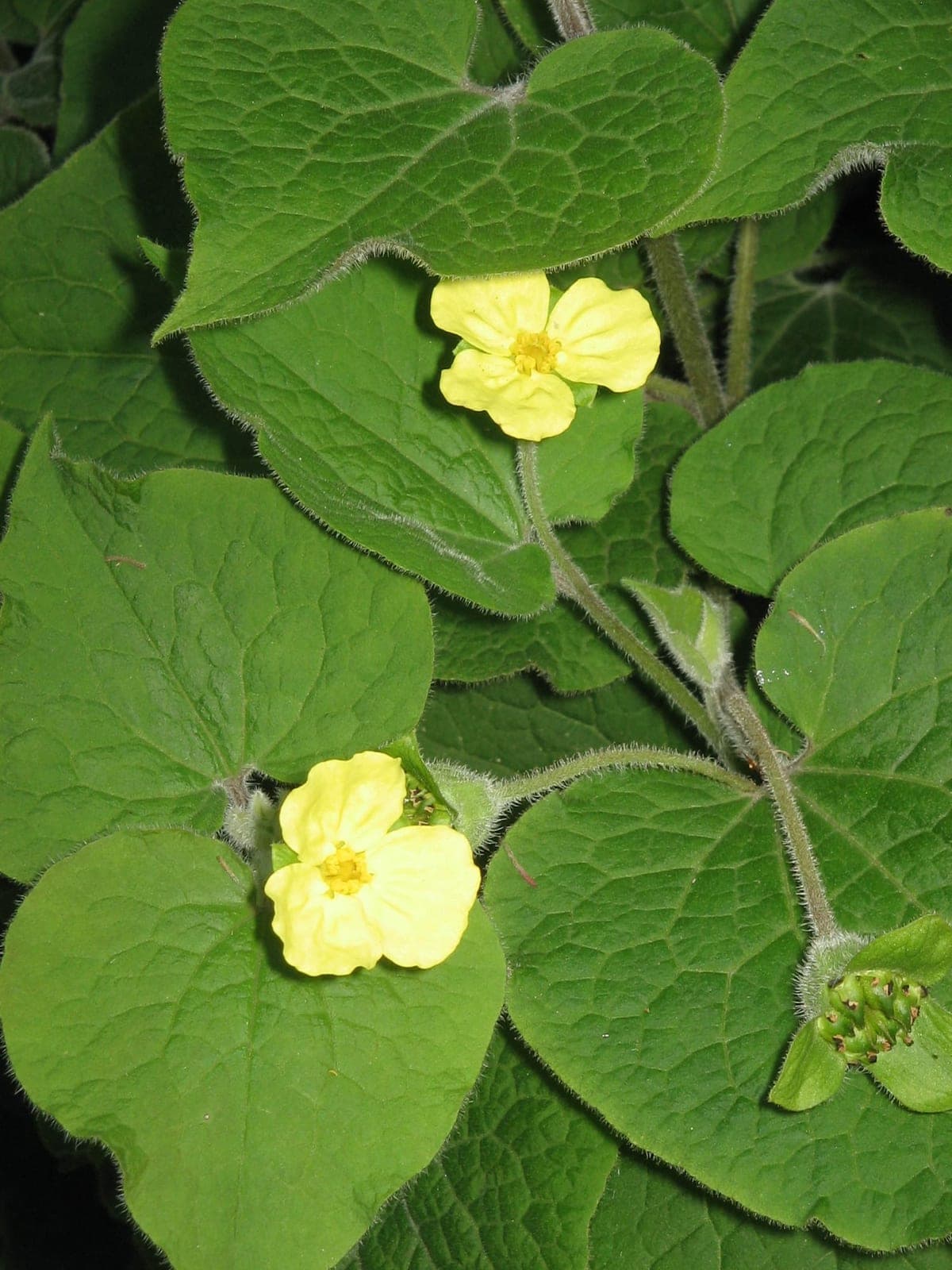
Saruma henryi is a rare woodland perennial from central China and the only species in its genus. The name Saruma is an anagram of the closely related Asarum (wild ginger), and the two share heart-shaped, softly hairy leaves and a preference for shaded, humus-rich soil. Small pale yellow, three-petaled flowers appear in spring and continue sporadically into early summer; the handsome foliage remains attractive through fall.
Native to forested slopes in Gansu, Guizhou, Hubei, Jiangxi, Shaanxi, and Sichuan, it is adapted to cool, humid summers and consistent soil moisture. In gardens it spreads slowly by rhizomes and self-sown seed without becoming invasive. Deciduous canopy provides the ideal combination of winter light and summer shade; a deep leaf-litter mulch mimics its forest-floor habitat and moderates moisture through dry spells. Slightly acidic soil in the pH 5.5–6.5 range is preferred.
Fungal leaf spot
Brown or purplish spots on the leaves, often ringed with a yellow halo, that spread and merge in warm, humid, or wet weather; heavily spotted leaves yellow and drop early.
Pick off spotted leaves and clear fallen debris to remove overwintering spores. Improve air circulation by thinning, and water at the base so foliage dries quickly. If it persists, apply a copper- or sulfur-based fungicide at the first sign.
Botrytis (grey mould)
Grey fuzzy mould on petals and stems, worst in cool wet conditions.
Remove affected parts immediately. Improve air circulation. Avoid overhead watering. Apply copper fungicide if severe.
Crown Rot
Lower leaves yellow and wilt; the base of the rosette turns brown and soft, sometimes with white fungal threads at the soil line. Plants collapse in wet conditions.
Remove and destroy affected plants. Improve drainage and avoid overhead watering. Do not mulch directly against the crown. Space plants for airflow and avoid replanting in the same wet spot.
Root rot
Plants wilt, yellow, and stunt even in moist soil; lower stems and roots turn brown, soft, and mushy and the plant may collapse. Most common in heavy, wet, or poorly drained ground.
Improve drainage and stop overwatering, and never plant too deep. Lift and destroy badly affected plants along with the soil around the roots. Grow in raised or free-draining beds to prevent it returning.