
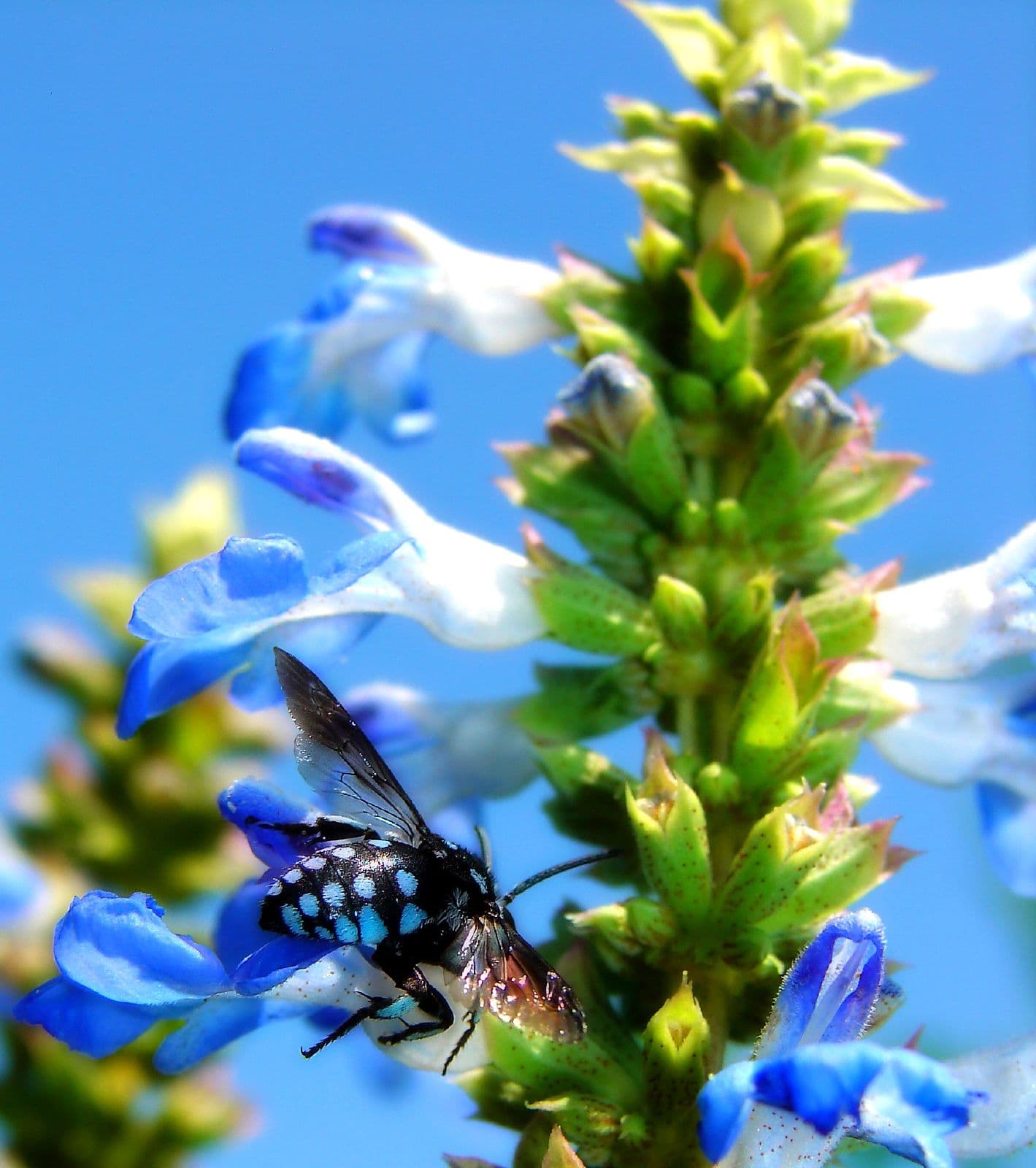
PL. —Salvia uliginosaBotanical illustration — drop image
Salvia uliginosa

Bog Sage

SummerFallInvasive
7b10bHardiness zone
Peak bloom windowZone 6b · frost-offset weeks
Winter
Not in bloom
Spring
Not in bloom
Summer
Peak bloom
Fall
Peak bloom
Peak bloom
In bloom
Background

Bog sage is the salvia to reach for in a damp corner of the border where most other salvias would sulk. Slender stems carry clear sky-blue flowers on airy, branching spikes from late summer clear through the first hard frost, and the color reads true at a distance in a way few blues in the garden do.

Unlike its drought-tolerant relatives, this species wants moist, rich soil and struggles through dry spells with wilted foliage. It spreads by shallow rhizomes and can naturalize into thick colonies in mild, wet climates — give it room or contain it. In zones colder than 7b, treat as a tender perennial and either mulch heavily or lift the rhizomes for winter.

Care guide
SunFull sun to part shade
WaterModerate to high — this is the one salvia that wants consistently moist soil
SoilRich, moisture-retentive; tolerates boggy spots
Spacing24–36 in
Height4–6 ft
Zone7b – 10b
WinterCut stems to the base after the first hard frost and mulch heavily over the crown; in zones colder than 7b, lift and pot the rhizomes to overwinter indoors in a cool, frost-free spot.
Invasive
Seasonal tasks
spring
sowPlant out potted starts after last frost in moist, fertile soil in full sun.
summer
watchKeep soil consistently moist through summer — this bog-native salvia wilts quickly in dry spells.
cutDeadhead spent spikes to prolong the sky-blue bloom into fall.
watchMonitor for powdery mildew during humid stretches; improve air circulation between plants.
cutPinch stem tips in late spring to encourage bushier growth and more flowering stems.
fall
overwinterCut stems to the base after the first hard frost and mulch heavily over the crown; in zones colder than 7b, lift and pot rhizomes to overwinter indoors in a cool, frost-free spot.
Common problems

Powdery mildew

Symptoms

White or grey powdery coating on leaves — usually starting on older growth in humid conditions or when nights cool.

Treatment

Improve air circulation by thinning plants. Apply neem oil or potassium bicarbonate spray at first sign. Avoid overhead watering.

Root rot

Symptoms

Plants wilt, yellow, and stunt even in moist soil; lower stems and roots turn brown, soft, and mushy and the plant may collapse. Most common in heavy, wet, or poorly drained ground.

Treatment

Improve drainage and stop overwatering, and never plant too deep. Lift and destroy badly affected plants along with the soil around the roots. Grow in raised or free-draining beds to prevent it returning.