
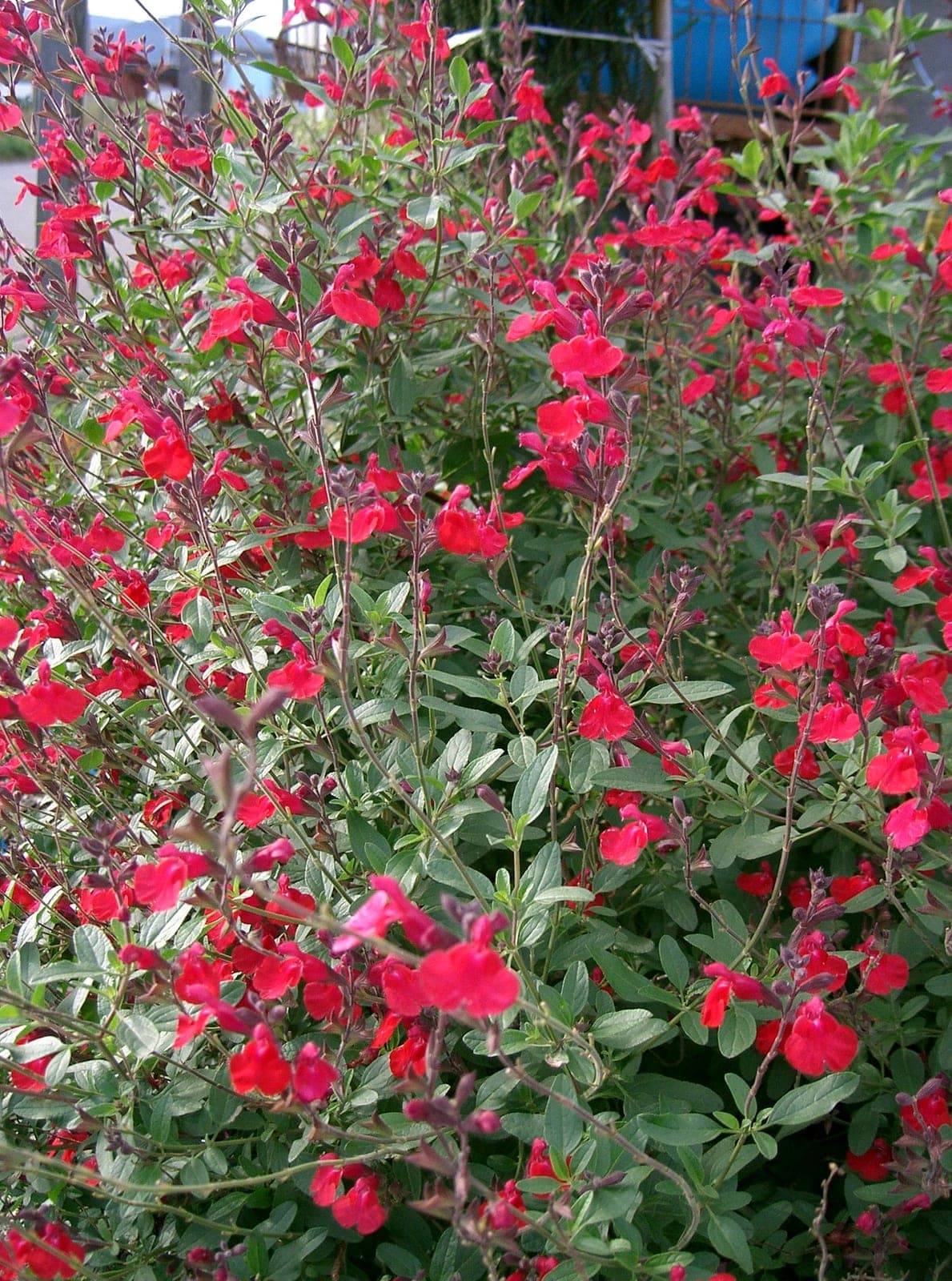
Native to mountainous, dry slopes of southern Arizona, Mexico, and Guatemala, baby sage is a small-leaved, aromatic shrub closely related to autumn sage and often confused or hybridized with it in the trade (the cross is sold as Salvia × jamensis). Flowers in shades of red, pink, or bicolor open from spring through fall, with the heaviest show arriving as temperatures cool in early autumn.
Like its close relative, it needs sharp drainage far more than rich soil, and once established shrugs off drought and summer heat without extra water. Crushing a leaf releases a distinctive fruity-sage scent. A hard prune in late winter keeps growth compact and productive.
Ecoregions:Southern Semi-Arid Highlands
Root rot
Plants wilt, yellow, and stunt even in moist soil; lower stems and roots turn brown, soft, and mushy and the plant may collapse. Most common in heavy, wet, or poorly drained ground.
Improve drainage and stop overwatering, and never plant too deep. Lift and destroy badly affected plants along with the soil around the roots. Grow in raised or free-draining beds to prevent it returning.