
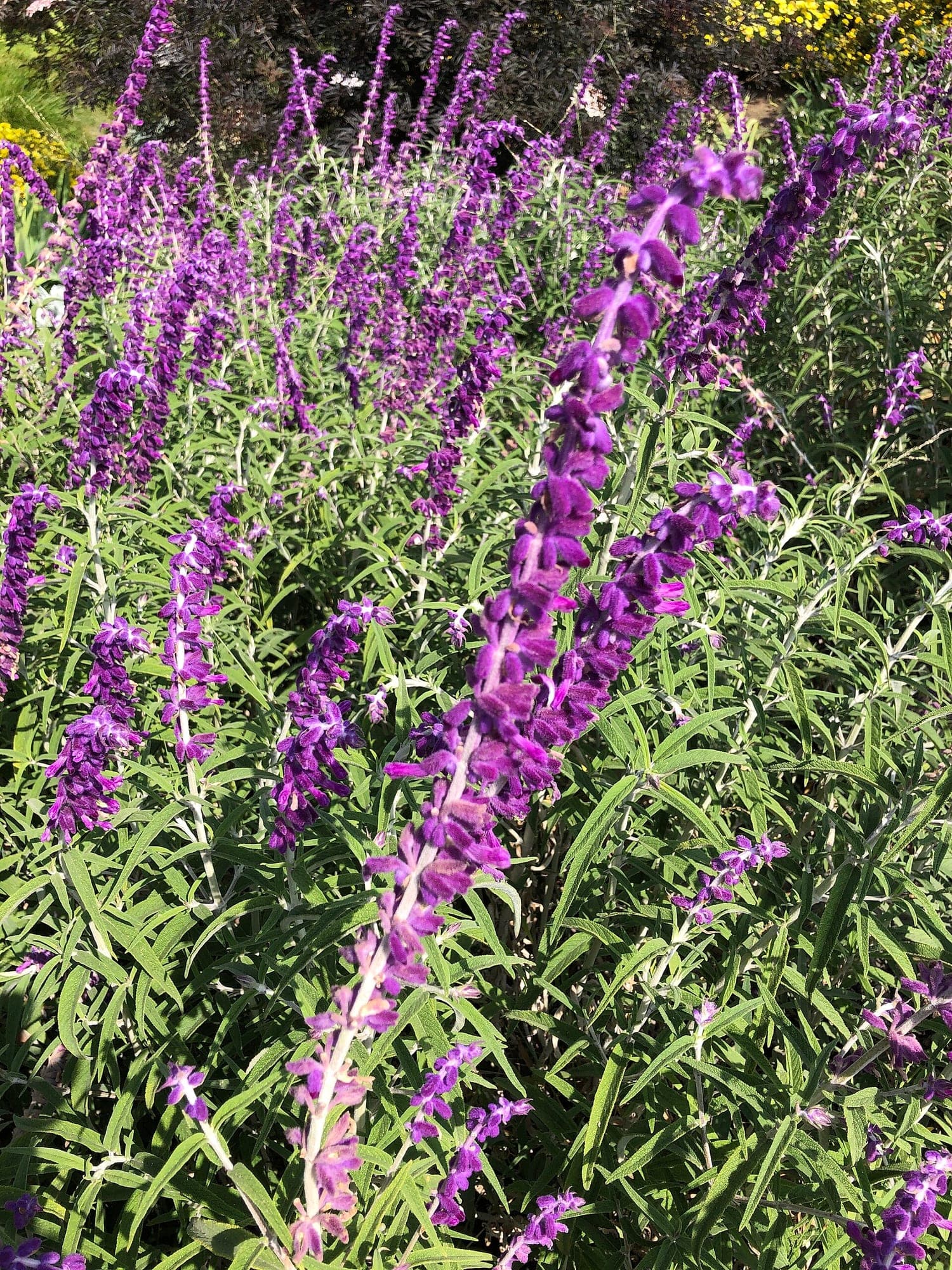
Mexican bush sage is a shrubby perennial from the pine and oak forests of Mexico, and it is one of the best late-season flowers there is. From late summer until a hard frost it carries 6–10 in spikes of velvety purple calyces, from which small white flowers emerge, above narrow gray-green leaves that are silvery underneath. It grows 3–4 ft tall and about as wide, and it flowers when most of the garden is winding down, which makes it an important late nectar source for hummingbirds, butterflies, and bees. Deer leave it alone.
Give it full sun and well-drained soil; it tolerates dry spells once established. It is a perennial in zones 7–10, though in the colder end of that range it can die back hard in a bad winter. Further north it is grown as an annual or lifted and overwintered, and rooted cuttings taken before frost are a cheap way to carry it through. It flowers on new growth, so cutting it back hard as spring growth resumes keeps it compact, and pinching the tips once or twice early in the season gives a fuller plant. Shade or heavy feeding gives lanky, floppy stems and fewer flowers.
Root rot
Plants wilt, yellow, and stunt even in moist soil; lower stems and roots turn brown, soft, and mushy and the plant may collapse. Most common in heavy, wet, or poorly drained ground.
Improve drainage and stop overwatering, and never plant too deep. Lift and destroy badly affected plants along with the soil around the roots. Grow in raised or free-draining beds to prevent it returning.
Powdery mildew
White or grey powdery coating on leaves - usually starting on older growth in humid conditions or when nights cool.
Improve air circulation by thinning plants. Apply neem oil or potassium bicarbonate spray at first sign. Avoid overhead watering.