
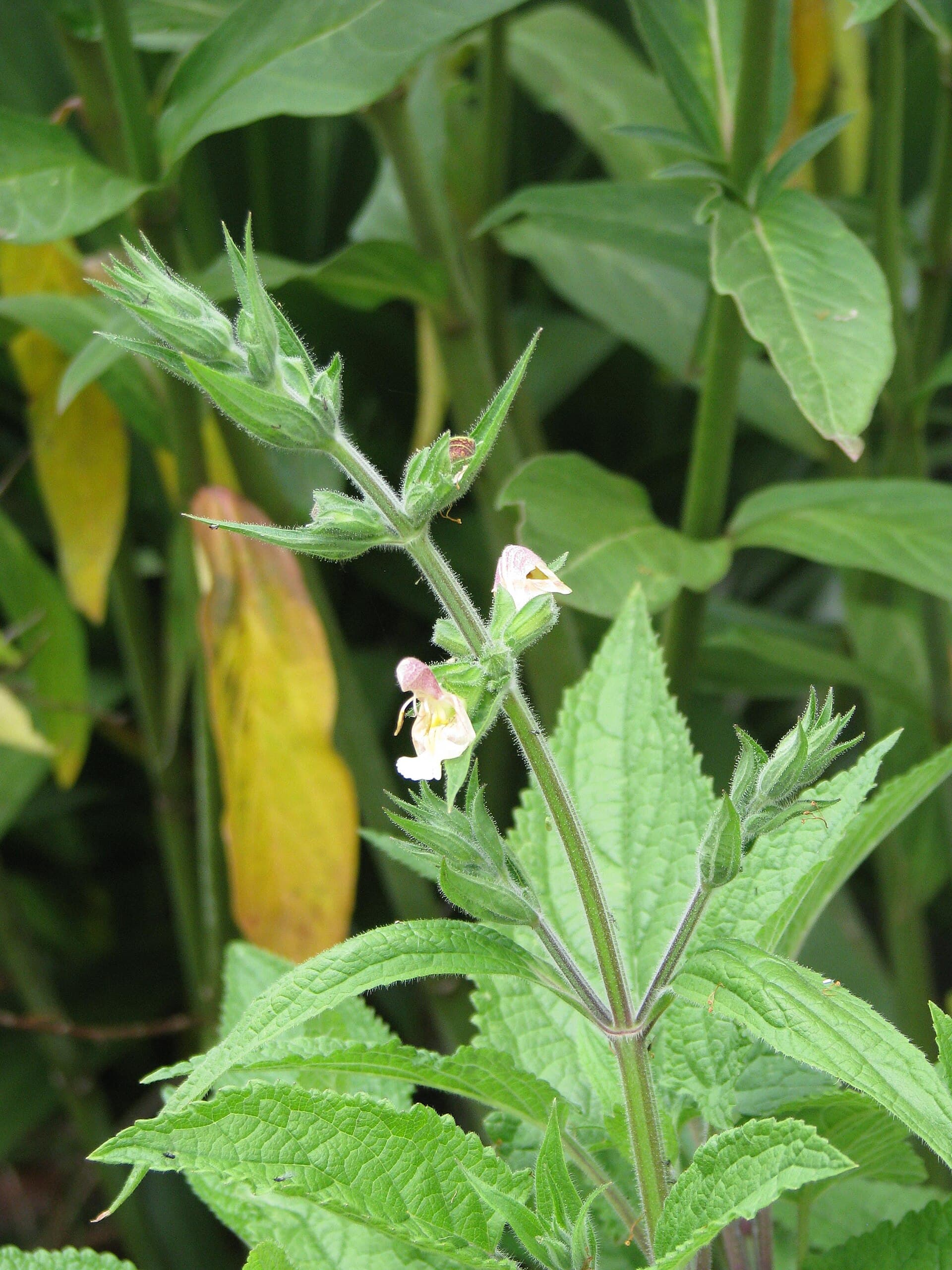
Native to the island of Honshu, Japan, Japanese yellow sage is an unusual salvia for the woodland garden - while most salvias want full sun, this one thrives in part to nearly full shade. Slow-growing and clump-forming with hairy, arrow-shaped leaves, it sends trailing stems that creep gently over time, providing an interesting groundcover effect under high shade before terminal spikes of soft yellow, tubular flowers top the foliage from late summer through fall.
It wants fertile, humus-rich soil with consistent moisture, unlike the drought-loving sun salvias - established plants tolerate short dry spells but perform best without extended drought. Heat and humidity tolerant, and deer generally leave it alone.
Powdery mildew
White or grey powdery coating on leaves - usually starting on older growth in humid conditions or when nights cool.
Improve air circulation by thinning plants. Apply neem oil or potassium bicarbonate spray at first sign. Avoid overhead watering.