
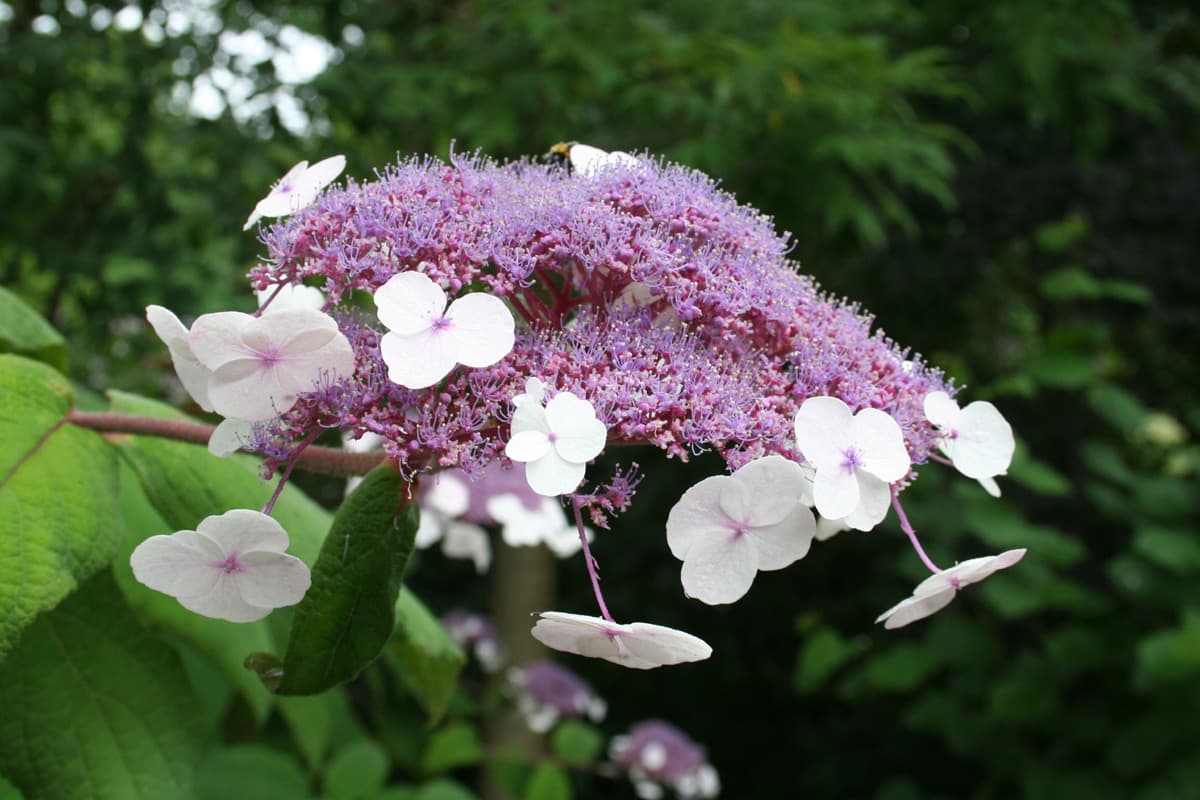
Hydrangea aspera is a large deciduous shrub native to montane forests from the Himalayas through southern China and Taiwan. It grows to 10 ft tall and wide with broadly oval, rough-textured leaves on stout, densely branched stems. In late summer it produces large flat lacecap heads of pale blue and pink fertile florets fringed by white or pale pink sterile florets - one of the most architecturally striking hydrangeas for shaded gardens.
This species requires a sheltered position with dappled or part shade; afternoon sun scorches the large leaves. Humus-rich, moist but well-drained soil is essential. It tolerates more shade than most hydrangeas and suits the edge of a woodland garden or a north- or east-facing border. Emerging buds are vulnerable to late spring frosts in zone 7, and the root zone benefits from a generous organic mulch before winter. Cultivars 'Villosa' and 'Sam McDonald' are widely grown for their especially large flower heads.
Powdery mildew
White or grey powdery coating on leaves - usually starting on older growth in humid conditions or when nights cool.
Improve air circulation by thinning plants. Apply neem oil or potassium bicarbonate spray at first sign. Avoid overhead watering.
Botrytis (grey mould)
Grey fuzzy mould on petals and stems, worst in cool wet conditions.
Remove affected parts immediately. Improve air circulation. Avoid overhead watering. Apply copper fungicide if severe.
Fungal leaf spot
Brown or purplish spots on the leaves, often ringed with a yellow halo, that spread and merge in warm, humid, or wet weather; heavily spotted leaves yellow and drop early.
Pick off spotted leaves and clear fallen debris to remove overwintering spores. Improve air circulation by thinning, and water at the base so foliage dries quickly. If it persists, apply a copper- or sulfur-based fungicide at the first sign.
Root rot
Plants wilt, yellow, and stunt even in moist soil; lower stems and roots turn brown, soft, and mushy and the plant may collapse. Most common in heavy, wet, or poorly drained ground.
Improve drainage and stop overwatering, and never plant too deep. Lift and destroy badly affected plants along with the soil around the roots. Grow in raised or free-draining beds to prevent it returning.
Leaf gall
Leaves, buds, or young shoots thicken into pale green, reddish, or whitish fleshy galls that later turn white with a powdery spore bloom before browning.
Pick off and destroy galls before they turn white and shed spores. Improve air circulation and avoid overhead watering in spring. The damage is largely cosmetic and rarely needs fungicide.
Hydrangea Ringspot Virus
Irregular pale yellow or white rings, line patterns, and chlorotic spots on leaves. Affected leaves may pucker or distort. Symptoms intensify in warm weather and can resemble nutrient deficiency.
No chemical cure exists. Remove and destroy infected plants promptly. Disinfect pruning tools between cuts with a 10% bleach or 70% isopropyl alcohol solution. Control aphids, which spread the virus mechanically. Purchase only certified virus-free nursery stock.