
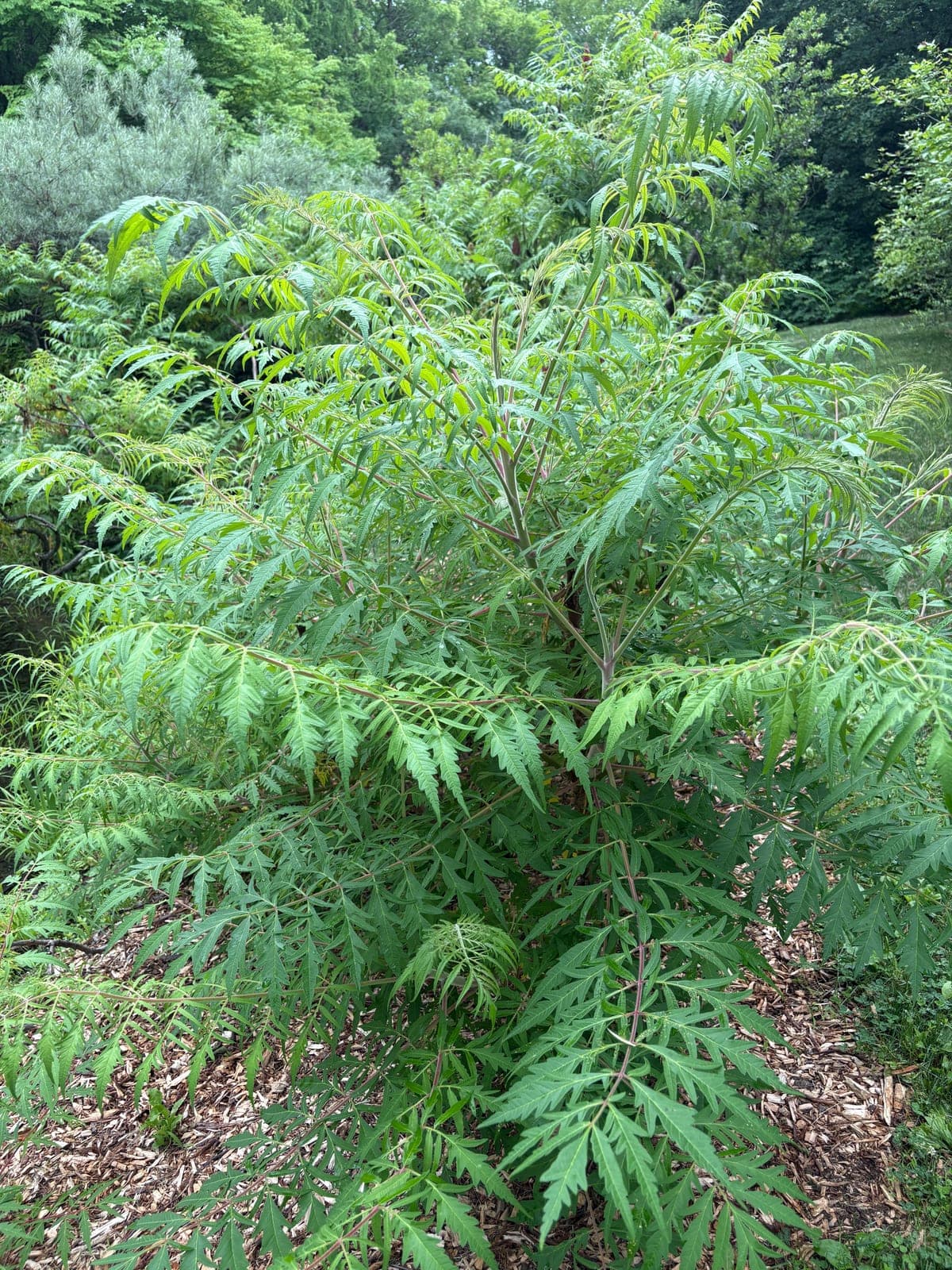
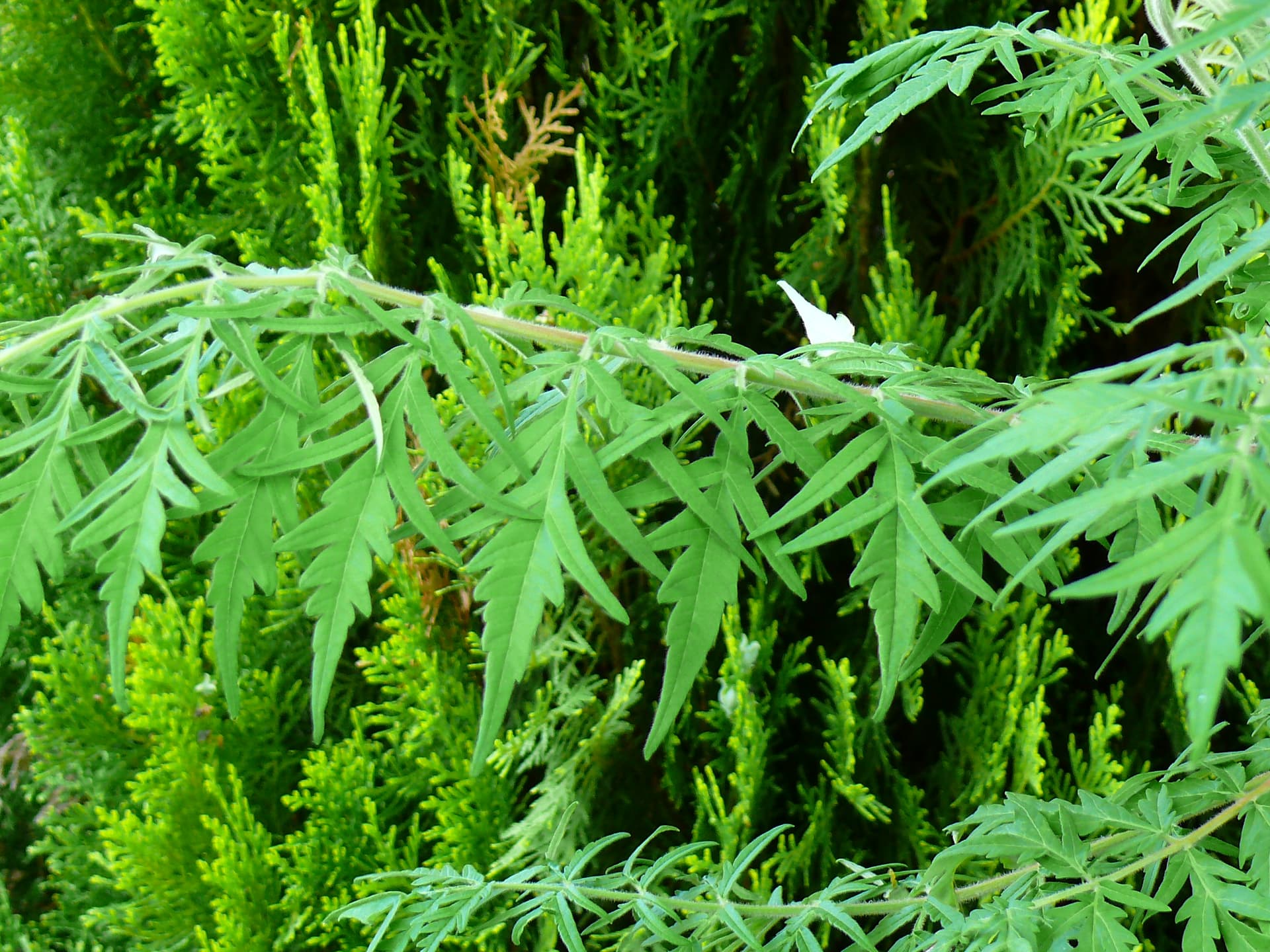
 'Dissecta' (syn. 'Laciniata') - deeply cut, fern-like leaflets give this cutleaf staghorn sumac a lacier texture than the species. Photo: aha, CC BY-SA 3.0.
Staghorn sumac is one of those plants that rewards the gardener who embraces a bit of wildness - it wants lean, well-drained soil and full sun, and it will sulk in rich, wet ground. Amend heavy clay with grit or coarse sand before planting, and resist the urge to fertilize; too much nitrogen pushes floppy, weak growth and dulls the spectacular fall color that makes this shrub worth every inch of space. Plant container-grown specimens in spring after frost, or in early fall with at least six weeks before hard freeze. If you're starting from seed, cold stratification is essential - scarify the seed coat lightly with sandpaper, then stratify in moist sand in the fridge for 30–60 days before sowing. The biggest mistake gardeners make is planting it in a spot that's too confined; staghorn sumac spreads by root suckers enthusiastically, so give it room or plan to mow around the perimeter regularly to keep colonies in check.
Beyond its ornamental value, staghorn sumac has a long history of use in traditional medicine and the kitchen. Indigenous peoples of North America steeped the ripe red berry clusters to make a tart, lemonade-like drink rich in vitamin C and antioxidants - you can do the same by cold-soaking the clusters in water for 20–30 minutes (avoid boiling, which releases tannins and turns the drink bitter). Strain through cheesecloth and sweeten to taste for a refreshing summer drink. The dried, ground berries are a key ingredient in the Middle Eastern spice blend za'atar and are used as a souring agent much like lemon juice - brilliant on roasted vegetables, grilled meats, and hummus. Medicinally, sumac berry tea has been used traditionally to soothe sore throats, reduce fever, and support urinary tract health, with modern research pointing to its significant antioxidant load as the likely mechanism. Just confirm your identification carefully - staghorn sumac's velvety, hairy stems and upright red berry clusters are distinctive, but it's worth knowing your plant before you eat it.