
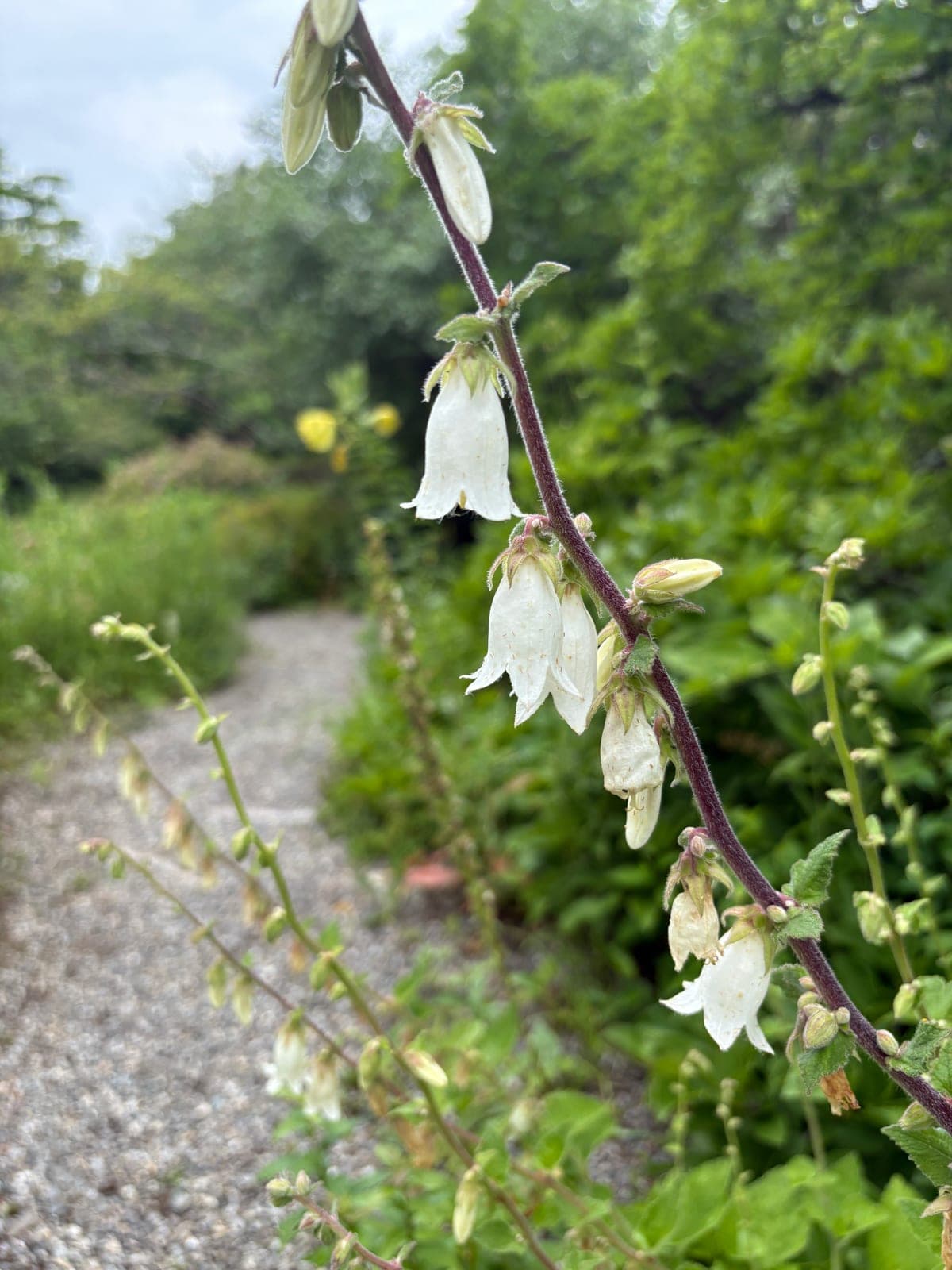
Ivory Bellflower is one of those quietly rewarding perennials that earns its place through sheer reliability. Start by preparing a well-drained spot with plenty of organic matter worked in - this plant loves a humus-rich soil with a pH nudging toward neutral or slightly alkaline, so if your ground is acidic, a little garden lime worked in before planting makes a real difference. It's most at home in partial to full shade, making it a brilliant choice for those tricky spots under deciduous trees or along north-facing borders. Plant out divisions or pot-grown specimens in spring once the soil is workable, spacing them around 30cm apart so they can fill in gracefully over a season or two. The most common mistake gardeners make is planting in a spot that's too dry - Campanula alliariifolia can handle shade beautifully, but it resents drought, so keep the soil consistently moist, especially through the first growing season while roots establish. Cold stratification gives seeds a real head start, so if you're raising plants from seed, mix them with damp sand and refrigerate for 4–6 weeks before sowing indoors under lights in late winter.
Beyond its ornamental charm, Campanula alliariifolia has a modest footprint in traditional herbal knowledge - various bellflowers have been used historically in Eastern European folk medicine as mild anti-inflammatory preparations, though this species isn't widely documented in formal herbalism and should be treated with appropriate caution. The leaves, which are softly hairy and heart-shaped at the base, are technically edible and have been used in salads and cooked greens in parts of the Caucasus, where the plant originates - young spring leaves are the most tender and palatable, with a mild, slightly grassy flavour not unlike spinach. As a garden companion, it pairs naturally with yarrow and calendula at the sunnier edges of a planting, and sits beautifully alongside chamomile in a semi-shaded cottage-style border. Once established, it self-seeds gently without becoming a nuisance, and clumps benefit from division every three to four years in early spring to keep them vigorous and free-flowering.