
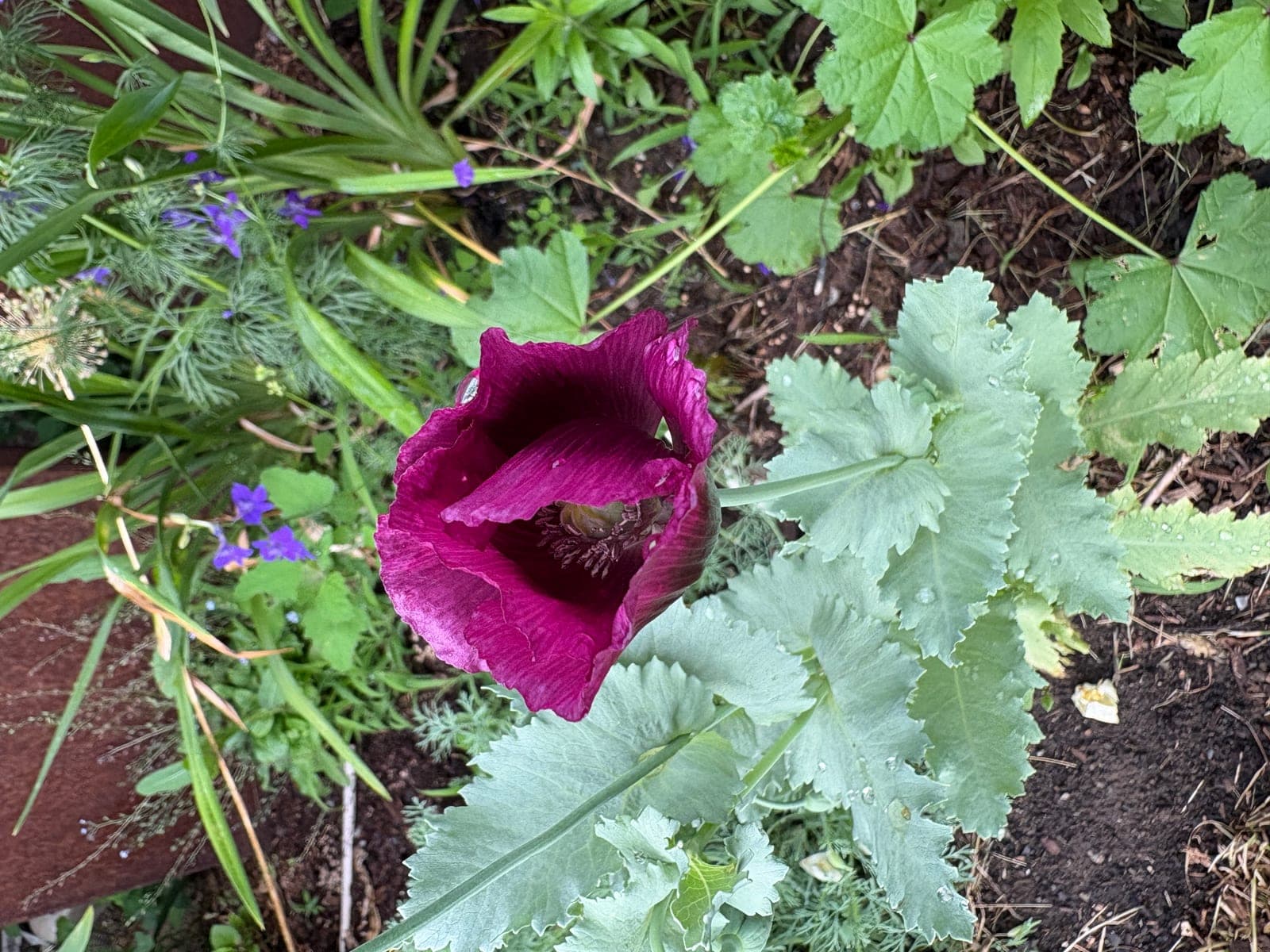
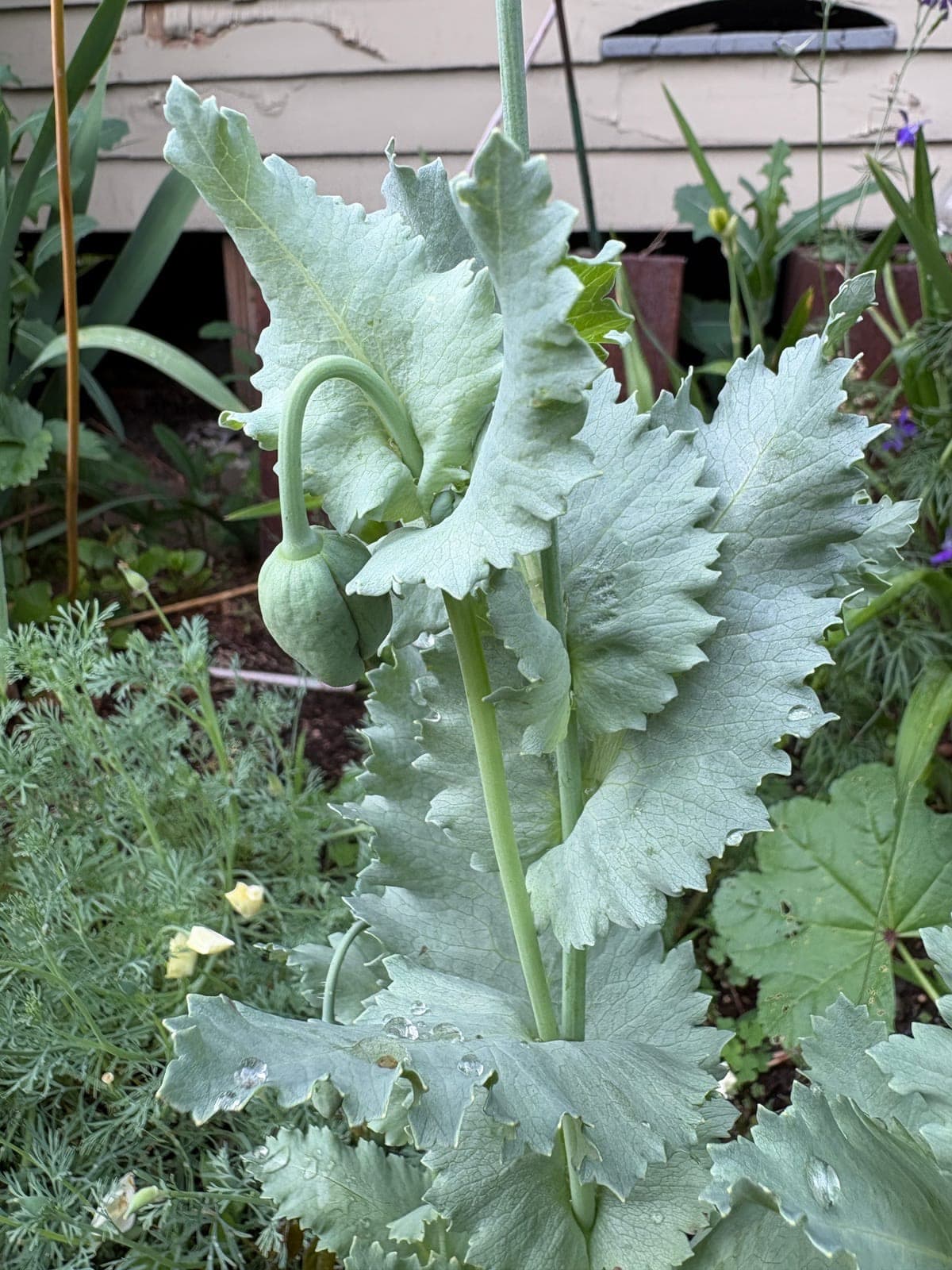
Breadseed poppy is one of the most rewarding plants a gardener can scatter - elegant glaucous foliage, enormous silky flowers in every shade from white through palest lavender to deep burgundy and near-black, and dramatic silver seed pods that dry perfectly on the stem. It is a hardy annual that thrives on neglect: sow it directly into bare soil in early spring while frosts still threaten, or in autumn, and it will do the rest. Rich soil and heavy feeding produce lush leaves at the expense of flowers; lean, well-drained ground gives the best display.
For cut flowers, harvest stems when the bud has just cracked open and the first flash of colour is visible - fully open flowers shatter quickly. Sear the stem end in a flame immediately after cutting to stop the milky sap. Leave a portion of the plant to set seed and it will self-sow reliably for years, gradually naturalising across a border. The rounded blue-grey seed heads are as ornamental as the flowers and can be harvested dry for arrangements or culinary use - the seeds contain only trace alkaloids and are safe to eat.
Powdery mildew
White or grey powdery coating on leaves - usually starting on older growth in humid conditions or when nights cool.
Improve air circulation by thinning plants. Apply neem oil or potassium bicarbonate spray at first sign. Avoid overhead watering.
Root rot
Plants wilt, yellow, and stunt even in moist soil; lower stems and roots turn brown, soft, and mushy and the plant may collapse. Most common in heavy, wet, or poorly drained ground.
Improve drainage and stop overwatering, and never plant too deep. Lift and destroy badly affected plants along with the soil around the roots. Grow in raised or free-draining beds to prevent it returning.
Damping Off
Seedlings collapse at the soil line with thin, water-soaked stems; seeds may fail to emerge or rot before sprouting.
Sow in well-draining mix, avoid overwatering, and ensure good airflow. Remove affected seedlings and let the surface dry between waterings.