
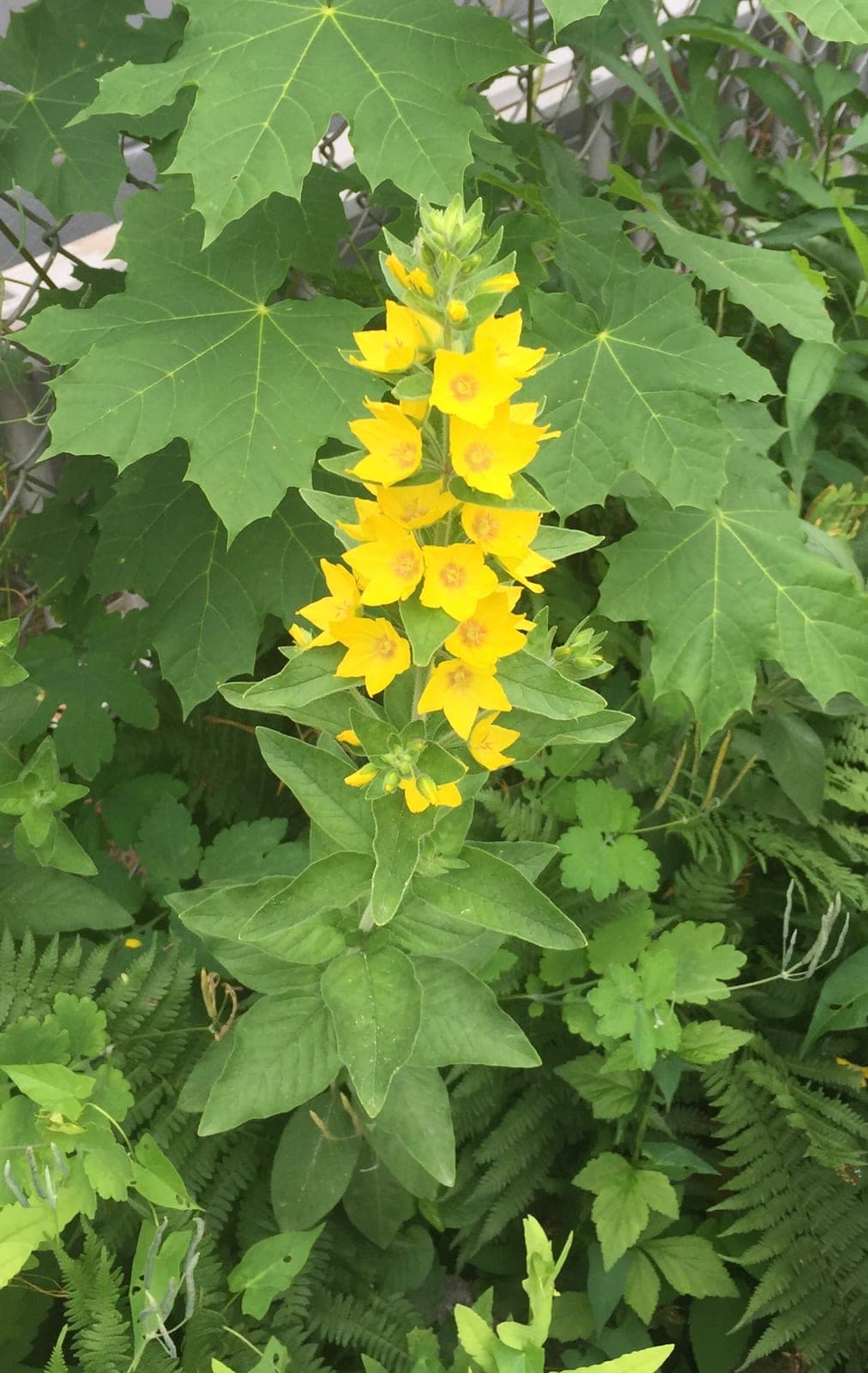
Yellow loosestrife is a confident, upright perennial that earns its place at the back of a border or along a pond edge, throwing up dense columns of bright yellow cup-flowers in June and July that hum with bees. It spreads steadily by underground rhizomes and forms substantial clumps over time - a quality that makes it excellent for filling problem corners of damp ground, though it does need containment in a well-tended bed.
Plant in a spot with consistently moist soil; it is especially well suited to rain gardens, stream margins, and the north-facing side of a border where hostas and ferns are its natural neighbors. Divide the clump every three or four years in spring to keep it vigorous and to prevent it crowding out smaller neighbours. Cut stems back to the ground after frost - the plant is fully herbaceous and re-emerges reliably each spring.
Powdery mildew
White or grey powdery coating on leaves - usually starting on older growth in humid conditions or when nights cool.
Improve air circulation by thinning plants. Apply neem oil or potassium bicarbonate spray at first sign. Avoid overhead watering.
Rust
Orange to brown raised pustules on the undersides of leaves, with yellow spotting on the upper surface. Heavy infections cause leaves to yellow and drop.
Remove and destroy infected leaves. Avoid overhead watering and improve air circulation. Apply a sulfur or copper-based fungicide if it spreads. Clear plant debris in fall.