
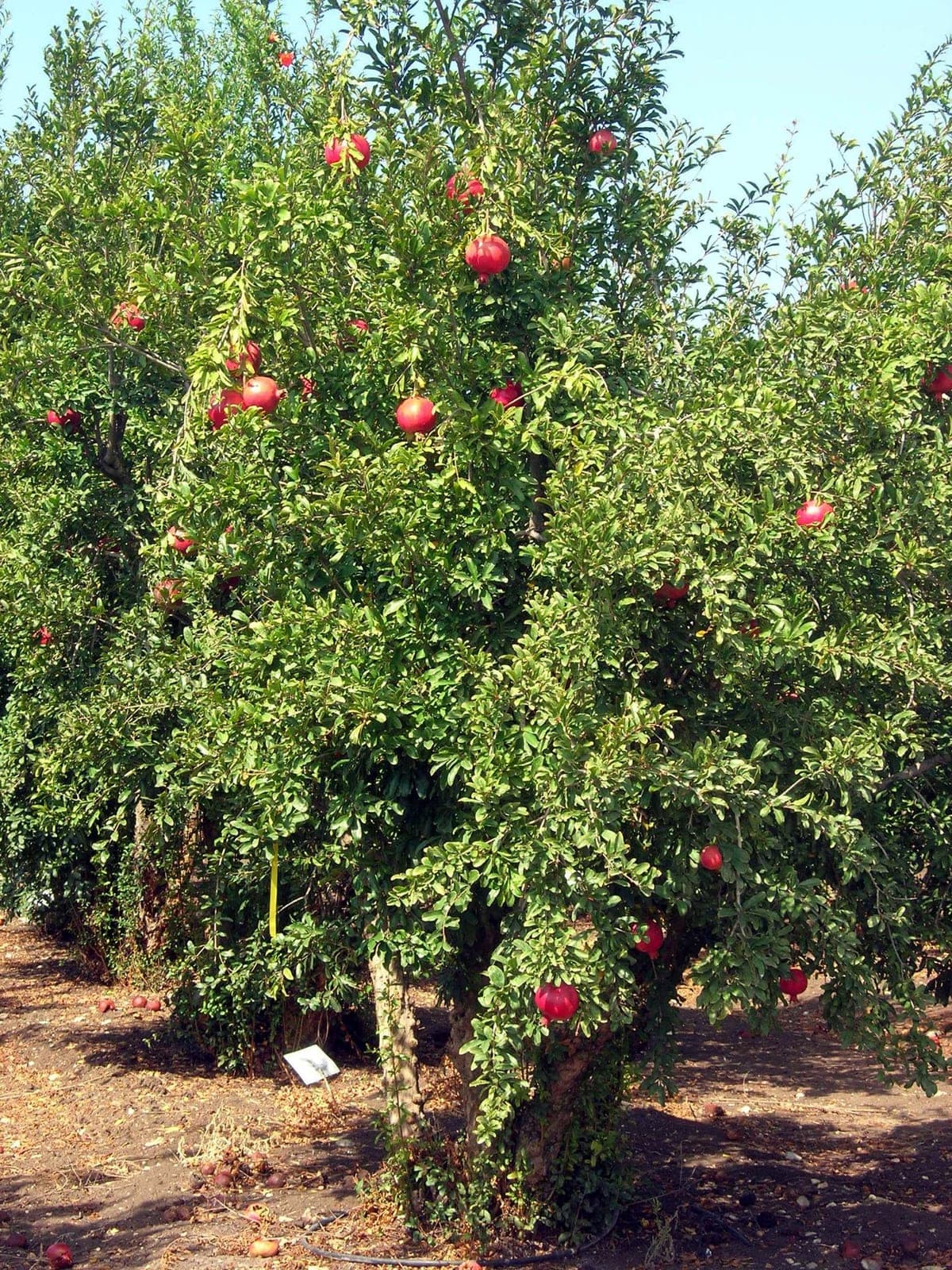
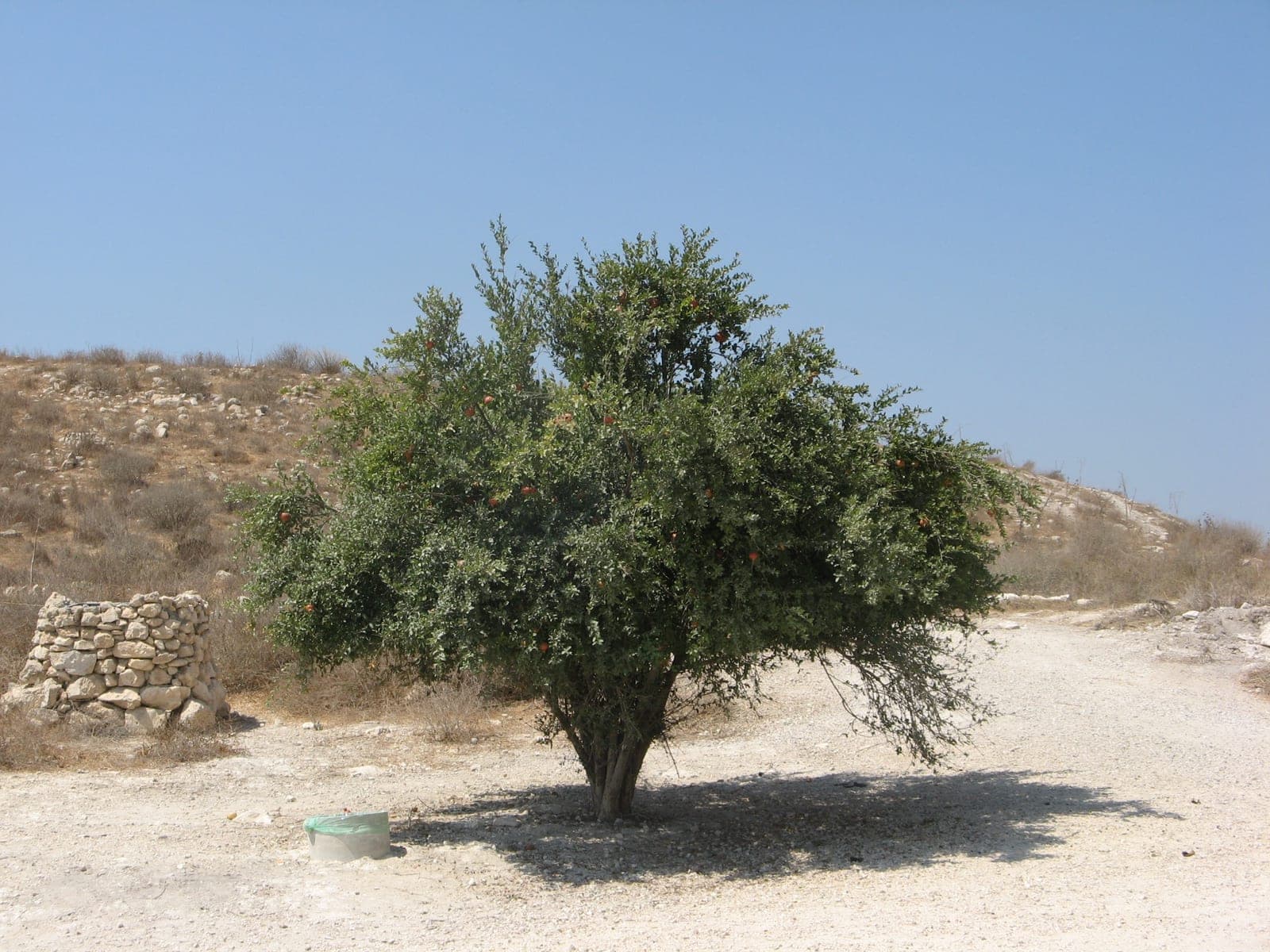
Punica granatum is a deciduous shrub grown for its fruit, showy orange-red flowers in late spring, and year-round ornamental structure. Native to the Iranian plateau, it has been cultivated for roughly 5,000 years and remains central to Mediterranean, Middle Eastern, and South Asian food traditions. In North American gardens it functions as a fruiting specimen, a tall informal hedge, or an espalier candidate on south-facing walls.
Pomegranate demands full sun and sharp drainage above all else. It tolerates poor, alkaline, and mildly saline soils better than most fruiting trees and becomes highly drought-tolerant once established. In zones 7b–8a, a sheltered south-facing microclimate and deep mulch over the root zone improve winter survival; stems killed back by temperatures below about -9°C (15°F) often resprout from established root systems. The plant suckers freely from the base - decide early whether to train a single-trunk form by removing suckers consistently, or allow a multi-stem shrub structure to develop. Fruit matures 5–7 months after flowering.
The arils are eaten fresh or pressed for juice; pomegranate molasses and dried arils (anardana) are culinary ingredients across Persian, Levantine, and South Asian cooking. The rind and bark, high in tannins, appear in traditional medicine systems as treatments for intestinal parasites, diarrhea, and dysentery. Published research documents antioxidant, anti-inflammatory, and antihypertensive activity from punicalagins and anthocyanins present in the juice and peel.
Powdery mildew
White or grey powdery coating on leaves - usually starting on older growth in humid conditions or when nights cool.
Improve air circulation by thinning plants. Apply neem oil or potassium bicarbonate spray at first sign. Avoid overhead watering.
Alternaria blight
Brown circular spots with yellow halos on leaves; spreads rapidly in wet weather.
Remove affected leaves immediately. Water at the base only. A copper-based fungicide can help if caught early.
Cercospora Leaf Spot
Small round spots with tan or gray centers and reddish-purple borders on leaves. Spots merge in severe cases, causing leaves to brown and die back.
Remove infected leaves and avoid overhead watering. Space plants for airflow and rotate crops. Apply a copper-based fungicide if the infection spreads.
Botrytis (grey mould)
Grey fuzzy mould on petals and stems, worst in cool wet conditions.
Remove affected parts immediately. Improve air circulation. Avoid overhead watering. Apply copper fungicide if severe.
Phytophthora Root Rot
Wilting despite moist soil, yellowing leaves, stunted growth, and dark, decayed roots and crown tissue. Vines may collapse during hot weather.
Plant in well-draining soil and avoid waterlogging. Remove and destroy affected vines. Improve drainage with raised beds or amended soil and avoid overwatering.
Crown Rot
Lower leaves yellow and wilt; the base of the rosette turns brown and soft, sometimes with white fungal threads at the soil line. Plants collapse in wet conditions.
Remove and destroy affected plants. Improve drainage and avoid overhead watering. Do not mulch directly against the crown. Space plants for airflow and avoid replanting in the same wet spot.
Aspergillus Heart Rot
Fruit exterior appears completely normal. Internally, arils are partially or fully blackened, shriveled, and may have a musty odor. Infection by Aspergillus niger and related species enters through the open calyx during fruit development and is invisible until the fruit is cut open.
Avoid overhead irrigation during flowering and fruit development to keep the calyx dry. Harvest promptly at maturity - overripe fruit left on the tree is at greatest risk. Store harvested fruit in cool, dry conditions and inspect before storage. Remove and destroy infected fruit immediately. In humid climates, apply copper-based fungicide sprays directed at the calyx during the flowering period to reduce infection rates.