
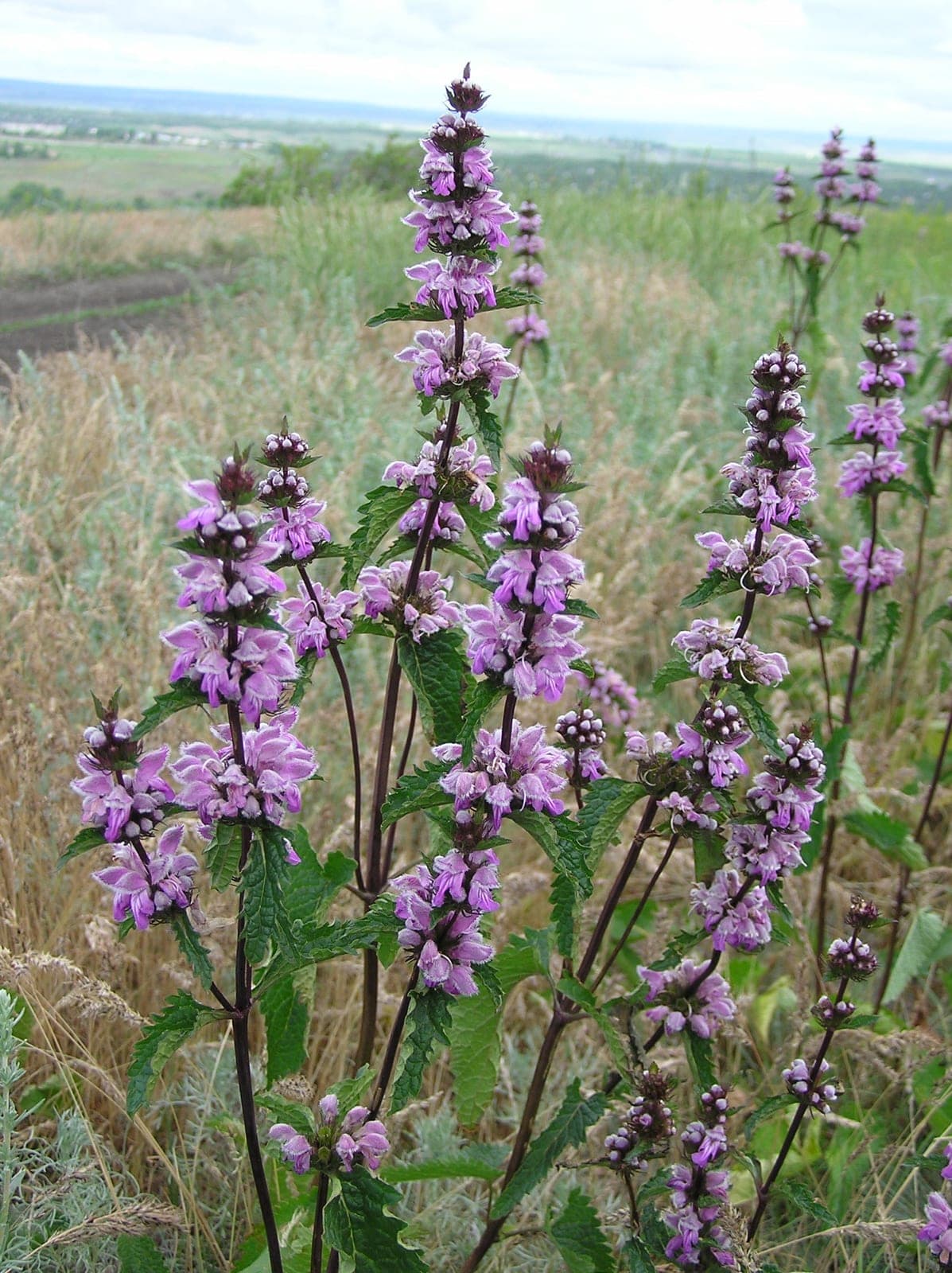
Tuberous Jerusalem sage sends up tall, near-black stems carrying tight whorls of hooded, dusky-pink flowers stacked at intervals up the spike - a striking vertical accent above a low mound of rough, sage-scented foliage. Native to central and eastern Europe and western Asia, it thrives in the same lean, sunny conditions as culinary sage and other Mediterranean-leaning perennials, and the seed heads hold their architectural whorled shape well after the flowers fade, carrying interest into fall and winter if left uncut.
It is drought tolerant once established, spreads slowly from underground tubers, and is rarely bothered by deer or rabbits thanks to its aromatic, slightly fuzzy foliage. Give it full sun and sharp drainage - it resents heavy, wet winter soil far more than cold. Deadheading isn't necessary for rebloom, but cutting the spent flower stems back after the display fades keeps the clump tidy going into fall.
Root rot
Plants wilt, yellow, and stunt even in moist soil; lower stems and roots turn brown, soft, and mushy and the plant may collapse. Most common in heavy, wet, or poorly drained ground.
Improve drainage and stop overwatering, and never plant too deep. Lift and destroy badly affected plants along with the soil around the roots. Grow in raised or free-draining beds to prevent it returning.