
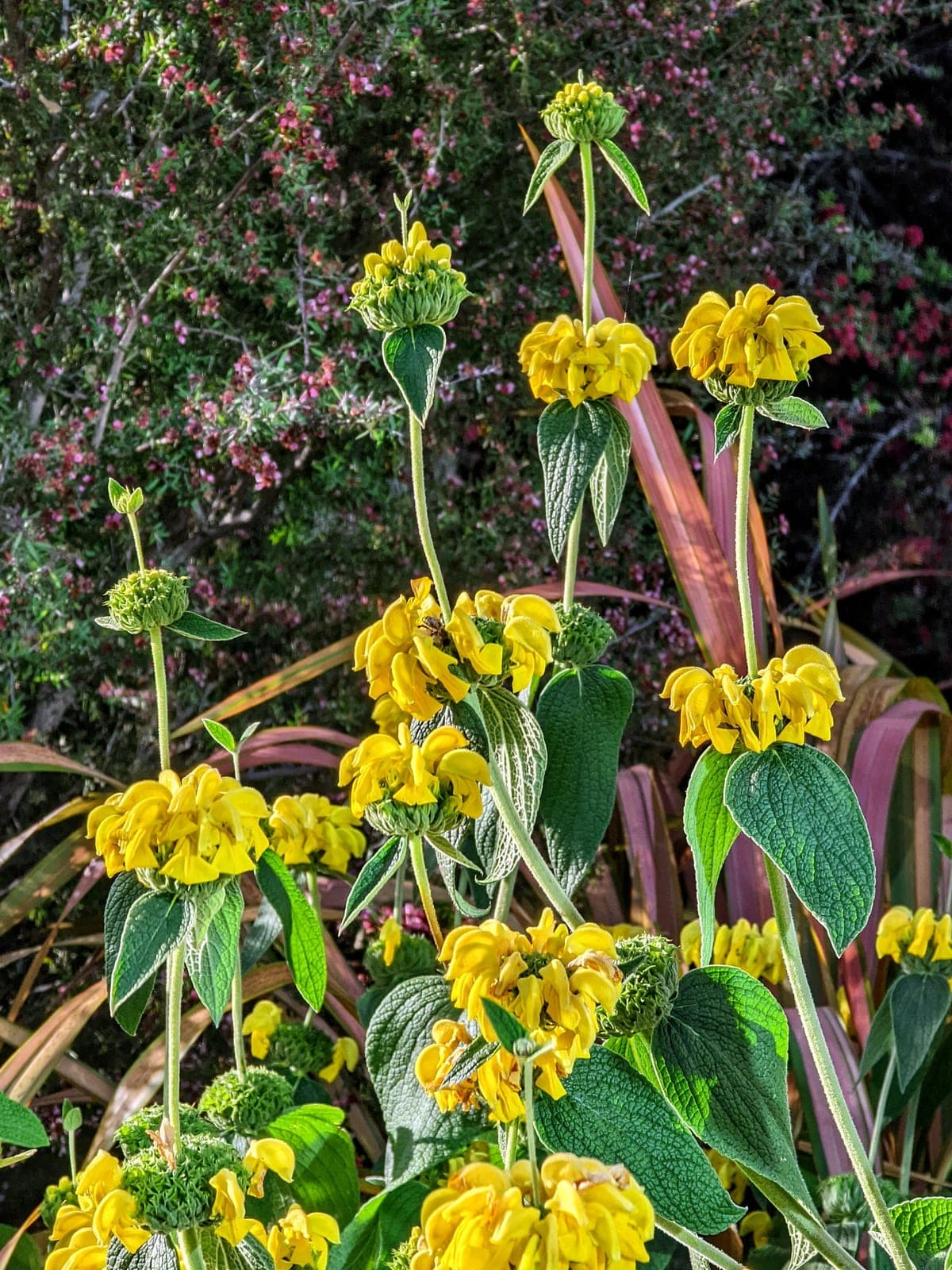
Turkish sage spreads by rhizomes into a dense, weed-smothering mat of large, felted, sage-green leaves, sending up sturdy stems in early summer stacked with tiers of soft, hooded yellow flowers in whorls, spaced at intervals like a candelabra. Native to Turkey and Syria, it's an easy, low-maintenance ground cover for a sunny bank or the front of a border, and the seed heads that follow keep the same whorled architecture through fall and winter, giving structure to the border long after the flowers fade - a favorite for gardeners who leave stems standing for winter interest.
It is drought tolerant once established and spreads readily, so give it room or expect to divide it every few years to keep it in bounds. Rarely troubled by deer or rabbits thanks to its coarse, aromatic foliage. It tolerates poor soil and light shade better than most Phlomis, but flowers most heavily in full sun.
Root rot
Plants wilt, yellow, and stunt even in moist soil; lower stems and roots turn brown, soft, and mushy and the plant may collapse. Most common in heavy, wet, or poorly drained ground.
Improve drainage and stop overwatering, and never plant too deep. Lift and destroy badly affected plants along with the soil around the roots. Grow in raised or free-draining beds to prevent it returning.