
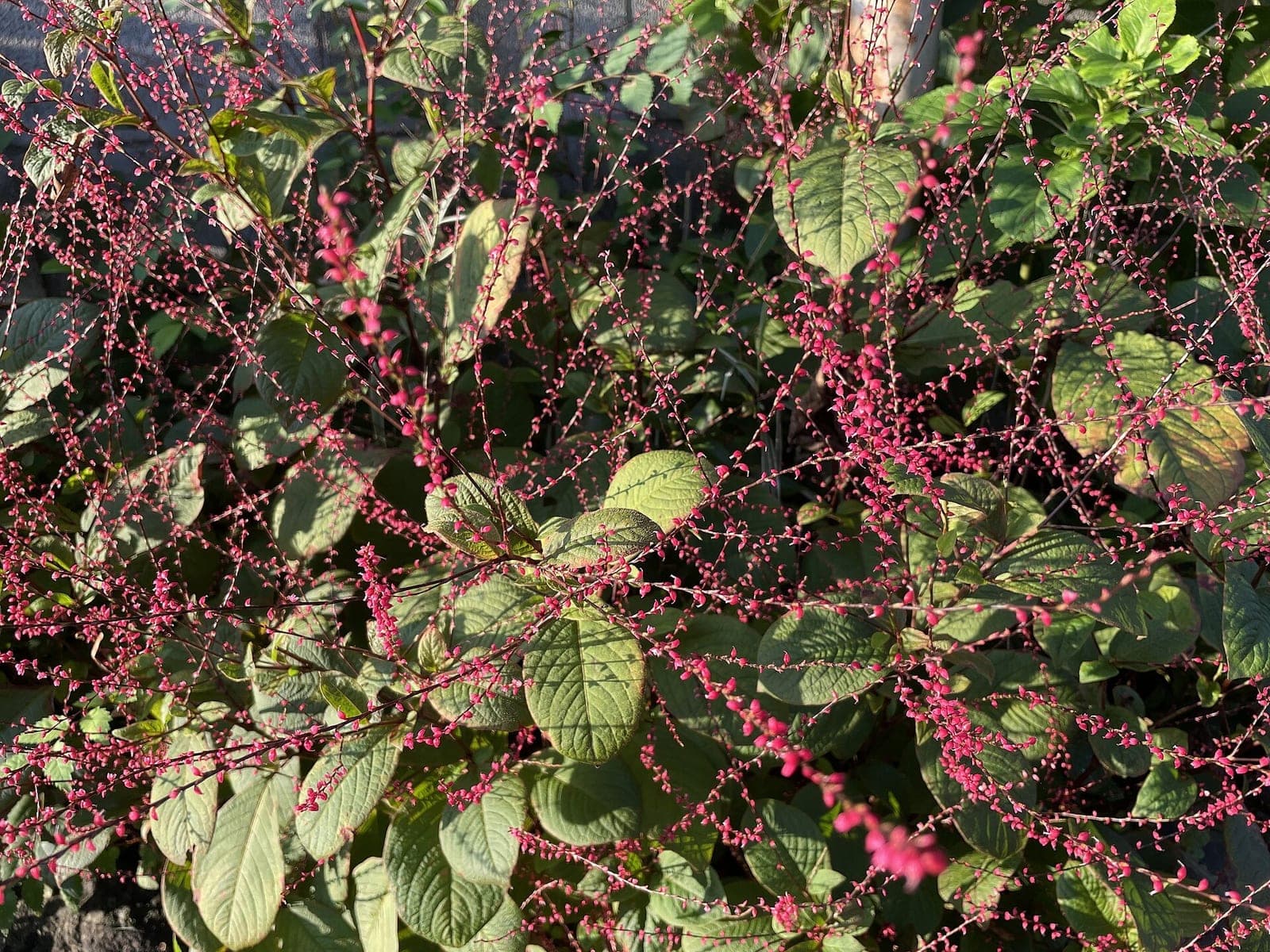
Asian Jumpseed is a shade-tolerant perennial native to Japan, Korea, and adjacent East Asia. Its ornamental value centers on broad, elliptical leaves up to 6 inches long, typically marked with a dark brown chevron near the center. Thread-like spikes of tiny pink-to-white flowers emerge in late summer and persist into fall, adding fine-textured movement to woodland beds and shaded borders.
The common name reflects the seed dispersal strategy: ripe seeds are forcibly ejected from the calyx when touched or brushed, scattering well beyond the parent plant. Rhizome spread adds to this mobility, so a single plant can colonize a shaded area quickly. Apply a 2–3 inch mulch layer to retain moisture and slow unwanted seedling establishment. The plant dies back completely each winter and re-emerges reliably across its zone range. It is closely related to North American Jumpseed (Persicaria virginiana) and appears under that name in some older nursery and botanical references.
Fungal leaf spot
Brown or purplish spots on the leaves, often ringed with a yellow halo, that spread and merge in warm, humid, or wet weather; heavily spotted leaves yellow and drop early.
Pick off spotted leaves and clear fallen debris to remove overwintering spores. Improve air circulation by thinning, and water at the base so foliage dries quickly. If it persists, apply a copper- or sulfur-based fungicide at the first sign.
Root rot
Plants wilt, yellow, and stunt even in moist soil; lower stems and roots turn brown, soft, and mushy and the plant may collapse. Most common in heavy, wet, or poorly drained ground.
Improve drainage and stop overwatering, and never plant too deep. Lift and destroy badly affected plants along with the soil around the roots. Grow in raised or free-draining beds to prevent it returning.