

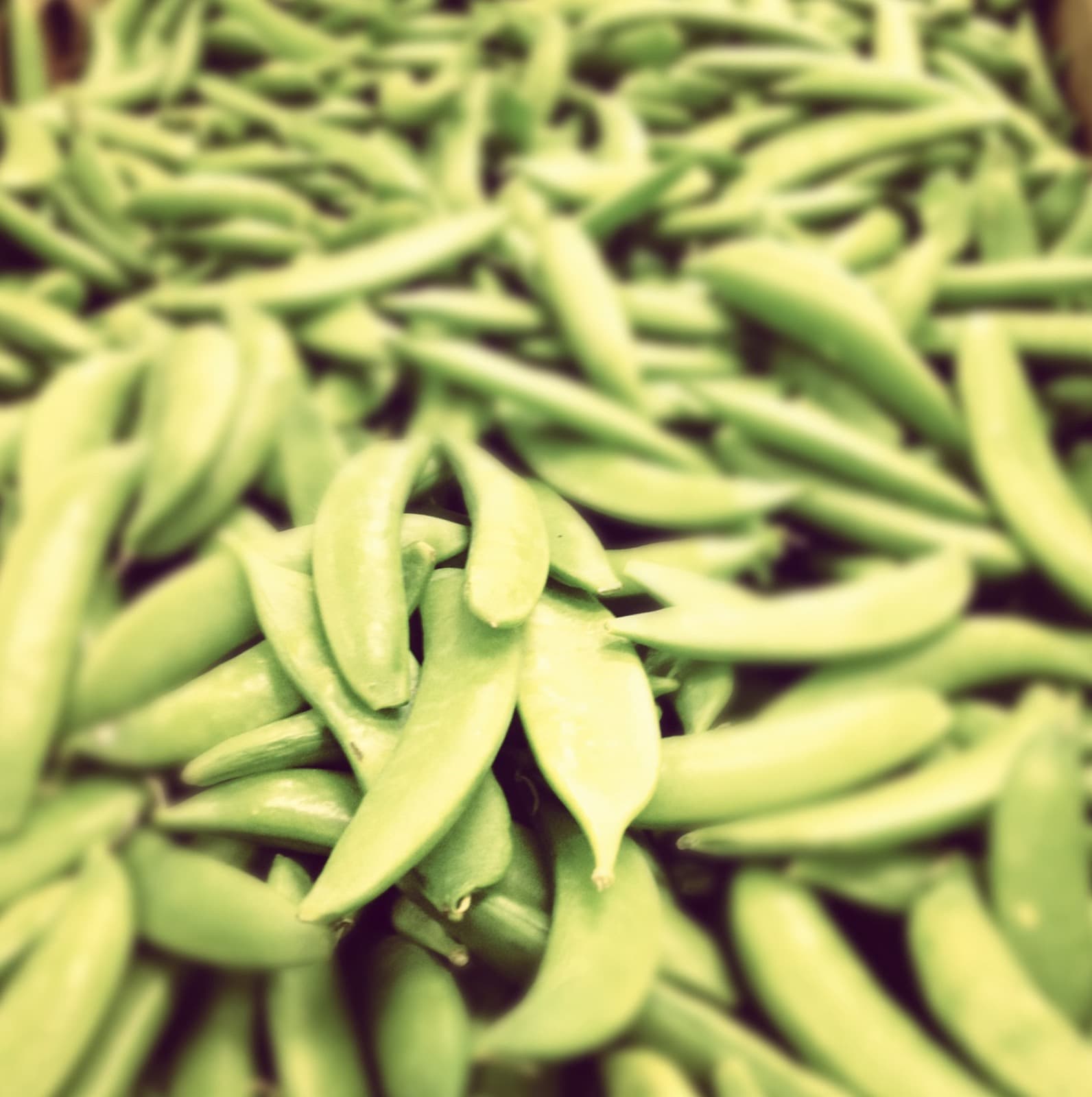
Sugar Daddy is a stringless snap pea: the whole pod is eaten young, plump and glossy, before the peas inside fully develop, with no tough string to pull. It is compact at 24 to 30 inches and needs little or no staking compared with the tall climbing types, which suits a small bed or a container with a few twigs for support.
Like all peas it must go in early. Direct sow an inch deep and 2 to 3 inches apart as soon as the soil can be worked, four to six weeks before last frost, in cool ground; peas germinate at 40°F and the crop is over once summer heat arrives. A second sowing in late summer gives a fall crop in most zones. Keep the plants evenly watered from flowering onward, and do not feed them nitrogen; they fix their own.
Pick when the pods are plump but still glossy, since a dull surface means the sugars are turning to starch, and eat them the same day for the best flavour. Picking every other day keeps the plants producing. Birds take the seed as it sprouts, so cover the row until the seedlings are up. Deer and rabbits graze peas, which belong inside the fence.
Powdery mildew
White or grey powdery coating on leaves - usually starting on older growth in humid conditions or when nights cool.
Improve air circulation by thinning plants. Apply neem oil or potassium bicarbonate spray at first sign. Avoid overhead watering.